
Virtuals Protocol Emerges as Key Innovation in Digital Asset Infrastructure
 Aime Summary
Virtuals Protocol is a digital asset infrastructure innovation designed to streamline tokenized asset management according to project documentation. The protocol introduces mechanisms to enhance liquidity and reduce friction in decentralized finance (DeFi) ecosystems as described in whitepapers. Early adoption by institutional players suggests growing recognition of its potential to reshape market dynamics based on market analysis.
Virtuals Protocol has emerged as a key innovation in digital asset infrastructure, positioning itself as a framework to facilitate tokenized asset management. The project introduces a novel approach to asset tokenization, leveraging smart contracts to automate traditionally manual processes. This advancement aims to lower entry barriers for both retail and institutional participants in the DeFi space.
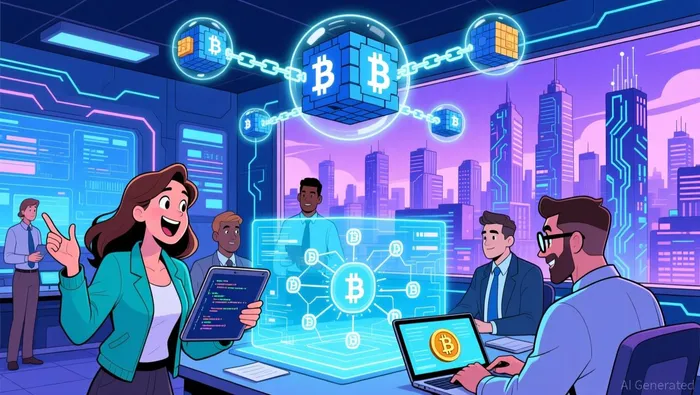
The protocol is built to address inefficiencies in current tokenized asset systems, such as fragmented liquidity and interoperability issues. By integrating cross-chain capabilities and modular smart contract templates, Virtuals ProtocolVIRTUAL-- enables developers to deploy tokenized assets across multiple blockchain networks. This flexibility could help reduce reliance on a single platform's ecosystem.
For investors, the protocol's approach could represent a structural shift in how tokenized assets are managed and traded. By standardizing asset tokenization, Virtuals Protocol may help unlock new use cases in real-world asset (RWA) tokenization and synthetic asset creation. However, the market will need to assess the protocol's scalability and governance structure before widespread adoption is likely.
What Is Virtuals Protocol?
Virtuals Protocol is a blockchain-based infrastructure project designed to streamline the creation, management, and trading of tokenized assets. The protocol operates using a modular framework, allowing developers to deploy tokenized assets without extensive coding. It is open-source and built on a multichain architecture, supporting EthereumETH--, SolanaSOL--, and other major blockchains.
The platform's core components include a set of smart contracts that govern asset tokenization, a governance layer for protocol upgrades, and an automated liquidity management module. These components work together to reduce the complexity of tokenized asset deployment, making it more accessible to a broader range of market participants.
The protocol's design emphasizes interoperability, allowing tokenized assets created on one chain to be seamlessly used on another. This cross-chain functionality could help reduce fragmentation in the tokenized asset market, a persistent challenge in the DeFi space.
What Problem Does Virtuals Protocol Address?
Traditional tokenized asset systems often suffer from liquidity constraints and inefficiencies in asset management. Virtuals Protocol seeks to address these issues by introducing a more dynamic and flexible framework for asset tokenization. The protocol's automated liquidity management system is designed to ensure that tokenized assets remain liquid, even in low-liquidity environments.
Another key issue the protocol tackles is interoperability. Many tokenized asset platforms are siloed within a single blockchain ecosystem, limiting their utility. By supporting multiple chains, Virtuals Protocol enables tokenized assets to be used across different platforms and applications, enhancing their value and usability.
The protocol also aims to improve transparency and trust in the tokenized asset space. Through its governance layer, stakeholders can propose and vote on protocol upgrades, ensuring that the platform evolves in a community-driven and decentralized manner.
How Might Virtuals Protocol Impact the Market?
If widely adopted, Virtuals Protocol could have a significant impact on the tokenized asset market. The protocol's focus on scalability, liquidity, and interoperability positions it as a potential enabler of broader DeFi adoption. Institutional investors, in particular, may find the platform appealing due to its modular architecture and governance features.
The protocol's cross-chain capabilities could also help bridge the gap between different blockchain ecosystems, reducing the need for users to switch between platforms. This could lead to increased network effects and a more cohesive DeFi landscape.
However, the protocol's success will depend on several factors, including the adoption rate among developers and the performance of its governance model. Early feedback from the community will be critical in determining whether the platform can sustain long-term growth and innovation in the tokenized asset space.

Blending traditional trading wisdom with cutting-edge cryptocurrency insights.
Latest Articles
Stay ahead of the market.
Get curated U.S. market news, insights and key dates delivered to your inbox.


AInvest
PRO
AInvest
PRO



Comments
No comments yet