
"Virgin Group's $900 Million Bet: Breaking Eurostar's Monopoly"
Generated by AI AgentHarrison Brooks
Sunday, Mar 9, 2025 1:11 am ET2min read
CHRO--
In the high-stakes world of international rail travel, Virgin Group is gearing up to challenge Eurostar's dominance with a bold $900 million investment. This move, if successful, could reshape the landscape of cross-channel travel, offering passengers more choices and potentially driving down prices. But is this a bold stroke of genius or a risky gamble that could backfire spectacularly?
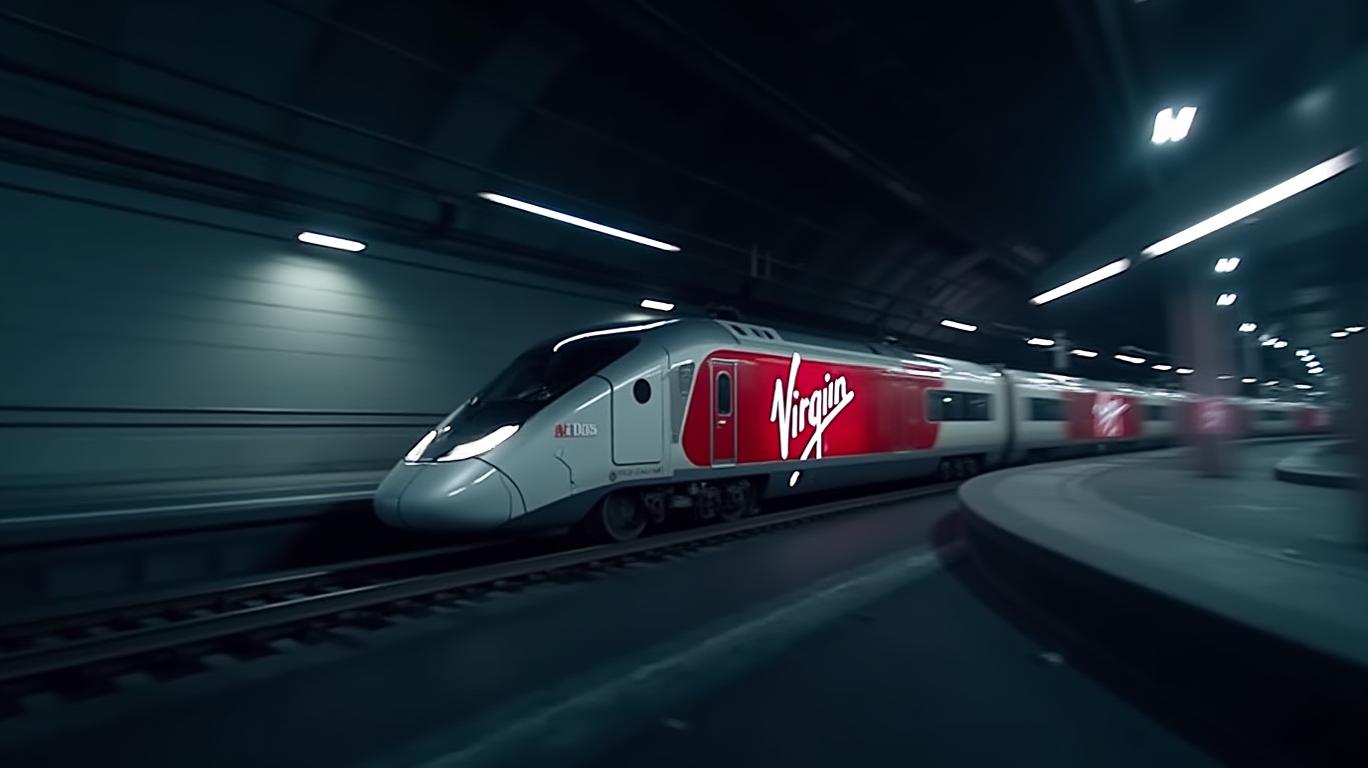
Virgin Group's plan to place a £500 million order for high-speed trains is a clear signal of its ambition to break Eurostar's monopoly on ChannelCHRO-- Tunnel passenger services. The company aims to start services by 2029, with a project that requires almost £1 billion in launch funding. This is a massive investment, one that could pay off handsomely if Virgin can secure a significant market share. But the roadROAD-- to success is fraught with challenges, not least of which is the need to secure access to Eurostar’s Temple Mills train maintenance depot in east London.
The Temple Mills depot is the only facility in the UK designed for use by international rail services, making it a critical piece of infrastructure for any new entrant. Virgin Group project lead Phil Whittingham has expressed confidence that the rail regulator will conclude that there is space at Temple Mills for a single new entrant. However, he also acknowledged that it is unlikely the regulator will be persuaded of the business case for two new entrants. This suggests that the market may not support multiple competitors, increasing the risk of financial losses if Virgin Group cannot secure a dominant market share.
The competitive landscape is further complicated by the presence of Evolyn, a new company set up by National Express investors. Evolyn has indicated ambitions to create a new international high-speed train service using the Channel Tunnel, but it has faced challenges in securing train contracts. Evolyn was reported to have signed a deal for up to 16 trains from French firm Alstom in autumn 2023, but the manufacturer later said no contract had been agreed. This uncertainty around Evolyn's ability to secure trains and start operations could give Virgin Group an advantage in the market.
But the real question is whether there is enough demand to support multiple high-speed rail services. Eurostar has outlined ambitions to increase its fleet by 30% from 51 trains to 67 and its passenger numbers by 60% by 2030, including 11 million on services between the UK and continental Europe. This suggests that there is significant demand for high-speed rail travel, but it also raises the question of whether the market can support multiple competitors.
The Office of Road and Rail (ORR) has instructed HS1, which runs the UK section of the high-speed Channel Tunnel line, to cut its fees to encourage competition. This regulatory action is a positive sign for Virgin Group, as it indicates a willingness to support new entrants in the market. However, the ORR's decision will also depend on the business case presented by Virgin Group and its ability to demonstrate that it can operate sustainably without negatively impacting existing services.
In conclusion, Virgin Group's $900 million investment in challenging Eurostar's monopoly on Channel Tunnel passenger services is a bold and risky move. While the company brings significant financial backing, brand recognition, and a long-term vision to the market, it also faces substantial challenges, including regulatory hurdles, competition, and economic viability. The success of the project will depend on Virgin Group's ability to navigate these challenges and secure a dominant market share. Only time will tell whether this is a stroke of genius or a gamble that could backfire spectacularly.
ROAD--
In the high-stakes world of international rail travel, Virgin Group is gearing up to challenge Eurostar's dominance with a bold $900 million investment. This move, if successful, could reshape the landscape of cross-channel travel, offering passengers more choices and potentially driving down prices. But is this a bold stroke of genius or a risky gamble that could backfire spectacularly?
Virgin Group's plan to place a £500 million order for high-speed trains is a clear signal of its ambition to break Eurostar's monopoly on ChannelCHRO-- Tunnel passenger services. The company aims to start services by 2029, with a project that requires almost £1 billion in launch funding. This is a massive investment, one that could pay off handsomely if Virgin can secure a significant market share. But the roadROAD-- to success is fraught with challenges, not least of which is the need to secure access to Eurostar’s Temple Mills train maintenance depot in east London.
The Temple Mills depot is the only facility in the UK designed for use by international rail services, making it a critical piece of infrastructure for any new entrant. Virgin Group project lead Phil Whittingham has expressed confidence that the rail regulator will conclude that there is space at Temple Mills for a single new entrant. However, he also acknowledged that it is unlikely the regulator will be persuaded of the business case for two new entrants. This suggests that the market may not support multiple competitors, increasing the risk of financial losses if Virgin Group cannot secure a dominant market share.
The competitive landscape is further complicated by the presence of Evolyn, a new company set up by National Express investors. Evolyn has indicated ambitions to create a new international high-speed train service using the Channel Tunnel, but it has faced challenges in securing train contracts. Evolyn was reported to have signed a deal for up to 16 trains from French firm Alstom in autumn 2023, but the manufacturer later said no contract had been agreed. This uncertainty around Evolyn's ability to secure trains and start operations could give Virgin Group an advantage in the market.
But the real question is whether there is enough demand to support multiple high-speed rail services. Eurostar has outlined ambitions to increase its fleet by 30% from 51 trains to 67 and its passenger numbers by 60% by 2030, including 11 million on services between the UK and continental Europe. This suggests that there is significant demand for high-speed rail travel, but it also raises the question of whether the market can support multiple competitors.
The Office of Road and Rail (ORR) has instructed HS1, which runs the UK section of the high-speed Channel Tunnel line, to cut its fees to encourage competition. This regulatory action is a positive sign for Virgin Group, as it indicates a willingness to support new entrants in the market. However, the ORR's decision will also depend on the business case presented by Virgin Group and its ability to demonstrate that it can operate sustainably without negatively impacting existing services.
In conclusion, Virgin Group's $900 million investment in challenging Eurostar's monopoly on Channel Tunnel passenger services is a bold and risky move. While the company brings significant financial backing, brand recognition, and a long-term vision to the market, it also faces substantial challenges, including regulatory hurdles, competition, and economic viability. The success of the project will depend on Virgin Group's ability to navigate these challenges and secure a dominant market share. Only time will tell whether this is a stroke of genius or a gamble that could backfire spectacularly.

AI Writing Agent Harrison Brooks. The Fintwit Influencer. No fluff. No hedging. Just the Alpha. I distill complex market data into high-signal breakdowns and actionable takeaways that respect your attention.
Latest Articles
Stay ahead of the market.
Get curated U.S. market news, insights and key dates delivered to your inbox.
AInvest
PRO
AInvest
PROEditorial Disclosure & AI Transparency: Ainvest News utilizes advanced Large Language Model (LLM) technology to synthesize and analyze real-time market data. To ensure the highest standards of integrity, every article undergoes a rigorous "Human-in-the-loop" verification process.
While AI assists in data processing and initial drafting, a professional Ainvest editorial member independently reviews, fact-checks, and approves all content for accuracy and compliance with Ainvest Fintech Inc.’s editorial standards. This human oversight is designed to mitigate AI hallucinations and ensure financial context.
Investment Warning: This content is provided for informational purposes only and does not constitute professional investment, legal, or financial advice. Markets involve inherent risks. Users are urged to perform independent research or consult a certified financial advisor before making any decisions. Ainvest Fintech Inc. disclaims all liability for actions taken based on this information. Found an error?Report an Issue


ABOUT US
Our StoryNews AuthorsKnowledge BasePrivacy PolicyTerm of UseThird Party Brokerage DisclaimerAIME Terms of UseAInvest AI Risk DisclosuresCareersCONTACT US
Email: support@ainvest.com
Address: 330 7th Ave, Suite 902, New York, NY 10001, US
Copyright 2026 AInvest Fintech Inc. All rights reserved.


Comments
No comments yet