
Virgin Galactic's Q2 2025 Earnings Call: Unpacking Key Contradictions in Cash Flow, Market Potential, and Flight Strategy
Generated by AI AgentAinvest Earnings Call Digest
Thursday, Aug 7, 2025 1:39 am ET1min read
SPCE-- Aime Summary
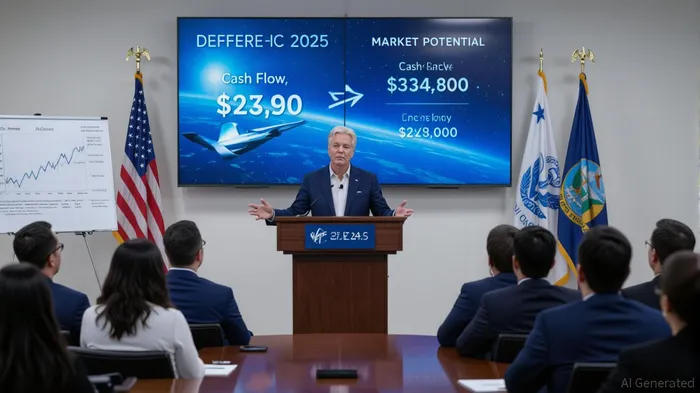
Aime SummaryFree cash flow expectations, LV-X market potential, private astronaut flight timing, research flight mix, and ticket sales and pricing strategy are the key contradictions discussed in Virgin Galactic's latest 2025Q2 earnings call.
Spaceship Production Progress:
- Virgin GalacticSPCE-- continues to track for its first commercial spaceflight in fall 2026, with private astronaut flights expected to commence later that year.
- The company has made significant advancements in its spaceship program, including fabrication and assembly of key components like oxidizer tanks and flight controls, with 100% of program assembly tooling now in the Phoenix factory.
- The delay in the fuselage skin and wing spar is being resolved, with the team focusing on quality and safety to ensure a smooth transition into ground and flight testing phases.
Financial and Operational Efficiency:
- Total operating expenses decreased by 34% to $70 million compared to $106 million in the prior year period, with a further $19 million decrease from the first quarter.
- Adjusted EBITDA improved by 34% to negative $52 million, and free cash flow was negative $114 million, within the range of prior guidance.
- The company has managed to reduce cash spending and redirect resources, leveraging a disciplined approach to its strategic plan.
Capital Investment and Cash Holdings:
- Capital expenditures were $58 million in Q2, up from $34 million in the prior year period, contributing to property, plant, and equipment (PP&E) growth by nearly 50%.
- The company ended the quarter with over $0.5 billion in cash, cash equivalents, and marketable securities, maintaining a strong balance sheet.
- Virgin Galactic continues to manage its cash prudently while investing in its spaceship fleet and preparing for future growth opportunities.
Launch Vehicle Program and Expansion:
- Virgin Galactic is progressing with the design of its next-generation launch vehicle (LV-X) with the aim of expanding its spaceship fleet and exploring government research applications.
- The company is collaborating with Lawrence Livermore National Laboratory on a feasibility study to assess opportunities for its carrier ship platform.
- The development of launch vehicles is designed to support increased flight capacity at Spaceport America and potential future expansion into international markets like Italy.
Spaceship Production Progress:
- Virgin GalacticSPCE-- continues to track for its first commercial spaceflight in fall 2026, with private astronaut flights expected to commence later that year.
- The company has made significant advancements in its spaceship program, including fabrication and assembly of key components like oxidizer tanks and flight controls, with 100% of program assembly tooling now in the Phoenix factory.
- The delay in the fuselage skin and wing spar is being resolved, with the team focusing on quality and safety to ensure a smooth transition into ground and flight testing phases.
Financial and Operational Efficiency:
- Total operating expenses decreased by 34% to $70 million compared to $106 million in the prior year period, with a further $19 million decrease from the first quarter.
- Adjusted EBITDA improved by 34% to negative $52 million, and free cash flow was negative $114 million, within the range of prior guidance.
- The company has managed to reduce cash spending and redirect resources, leveraging a disciplined approach to its strategic plan.
Capital Investment and Cash Holdings:
- Capital expenditures were $58 million in Q2, up from $34 million in the prior year period, contributing to property, plant, and equipment (PP&E) growth by nearly 50%.
- The company ended the quarter with over $0.5 billion in cash, cash equivalents, and marketable securities, maintaining a strong balance sheet.
- Virgin Galactic continues to manage its cash prudently while investing in its spaceship fleet and preparing for future growth opportunities.
Launch Vehicle Program and Expansion:
- Virgin Galactic is progressing with the design of its next-generation launch vehicle (LV-X) with the aim of expanding its spaceship fleet and exploring government research applications.
- The company is collaborating with Lawrence Livermore National Laboratory on a feasibility study to assess opportunities for its carrier ship platform.
- The development of launch vehicles is designed to support increased flight capacity at Spaceport America and potential future expansion into international markets like Italy.

Discover what executives don't want to reveal in conference calls
Latest Articles
Stay ahead of the market.
Get curated U.S. market news, insights and key dates delivered to your inbox.
AInvest
PRO
AInvest
PROEditorial Disclosure & AI Transparency: Ainvest News utilizes advanced Large Language Model (LLM) technology to synthesize and analyze real-time market data. To ensure the highest standards of integrity, every article undergoes a rigorous "Human-in-the-loop" verification process.
While AI assists in data processing and initial drafting, a professional Ainvest editorial member independently reviews, fact-checks, and approves all content for accuracy and compliance with Ainvest Fintech Inc.’s editorial standards. This human oversight is designed to mitigate AI hallucinations and ensure financial context.
Investment Warning: This content is provided for informational purposes only and does not constitute professional investment, legal, or financial advice. Markets involve inherent risks. Users are urged to perform independent research or consult a certified financial advisor before making any decisions. Ainvest Fintech Inc. disclaims all liability for actions taken based on this information. Found an error?Report an Issue


ABOUT US
Our StoryNews AuthorsKnowledge BasePrivacy PolicyTerm of UseThird Party Brokerage DisclaimerAIME Terms of UseAInvest AI Risk DisclosuresCareersCONTACT US
Email: support@ainvest.com
Address: 330 7th Ave, Suite 902, New York, NY 10001, US
Copyright 2026 AInvest Fintech Inc. All rights reserved.


Comments
No comments yet