
How Viral Toy Trends Like Labubu Are Reshaping Retail and Investor Behavior
 Aime Summary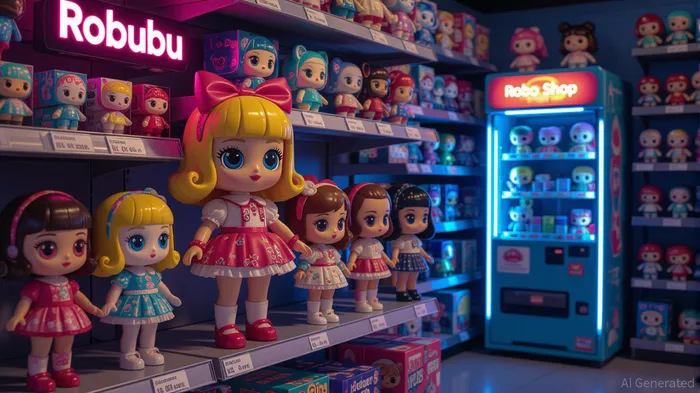
The rise of Labubu—the whimsical, "ugly-cute" toy that has captivated millions—has become a case study in how consumer-driven equity surges can redefine industries. Since its 2023 explosion, the character has fueled a $1.93 billion revenue surge for Pop Mart (HKG:9992) in the first half of 2025, with Labubu alone accounting for 34.7% of the company's total sales. This phenomenon is not just a toy story; it's a blueprint for how viral trends can disrupt traditional retail models, create new investor opportunities, and reshape global consumer behavior.
The Labubu Effect: From Blind Boxes to Billion-Dollar Valuations
At the heart of Labubu's success is the blind-box model—a retail strategy that leverages scarcity and surprise to drive demand. By packaging toys in sealed boxes with a 1-in-72 chance of obtaining a rare variant, Pop Mart has turned toy purchases into a high-stakes game of chance. This approach has created a secondary market where rare Labubus sell for tens of thousands of dollars. For instance, a mint-green variant fetched $170,000 at auction in June 2025, while a human-sized Labubu sold for $150,000.
The financial implications are staggering. Pop Mart's revenue grew 204.4% year-on-year in H1 2025, with 30% of Labubu sales coming from outside China. The company's market cap now stands at $43.28 billion, eclipsing traditional toy giants like MattelMAT-- and HasbroHAS--. This growth is driven by a blend of digital virality (1.3 million TikTok videos with the #Labubu hashtag), celebrity endorsements (BLACKPINK's Lisa, Rihanna), and strategic expansions into fashion and jewelry.
The Broader Market: Collectibles as Lifestyle and Investment Assets
Labubu is part of a larger shift in the collectibles market, which is projected to grow at a 9.2% CAGR through 2034. The global collectibles industry, valued at $484.6 billion in 2024, now includes categories like sports trading cards, NFTs, and vintage toys. Investors are increasingly viewing these items as alternative assets, with rare collectibles appreciating at rates rivaling real estate or fine art.
For example, the Pokémon card market surged 729% in 2024, while a 1933 Double Eagle gold coin sold for $7.5 million. Digital collectibles, powered by blockchain, have also entered the fray, with NFTs like Beeple's $69 million artwork redefining ownership. This diversification means investors must look beyond traditional metrics—popularity, scarcity, and cultural resonance are now critical indicators.
Actionable Insights for Investors
- Diversify Across Collectible Categories: While Labubu dominates the toy sector, investors should also consider emerging trends like NFTs, vintage sneakers, and limited-edition fashion. For instance, the sneaker resale market grew 25% in 2024, with platforms like StockX and GOAT outperforming stock indices.
- Monitor Retail Innovation: Pop Mart's 533 international "Robo Shops" and 475 stores highlight the importance of omnichannel strategies. Companies that blend physical retail with digital engagement (e.g., livestreamed product drops) are likely to outperform.
- Assess Regulatory Risks: China's scrutiny of blind-box mechanics and U.S. tariffs on Chinese imports could impact margins. Investors should evaluate how companies like Pop Mart adapt—diversifying supply chains or pivoting to digital-first models.
- Leverage Sentiment Analysis: Social media virality (e.g., TikTok trends) and celebrity endorsements are now key drivers of demand. Tools like Google Trends and social listening platforms can help identify the next Labubu before it goes mainstream.
The Road Ahead: Sustaining Momentum
While Labubu's success is undeniable, challenges loom. Consumer fatigue is emerging, with 43% of collectors reporting interest in reducing blind-box purchases. Additionally, the market's speculative nature means valuations could correct if demand wanes. However, Pop Mart's pivot to lifestyle branding—launching POPOP jewelry and collaborating with Vans—demonstrates a strategy to extend the Labubu IP beyond toys.
For investors, the key is to balance short-term gains with long-term sustainability. Companies that innovate beyond the blind-box model—like integrating collectibles with metaverse experiences or luxury goods—may capture the next wave of growth.
Conclusion
The Labubu phenomenon underscores a fundamental truth: in the 21st century, consumer-driven equity surges are less about products and more about experiences, identity, and community. As the collectibles market evolves, investors who recognize the emotional and cultural value of these trends will be best positioned to capitalize on the next wave of retail disruption. Whether it's a toy, a trading card, or a digital asset, the future of consumer equity lies in the intersection of nostalgia, technology, and storytelling.

Delivering real-time insights and analysis on emerging financial trends and market movements.
Latest Articles
Stay ahead of the market.
Get curated U.S. market news, insights and key dates delivered to your inbox.


AInvest
PRO
AInvest
PRO



Comments
No comments yet