
Vine Hill Capital II-U (VHCP) and units (VHCPU) hit monthly low despite 0.20% intraday gain.
 Aime Summary
The share price of Vine Hill Capital Investment Corp. II (VHCP) and its units (VHCPU) dropped to a record low this month, with an intraday gain of 0.20% on 19 December. The stock’s performance follows a recent upsized $200 million IPO, which priced 20 million units at $10.00 each, raising capital for a potential business combination. Despite the IPO’s success, the share price has faced downward pressure, reflecting broader market dynamics and SPAC-specific risks.
Vine Hill Capital II-U began trading on 18 December, with units comprising one Class A share and one-third of a warrant exercisable at $11.50. The IPO, led by Stifel Nicolaus, included a 45-day option for underwriters to purchase an additional 3 million units, a mechanism designed to stabilize post-IPO volatility. 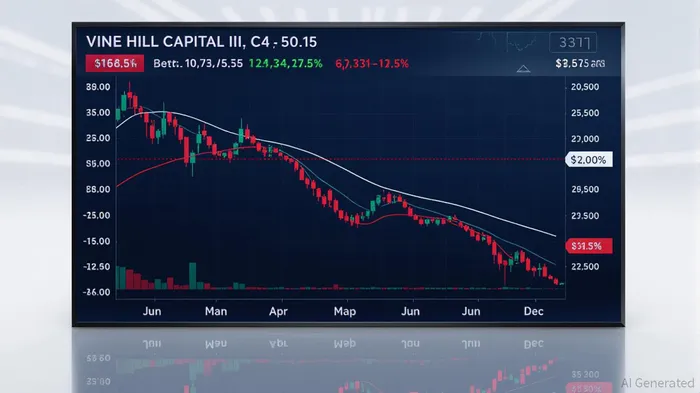 Management’s focus on industries aligned with its expertise has drawn investor interest, though the lack of a specified merger deadline introduces uncertainty. The company must complete a transaction within a typical SPAC timeframe to avoid liquidation, a timeline that could influence short-term trading patterns.
The SPAC’s performance occurs amid a cautiously optimistic market environment for SPACs, which have regained traction after regulatory and market challenges in 2023-2024. Vine Hill’s ability to secure an upsized IPO underscores investor confidence in its management team and strategy. However, the stock’s decline to a monthly low highlights the inherent risks of SPAC investments, including redemption pressures and the need for timely, high-quality acquisitions. Broader macroeconomic factors, such as interest rates and risk appetite, will also play a role in shaping the stock’s trajectory as it navigates the post-IPO phase.

Stay ahead of the market.
Get curated U.S. market news, insights and key dates delivered to your inbox.
AInvest
PRO
AInvest
PRO



Comments
No comments yet