
Vimeo's Workforce Reduction and the Streaming Platform Sector's Financial Strain: Assessing Long-Term Viability in a Pressured OTT Landscape


 Aime Summary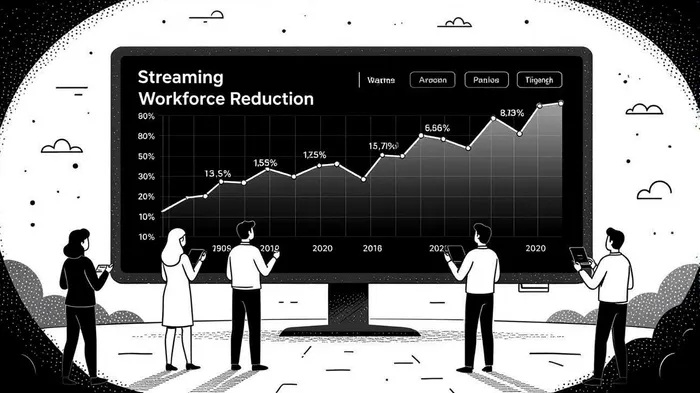
The Over-The-Top (OTT) streaming industry, once a beacon of explosive growth and innovation, is now grappling with a confluence of financial pressures that are reshaping its trajectory. Vimeo's recent 10% workforce reduction in 2025—its third major round of layoffs since 2022—serves as a microcosm of broader sector-wide challenges. While the company's pivot toward AI-driven tools and enterprise solutions has yielded a 25% year-over-year revenue growth in its enterprise segment, the broader OTT market is contending with rising content costs, subscription churn, and regulatory headwinds. For investors, the question is no longer whether OTT platforms can scale but whether they can sustain profitability amid these mounting pressures.
Vimeo's Strategic Rationale: Efficiency vs. Long-Term Resilience
Vimeo's decision to cut 26% of its workforce since 2022 reflects a calculated effort to streamline operations and prioritize high-margin enterprise tools. The company's 2025 financials—$417 million in revenue, $27 million net profit, and a 25% enterprise growth rate—underscore the effectiveness of this strategy. CEO Philip Moyer's emphasis on “sustainable profitability” aligns with industry trends, where platforms are shifting from subscriber acquisition to monetizing existing user bases through AI-powered analytics and premium features like “Workspaces.” However, the human cost of these cuts—26% of the workforce since 2022—raises questions about long-term employee morale and innovation capacity.
Vimeo's reliance on variable pay structures for top executives (90% tied to performance and stock incentives) further complicates its risk profile. While such models align with short-term financial goals, they may undermine long-term stakeholder alignment, particularly as the company navigates leadership transitions and external recruitment for key roles. For investors, this duality—strong financial metrics versus operational fragility—demands a nuanced assessment of Vimeo's ability to balance efficiency with resilience.
Broader OTT Sector Pressures: A Market at a Crossroads
The OTT industry's projected growth to $596.92 billion by 2030 (CAGR of 11.45%) is tempered by significant structural challenges. Content acquisition costs, for instance, have surged as platforms compete for exclusive rights, compressing profit margins. The NBA's $76 billion media deal—a benchmark for sports rights—illustrates the high-stakes nature of content monetization. Meanwhile, subscription stacking and churn remain persistent issues, with North American households averaging four streaming services. Platforms like NetflixNFLX-- have mitigated this through ad-tier models and improved recommendation algorithms, but smaller players like Paramount continue to struggle, with streaming losses narrowing to $497 million in Q2 2024 despite a $6.8 billion revenue.
Regulatory pressures add another layer of complexity. Europe's 30% domestic content quotas and Australia's proposed 20% thresholds force platforms to invest in localized production, diverting capital from innovation. In the U.S., antitrust scrutiny of consolidation efforts (e.g., Disney's proposed merger with Skydance) could further fragment the market. For investors, these dynamics highlight the need to evaluate not just financial performance but also a platform's ability to navigate regulatory and geopolitical risks.
Investment Risks and Strategic Considerations
The OTT sector's high capital intensity and reliance on AI-driven innovation present both opportunities and risks. Vimeo's stock price surged 5.07% post-Q2 2025 earnings, reflecting investor optimism in its AI integration and enterprise focus. However, the company's absence of a dividend strategy and its exposure to macroeconomic volatility (e.g., interest rate hikes, inflation) warrant caution. A analysis reveals a volatile trajectory, with gains offset by periodic dips tied to sector-wide corrections.
Comparatively, Netflix's $33.7 billion 2024 revenue and $10.4 billion profit demonstrate the scalability of a diversified monetization model. Yet even Netflix's success hinges on its ability to maintain content differentiation—a challenge as AI-generated content proliferates. For investors, the key is to identify platforms that can balance AI-driven efficiency with creative innovation, while avoiding those overly reliant on short-term cost-cutting.
Historical data on earnings release performance offers additional context. From 2022 to 2025, Netflix's stock closed at a record $1,274.17 on July 17, 2025—its highest earnings-day price—while VimeoVMEO-- saw a notable post-earnings surge on August 6, 2025. Netflix's earnings-driven performance has shown a consistent upward trend, whereas Vimeo's results remain more volatile, reflecting its smaller market capitalization and sector positioning. These patterns underscore the importance of timing and market sentiment in earnings-driven stock movements.
Conclusion: Navigating the OTT Crossroads
Vimeo's workforce reductions and strategic refocus on AI and enterprise tools position it as a resilient player in a fragmented market. However, the broader OTT sector's financial strain—driven by content inflation, regulatory complexity, and subscription churn—demands a cautious approach. Investors should prioritize platforms with diversified revenue streams, robust AI integration, and strong governance frameworks. While the OTT industry's long-term growth potential remains intact, the path to profitability will require navigating a landscape where operational efficiency and innovation must coexist.
For those willing to take a measured bet, the OTT sector offers compelling opportunities—but only for those who can discern the difference between temporary turbulence and enduring transformation.

Delivering real-time insights and analysis on emerging financial trends and market movements.
Latest Articles
Stay ahead of the market.
Get curated U.S. market news, insights and key dates delivered to your inbox.




Comments
No comments yet