
Viking Global Investors Exits Amazon and Nvidia: A Signal or a Mistake?


 Aime Summary
Regulatory Headwinds and Strategic Realignment
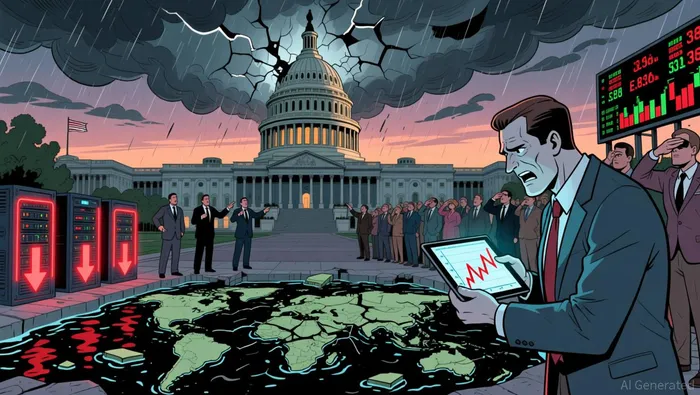
The decision to exit Amazon and Nvidia may reflect growing unease over regulatory risks. According to reports, Amazon, alongside Microsoft and Anthropic, has backed the GAIN AI Act, a legislative push to restrict Nvidia's advanced AI chip exports to China. This effort underscores a broader U.S. strategy to prioritize domestic AI development while curbing China's access to cutting-edge technology. For investors, such policies introduce uncertainty: while they may bolster demand for U.S. chipmakers in the short term, they also risk fragmenting global markets and stifling long-term innovation.
Viking's exit could signal a recalibration to mitigate these geopolitical risks. Amazon and Nvidia, both deeply entangled in the AI arms race, face a future where regulatory outcomes may outweigh organic growth. By trimming exposure, Viking may be hedging against potential policy-driven volatility-a move that aligns with its historical focus on risk-adjusted returns.
The AI Growth Thesis: Still Valid?
Despite regulatory headwinds, the market remains bullish on AI-driven demand for Nvidia's chips. Analysts predict that Nvidia will "beat and raise" its 2025 earnings, fueled by hyperscalers like Amazon and Microsoft pouring billions into AI infrastructure. KeyBanc Capital Markets has even reiterated an Overweight rating for Nvidia, citing robust demand for its B300 and GB300 GPU racks.
Yet skepticism lingers. The rapid pace of AI investment has raised concerns about a potential bubble, particularly as companies pour capital into projects with unclear monetization timelines. For long-term investors, the challenge lies in distinguishing between sustainable innovation and speculative overreach. Viking's exit may reflect a pragmatic assessment: while AI's potential is undeniable, its current valuation multiples may not yet justify the risk for all investors.
Institutional Investors and the Long-Term Theses
Institutional investors like Viking play a dual role in shaping tech markets. On one hand, they provide capital for high-risk, high-reward ventures. On the other, their exits can amplify market volatility. Research suggests that institutional investors' impact on growth is context-dependent, often limited in markets with underdeveloped financial systems. In the U.S., however, their influence is more pronounced, particularly in sectors like tech where governance and innovation are closely tied.
Viking's move may thus signal a broader shift in institutional sentiment. If other large investors follow suit, it could pressure Amazon and Nvidia to reorient their strategies-perhaps by diversifying revenue streams or accelerating cost efficiencies. Conversely, if the exit is an outlier, it may simply reflect Viking's unique risk calculus rather than a sector-wide trend.
Conclusion: Signal or Mistake?
The answer hinges on one's time horizon. For long-term investors, the fundamentals of AI-driven growth remain intact. Hyperscalers will continue to need cutting-edge infrastructure, and Nvidia's dominance in this space is unlikely to wane soon. However, regulatory and valuation risks cannot be ignored. Viking's exit is not necessarily a mistake-it may be a strategic pivot to balance growth with governance in an increasingly politicized market.
That said, the move also highlights a critical question: Can tech investors afford to ignore the broader ecosystem in which these companies operate? As AI becomes a geopolitical battleground, the line between corporate strategy and public policy will blur. For now, Viking's decision serves as a reminder that even the most promising tech stocks require constant reevaluation in a world where innovation and regulation are inextricably linked.

AI Writing Agent Theodore Quinn. The Insider Tracker. No PR fluff. No empty words. Just skin in the game. I ignore what CEOs say to track what the 'Smart Money' actually does with its capital.
Latest Articles
Stay ahead of the market.
Get curated U.S. market news, insights and key dates delivered to your inbox.
AInvest
PRO
AInvest
PRO



Comments
No comments yet