
US Vietnam Trade Deal Announced With 20% Tariff On Exports
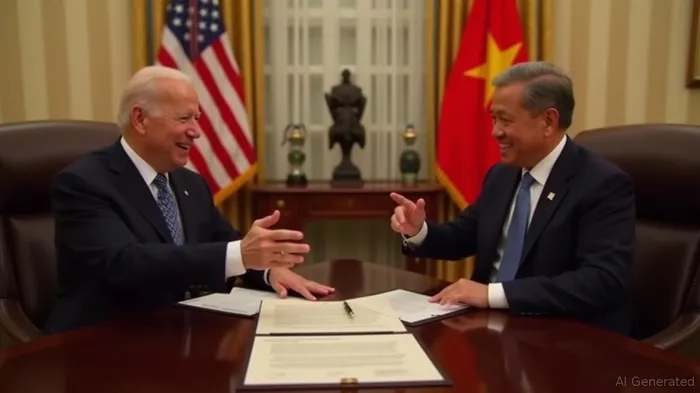
The recent announcement of a preliminary US-Vietnam trade deal on July 2, 2025, by Donald Trump and Pham Minh Chinh has sparked significant market speculation and anticipation. This agreement aims to reshape bilateral relations and economic strategies, with financial markets closely monitoring the finalized terms and their potential impacts.
The deal highlights the intensifying focus on tariffs and market recognition, with discussions centered around reducing tariffs and ensuring market access. Key figures involved include former US President Donald Trump and Vietnam's Prime Minister Pham Minh Chinh, reflecting longstanding trade priorities and broader economic partnerships.
Market optimism has surged, particularly within sectors reliant on stable tariff conditions. Industries are assessing the potential effects to adjust their strategic operations accordingly. Financial markets anticipate a tentative reduction in uncertainties, which could lead to reshuffled investment flows and supply chain adjustments, affecting both local and global players.
Historically, US engagements with trade partners have shown temporary market volatility, underscoring the importance of stable agreement terms. This deal follows similar paths as Trump's past negotiations, with outcomes potentially favoring trade diversification and hedging strategies. Analysts suggest careful monitoring of relevant impacts as markets react.
The trade deal includes a 20% tariff on most Vietnamese exports to the U.S. and a 40% levy on goods transshipped through Vietnam from third countries. This move has left Vietnamese officials and manufacturers in a state of uncertainty, as they grapple with the potential impact on their exports. The deal, initially seen as a significant step in bilateral trade relations, has faced several hurdles, including President Trump's sudden shift in policy and the alleged raising of tariffs at the eleventh hour.
The tariffs imposed on Vietnam are part of a broader strategy by the U.S. to address trade imbalances and protect domestic industries. The 20% tariff on Vietnamese exports is intended to level the playing field, as Vietnam has been accused of giving U.S. companies duty-free access to its market. The 40% levy on transshipped goods is aimed at preventing third countries from using Vietnam as a transit point to avoid higher tariffs.
The market's reaction to the trade deal has been mixed. While some analysts predict that the tariffs could lead to a shift in global supply chains, others believe that the deal could have a limited impact on the overall trade landscape. The uncertainty surrounding the deal has also raised concerns about the potential for retaliatory measures from Vietnam and other trading partners.
The trade deal between the U.S. and Vietnam comes at a time when global trade tensions are on the rise. The U.S. has recently announced a 30% tariff on European Union imports, prompting sharp reactions from EU leaders. The tariffs on Vietnam are seen as part of a broader strategy by the U.S. to address trade imbalances and protect domestic industries.
The impact of the trade deal on the Vietnamese economy remains to be seen. While the tariffs could lead to a decrease in exports to the U.S., they could also provide an opportunity for Vietnam to diversify its trade partners and reduce its reliance on the U.S. market. The deal could also have implications for other countries in the region, as they may face similar tariffs in the future.

Conoce rápidamente la historia y el origen de varias monedas bien conocidas
Latest Articles
Stay ahead of the market.
Get curated U.S. market news, insights and key dates delivered to your inbox.


AInvest
PRO
AInvest
PRO



Comments
No comments yet