
Vietnam's Trade Boom: What Recent Data Means for Investors
 Aime Summary
Vietnam is on the cusp of a major economic milestone, . For global investors and market-watchers, this surge in activity reflects more than just a regional success story—it's a shift in how manufacturing, technology, and global trade flows are evolving. With the U.S. and other major economies recalibrating their trade policies, Vietnam has stepped up as a key player in global value chains. Let's break down what's driving this momentum and what it means for investors now and in the near future.
Vietnam's 2025 trade performance and milestones
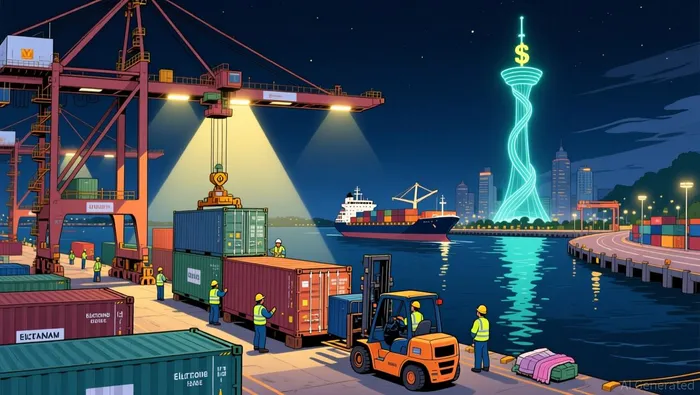
Vietnam's trade performance this year has been nothing short of explosive. In the first 11 months of 2025, , a 17.2% increase year-on-year. Based on current trends, , bringing it within striking distance of a $1 trillion threshold. That would place Vietnam among the top 15 global trade powers, up from a ranking of 21 in 2020.
High-tech sectors are leading the charge, with electronics, machinery, and textiles making up the bulk of export value. of total exports, a sign that Vietnam is moving up the value chain and becoming more integrated into global supply chains. This transition from low-cost manufacturing to higher value-added production is a major shift that could sustain Vietnam's trade growth well into the next decade.
Key economic indicators and policy reforms driving growth
Vietnam's growth isn't just being driven by exports. , leading analysts to revise upward their growth forecasts for 2025. This has been supported by a strong domestic sector and ongoing public investment. At the end of 2025, .
Meanwhile, the government is also making it easier for foreign investors to operate in the country. The newly passed Law on Investment, effective March 2026, streamlines procedures and reduces bureaucratic hurdles. Foreign investors can now establish companies before receiving an investment registration certificate, and the number of conditional business lines has been reduced. These changes are part of Vietnam's broader strategy to remain competitive in a world where manufacturing is increasingly shifting out of China.
Investor implications and risks to watch in 2026
While Vietnam's growth trajectory is impressive, investors need to balance optimism with caution. One major factor to watch is the Vietnamese dong (VND). Analysts project that the currency could depreciate . dollar, driven by continued foreign-currency demand and inflationary pressures. Though the U.S. Federal Reserve's recent 25-basis-point rate cut has eased short-term pressure, long-term fundamentals suggest some volatility.
Another risk factor is the geopolitical environment. In April 2025, Vietnam was targeted by new U.S. trade policies under , . While this could dampen trade volumes in some sectors, many analysts argue that Vietnam's diversification strategy—spreading its export markets across multiple countries—will help mitigate such risks.
Still, the opportunities remain compelling. Vietnam's State Securities Commission is also working to expand foreign investors' access to the stock market. At a recent forum, officials highlighted how Vietnam's stock market was upgraded to "secondary emerging" status by FTSE Russell in 2025. This is a major step toward international recognition and opens the door for more foreign capital inflows.
Looking ahead: Vietnam's potential in the global economy
Vietnam's story isn't just about trade—it's about reinvention. The country is moving from being a low-cost manufacturing hub to a more sophisticated economy with a growing middle class and increasing technological capabilities. This transition is not without its challenges, but the pace of reform and the country's strategic location in Southeast Asia make it an attractive market for long-term investors.
For now, the key is to monitor Vietnam's ability to maintain this momentum in 2026. If the government continues to streamline regulations, attract foreign investment, and develop high-tech industries, Vietnam could well become a new economic powerhouse. Investors who keep an eye on these developments—and are prepared for both the risks and rewards—could find themselves well-positioned for the next chapter in Vietnam's economic rise.

Delivering real-time insights and analysis on emerging financial trends and market movements.
Latest Articles
Stay ahead of the market.
Get curated U.S. market news, insights and key dates delivered to your inbox.


AInvest
PRO
AInvest
PRO



Comments
No comments yet