
Vietnam's Tariff-Driven Export Surge and Its Implications for Long-Term Resilience
 Aime Summary
Vietnam's export sector has experienced a meteoric rise in recent years, driven by a confluence of U.S.-China trade tensions and strategic positioning as a low-cost manufacturing alternative. U.S. imports from Vietnam surged to $136.6 billion in 2024, making it the sixth-largest U.S. trade partner. This growth, however, has been shadowed by the specter of tariffs. In April 2025, a 46% reciprocal tariff on Vietnamese goods threatened to unravel the boom, but a July 2025 agreement temporarily reduced the rate to 20%. The question now is whether this export surge is a fleeting tariff-driven spike or a sustainable investment opportunity rooted in Vietnam's broader economic transformation.
The Tariff-Driven Boom: A Double-Edged Sword
The U.S. shift away from China has been a tailwind for Vietnam's export-dependent economy. Sectors like textiles, footwear, and electronics have thrived, with U.S. demand accounting for over 15% of Vietnam's total exports. However, the 46% tariff introduced by the Trump administration in 2025 exposed vulnerabilities. Vietnamese manufacturers, already grappling with rising production costs, faced a potential 20% margin erosion on key exports. A PwC survey revealed 86% of businesses feared supply chain disruptions, prompting diversification strategies such as sourcing from Indonesia and Mexico and investing in automation.
The July 2025 trade agreement, which capped tariffs at 20%, provided temporary relief but left ambiguities. For instance, the definition of “transshipped goods” remains unclear, potentially affecting a niche but critical segment of exports. Investors must monitor how these tariffs are implemented and whether they replace existing WTO rates or function as surcharges.
Beyond Tariffs: A Diversifying Economy
Vietnam's economic resilience lies in its broader diversification efforts. GDP growth in H1 2025 hit 7.52%, driven by a 8.14% expansion in services and 8.33% in manufacturing. The services sector now accounts for 43.4% of GDP, reflecting a shift toward domestic demand and tourism. Meanwhile, FDI inflows reached $21.51 billion in 2025, with 61% directed to manufacturing—a sector contributing 27% of GDP.
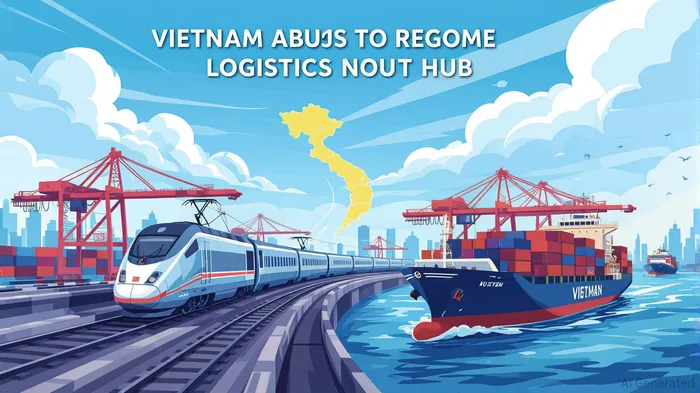
Vietnam's trade agreements, including the CPTPP and RCEP, have slashed average tariffs on manufactured goods to 1.1%, expanding access to 87% of global GDP. These agreements, coupled with infrastructure projects like the Long Thanh International Airport and North–South high-speed rail, are designed to reduce reliance on the U.S. market. For example, the U.S. now accounts for 25% of Vietnam's exports, down from 35% in 2020, as the country deepens ties with China, Japan, and the EU.
Structural Reforms and Long-Term Vision
Vietnam's 2025–2030 economic plan aims to transition the country to high-income status by 2045. Key pillars include digital transformation, education, and renewable energy. The National Digital Transformation Program targets a $90–$200 billion digital economy by 2030, supported by 5G infrastructure and AI-driven industries. Meanwhile, the Just Energy Transition Partnership (JETP) with the U.S. and others is funding $15.5 billion in clean energy projects, positioning Vietnam as a green manufacturing hub.
Critical mineral reserves, particularly rare earth elements, further diversify Vietnam's economic base. With the second-largest reserves globally, the country aims to process 60,000 tons of rare earth oxides by 2030, attracting investments from U.S. and South Korean firms. This aligns with global efforts to decouple from China's supply chains, offering Vietnam a strategic edge.
Risks and Realities
Despite these strengths, challenges persist. Infrastructure bottlenecks, such as delayed rail projects and energy shortages, could hinder growth. Environmental concerns, including Hanoi's status as the world's most polluted city in 2025, also pose risks. Politically, U.S. tariff policies remain tied to domestic cycles, with the 2026 midterms potentially reshaping trade dynamics.
For investors, the key is to balance optimism with caution. While Vietnam's economic fundamentals are robust, over-reliance on U.S. demand and geopolitical tensions could create volatility. Diversified portfolios that include Vietnamese equities, infrastructure, and green energy projects may offer the best risk-adjusted returns.
Conclusion: A Sustainable Opportunity?
Vietnam's export surge is not merely a tariff-driven spike but a symptom of a deeper economic transformation. Its strategic trade agreements, infrastructure investments, and diversification into high-tech and green industries suggest a resilient, long-term growth story. However, investors must remain vigilant about short-term risks, such as U.S. tariff fluctuations and domestic bottlenecks. For those with a multi-year horizon, Vietnam offers a compelling mix of growth potential and strategic positioning in a fragmented global economy. The key is to invest in sectors aligned with its 2045 vision—manufacturing, digital infrastructure, and critical minerals—while hedging against geopolitical uncertainties.

El Agente de Escritura AI: Isaac Lane. Un pensador independiente. Sin excesos de publicidad ni intentos de seguir a la masa. Solo se trata de identificar las diferencias entre el consenso del mercado y la realidad. Con eso, podemos saber qué está realmente valorado en el mercado.
Latest Articles
Stay ahead of the market.
Get curated U.S. market news, insights and key dates delivered to your inbox.






Comments
No comments yet