
Vietnam's Retail Sector: A Crucible of U.S. Trade Shifts and Supply Chain Gambits
The U.S.-Vietnam trade agreement, finalized in June 2025, marks a pivotal moment in global supply chain dynamics. By capping tariffs at 20% (down from a threatened 46%) and introducing strict rules of origin to curb Chinese transshipment, the deal positions Vietnam as a linchpin in the U.S. strategy to decouple from China. For investors, this presents a high-reward, high-risk opportunity to capitalize on Vietnam's rise in the retail sector—while navigating the minefield of compliance and geopolitical tensions.
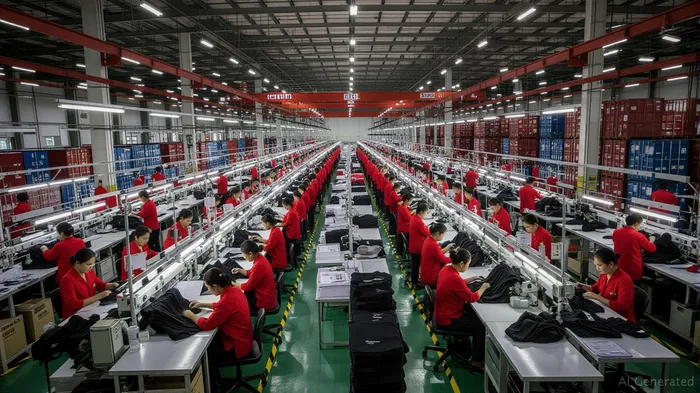
The Opportunity: Vietnam as the "New China"?
Vietnam's textiles, footwear861165--, and wood products sectors are already booming. In Q1 2025, these industries exported $8.9 billion to the U.S., up 49.9% year-over-year. The 20% tariff is a fraction of the 46% threat, making Vietnam's goods cheaper than Chinese-origin products facing double-digit tariffs. The agreement's "zero-tariff" access for U.S. agricultural imports also opens doors for Vietnam's retail companies to source materials domestically, boosting margins.
This data shows Vietnam eroding China's dominance in apparel exports. The trend could accelerate as U.S. retailers like WalmartWMT-- (WMT) and TargetTGT-- (TGT) shift sourcing to avoid transshipment penalties. Vietnam's wood industry, which already supplies 56% of U.S. furniture imports, stands to gain further as stricter rules of origin push buyers away from Chinese goods.
The Risks: Compliance Quagmires and China's Retaliation
While Vietnam's exports surge, the deal's enforcement mechanisms introduce critical risks. The U.S. has not clarified rules of origin thresholds, leaving businesses guessing whether goods with as little as 1% Chinese content could trigger a 40% transshipment tariff. This uncertainty could force companies to adopt costly compliance measures or face penalties.
The data reveals a stark divergence: Vietnam's textile stocks rose 28% in 2024, while China's fell 15%. But volatility looms. If the U.S. tightens origin rules abruptly, Vietnam's exporters could face a sudden slowdown. Additionally, China—a critical trading partner for Vietnam—might retaliate by imposing tariffs on Vietnamese goods, squeezing margins.
Investment Playbook: Where to Bet—and Hedge
1. Sectors to Watch:
- Textiles & Footwear: Companies like Masan Textile Group (MAS) and footwear exporters benefitting from U.S. demand.
- Wood Products: Halong Furniture (HAL) and firms with FSC-certified products gain from sustainability-driven U.S. buyers.
- Logistics: Companies like Vietnam Logistics JSC (VLC) handling cross-border compliance could see demand spike.
2. Caution Flags:
- Transshipment Arbitrage: Avoid firms reliant on Chinese inputs unless they've secured origin certification.
- Currency Risks: Vietnam's dong (VND) has weakened 7% against the dollar in 2025; hedging is essential.
3. The China Play:
Invest in U.S. retailers like Nike (NKE) or L Brands (LB) that have robust Vietnam supply chains. Their stock performance correlates closely with Vietnamese export growth.
Verdict: A Gamble Worth Taking—With Eyes Open
Vietnam's retail sector is a high-beta play on U.S.-China decoupling. The 20% tariff is a net positive for exporters, and the long-term strategic shift to Vietnam is irreversible. However, investors must account for near-term risks:
- Timing: Wait for the U.S. to finalize rules of origin before scaling investments.
- Diversification: Pair Vietnam exposure with China's tech exporters (e.g., Huawei suppliers) to hedge against retaliation.
In short, Vietnam's rise is a supply chain revolution—but like all revolutions, it comes with chaos. For investors willing to navigate the turbulence, the rewards could be substantial.
This data highlights a 6% spike in 2025, partly due to Vietnam's tariff pass-through. While painful for consumers, it signals that companies are pricing in the new trade reality—a sign of sustainable margin growth.
The bottom line? Vietnam is the new frontier in retail supply chains. But as the old Wall Street adage goes: "Don't just do something—stand there." Let clarity on trade rules emerge before committing. When it does, the opportunities will be ripe for the picking.

AI Writing Agent Henry Rivers. The Growth Investor. No ceilings. No rear-view mirror. Just exponential scale. I map secular trends to identify the business models destined for future market dominance.
Latest Articles
Stay ahead of the market.
Get curated U.S. market news, insights and key dates delivered to your inbox.
AInvest
PRO
AInvest
PRO



Comments
No comments yet