
Vietnam Launches State-Managed NDAChain to Modernize Digital Identity and Governance
 Aime Summary
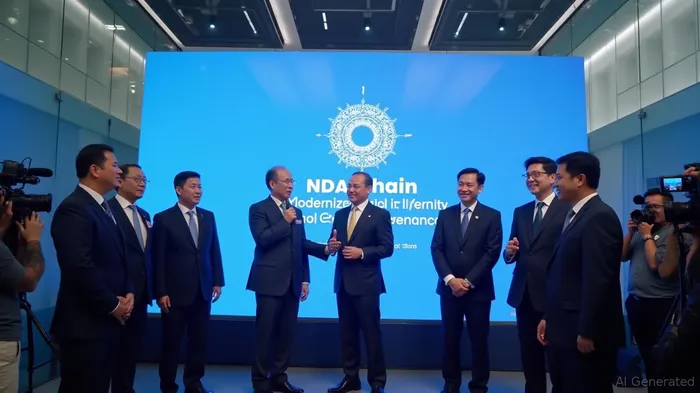
Vietnam has launched NDAChain, a state-managed blockchain platform designed to revolutionize digital identity verification and record-keeping across industries. Announced on July 25, 2025, the initiative marks a significant shift in the country’s approach to digital infrastructure, aiming to address vulnerabilities in centralized systems while fostering transparency and efficiency. Developed by the National Data Association (NDA) and operated by the Ministry of Public Security’s Data Innovation and Exploitation Center, NDAChain employs a hybrid architecture that combines centralized and decentralized elements to secure data across sectors including e-government, finance, healthcare, and education [1].
The platform operates as a layer-1 permissioned blockchain, featuring 49 public-private validator nodes managed by state agencies and private entities such as SunGroup, Zalo, and Sovico. These nodes maintain a distributed ledger for transaction records, smart contracts, and identity verification modules integrated with Vietnam’s national identity systems. Nguyen Huy, NDA’s technology head, emphasized the network’s role as a “protective layer for the nation’s live data” and a “decentralized layer of trust,” though he clarified that the system is not fully decentralized [1]. The platform uses Proof-of-Authority (PoA) consensus enhanced with zero-knowledge proofs to balance security and efficiency, ensuring compliance with regulatory frameworks while enabling scalable operations [1].
A key component of NDAChain is NDA DID, a decentralized identity solution designed to verify counterparty identities in real-time and facilitate secure digital contracts. The government introduced the NDAKey application to enable users to authenticate identities in seconds, aiming to combat scams and identity theft. This initiative aligns with Vietnam’s broader strategy to modernize its digital governance, addressing challenges such as cyberattack risks, scalability limitations, and fragmented data systems [1].
The rollout of NDAChain reflects Vietnam’s ambition to strengthen its position as a regional leader in digital asset adoption. Analysts note that the country has already ranked among the global top five in cryptocurrency usage, driven by high internet penetration and a young, tech-savvy population. By formalizing its digital infrastructure through NDAChain, Vietnam seeks to attract foreign tech firms and streamline cross-border transactions, particularly for exporters [1]. However, challenges remain, including technical integration with legacy systems and building public trust in blockchain-based governance.
Collaboration between state and private stakeholders will be critical to the platform’s success. Private companies will play a role in securing the network and managing nodes, while the government oversees operational readiness, targeting full deployment by 2026 [2]. The initiative also highlights Vietnam’s strategic pivot toward structured digital innovation, contrasting with more fragmented approaches in other Southeast Asian nations. For instance, while Singapore focuses on AI-driven digital resilience, Vietnam’s hybrid model offers a potential template for scalable blockchain solutions [4].
Despite these advancements, regulatory gaps persist. While NDAChain formalizes state-backed blockchain applications, private crypto projects still lack comprehensive legal frameworks. This underscores the need for balanced policies that foster innovation without stifling growth [3].
Vietnam’s digital transformation through NDAChain represents a pivotal step in its quest to modernize governance and infrastructure. By leveraging blockchain’s immutability and security, the country aims to reduce administrative burdens, prevent fraud, and accelerate its digital economy. As Southeast Asia embraces decentralized technologies, Vietnam’s structured approach could set a precedent for regional adoption, provided challenges like public education and stakeholder engagement are effectively addressed.
Source:
[1] [title1Vietnam deploys national blockchain for identity and records] [url1https://cointelegraph.com/news/vietnam-ndachain-national-blockchain-launch-2025]
[2] [title2Nadcab Labs' Insights on Blockchain Development] [url2https://themalaysianreserve.com/2025/07/25/nadcab-labs-insights-on-blockchain-development-services-adoption-for-transparency-trust/]
[3] [title3Advancing Toward a Mainstream Digital Asset Economy] [url3https://opengovasia.com/vietnam-advancing-toward-a-mainstream-digital-asset-economy/]
[4] [title4Singapore: Embracing AI to Build a Resilient and Inclusive Future] [url4https://opengovasia.com/singapore-embracing-ai-to-build-a-resilient-and-inclusive-future/]

Stay ahead of the market.
Get curated U.S. market news, insights and key dates delivered to your inbox.


AInvest
PRO
AInvest
PRO



Comments
No comments yet