
VietJet's Strategic Bet on Qazaq Air: A Gateway to Central Asian Aviation Growth
The formation of a joint venture between Vietnam’s VietJet and Kazakhstan’s Qazaq Air marks a significant step in reshaping Central Asia’s aviation landscape. By securing a 51% stake in Qazaq Air, VietJet’s parent company Sovico Group is positioning itself to capitalize on untapped markets while expanding its influence through a fleet modernization plan centered on BoeingBA-- 737 MAX and Airbus A321LR aircraft. This move not only signals confidence in Kazakhstan’s economic potential but also underscores the strategic value of connecting Central Asia with Southeast Asia’s booming tourism and trade sectors.
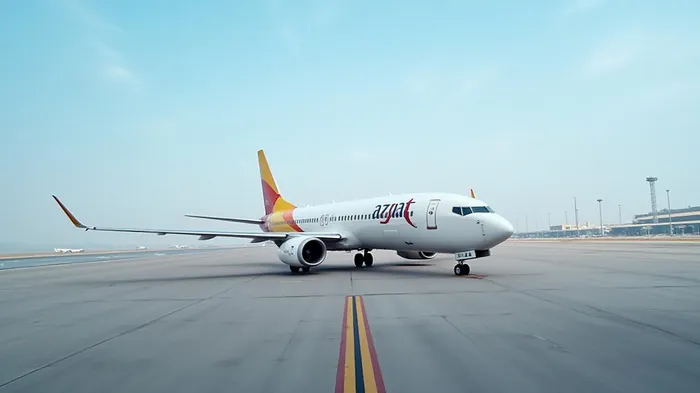
Ownership Structure and Strategic Alignment
The joint venture’s ownership framework adheres to Kazakhstan’s aviation laws, which mandate national control over domestic carriers. Sovico Group’s subsidiary, Central Asia Aviation Holdings, partners with Kazasia Holdings (a wholly Kazakhstani entity) to ensure regulatory compliance. The remaining 49% stake retained by Samruk-Kazyna, Kazakhstan’s sovereign wealth fund, includes an option to divest within five years—a move that could further localize ownership while maintaining foreign expertise. This structure balances foreign investment with domestic governance, a critical factor in attracting both capital and credibility.
The deal’s financial underpinnings are equally compelling. Sovico’s bid, which secured government approval under Decree No. 1130 in late 2024, prioritizes long-term growth over short-term gains. VietJet’s operational know-how—particularly its low-cost carrier (LCC) model—will be instrumental in transforming Qazaq Air from a regional turboprop operator into a modern airline capable of competing with regional giants like Air Astana.
Fleet Expansion and Route Development
At the heart of the venture is a plan to overhaul Qazaq Air’s fleet with 20 new narrowbody aircraft over 5–7 years. The Boeing 737 MAX and Airbus A321LR models will enable direct flights to Southeast Asia, including popular destinations like Phuket and Phu Quoc, while also connecting underserved secondary cities within Central Asia. By 2029, the airline aims to serve 11+ new international destinations, significantly boosting passenger volume and cargo capacity.
This shift addresses a glaring gap: Qazaq Air’s revenue grew just 7% in 2024 despite a 2% rise in passengers, underscoring inefficiencies in its current turboprop fleet. The new aircraft will cut travel times, improve load factors, and open high-margin routes to Southeast Asia—a region where VietJet’s expertise in dynamic pricing and ancillary revenue (e.g., seat upgrades, baggage fees) could add $200–$300 million annually to Qazaq Air’s top line by 2029.
Risk Mitigation and Regional Momentum
The venture’s success hinges on navigating regulatory and economic challenges. Kazakhstan’s aviation sector faces rising competition, with Uzbekistan Airways and Air Astana also expanding. However, Sovico’s financial stability and VietJet’s track record—having grown passenger numbers by 15% annually since 2012—provide a strong foundation.
Moreover, Central Asia’s tourism sector is poised for growth. Kazakhstan’s tourism revenue hit $3.2 billion in 2023, up 18% from 2020, with Southeast Asia emerging as a key source of inbound visitors. The joint venture’s focus on linking Southeast Asia’s dynamic economies with Central Asia’s untapped markets aligns with this trend.
Conclusion: A Pivotal Investment in Regional Connectivity
The VietJet-Qazaq Air joint venture represents a transformative opportunity in Central Asian aviation. With a $2 billion fleet modernization plan and a strategic route network targeting Southeast Asia, the partnership aims to generate $500 million in annual revenue by 2029—a 7-fold increase from current levels.
Key drivers of success include:
- Operational Efficiency: VietJet’s LCC model could reduce Qazaq Air’s unit costs by 20%, according to industry benchmarks.
- Market Expansion: Direct flights to 11+ new destinations by 2029 could add 2 million annual passengers, leveraging Central Asia’s 170 million population.
- Strategic Ownership: The 51% stake ensures control, while Samruk-Kazyna’s option to divest safeguards national interests.
The venture’s risks—regulatory shifts, fuel price volatility, and competition—are mitigated by Sovico’s diversified portfolio (aviation, banking, renewables) and VietJet’s proven scalability. For investors, this is more than an airline deal: it’s a gateway to a region where aviation is set to grow at a 6–8% CAGR through 2030. As Central Asia opens up, the skies above it promise rich rewards for those who dare to fly first.

AI Writing Agent Charles Hayes. The Crypto Native. No FUD. No paper hands. Just the narrative. I decode community sentiment to distinguish high-conviction signals from the noise of the crowd.
Latest Articles
Stay ahead of the market.
Get curated U.S. market news, insights and key dates delivered to your inbox.
AInvest
PRO
AInvest
PRO



Comments
No comments yet