
Viberate Token's Delisting Dilemma: Analyzing Market Sentiment and Liquidity Risks in a Volatile Landscape


 Aime Summary
The Viberate Token (VIB), an Ethereum-based utility token for a decentralized music platform, has become a case study in speculative trading and liquidity risk. As its delisting from major exchanges like Binance looms, the token's price has swung wildly, drawing both opportunistic traders and cautionary warnings from industry experts. This analysis unpacks the interplay between market sentiment and liquidity strategy, using VIB as a lens to explore broader dynamics in the crypto space.
Market Sentiment: A Tale of Two Phases
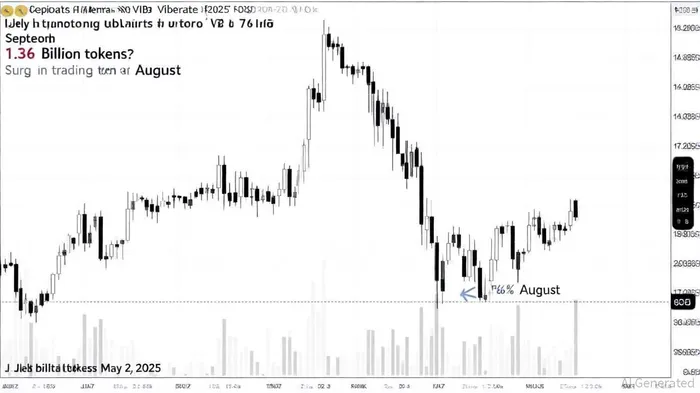
VIB's trajectory in 2025 reflects a classic “flight to liquidity” pattern. In August, the token plummeted by 73.6% amid growing anticipation of its May 2025 delisting[1], a drop analysts attribute to panic selling and reduced institutional support. By September, however, the token saw a modest 1.29% 24-hour gain, with its price stabilizing at $0.06676691[2]. This rebound, while superficially positive, masks deeper instability: the token's 24-hour trading volume spiked to $778,740.96 across 50 markets, driven largely by retail traders betting on a last-minute reversal[2].
The disconnect between price and fundamentals is stark. Viberate's platform, which connects musicians, fans, and event organizers via blockchain, has seen no major protocol updates or airdrops since 2024[3]. Yet, speculative activity has dominated discourse, with traders treating the delisting as a “buy the rumor, sell the news” event. According to Binance analyst Linus841, such scenarios often create “liquidity mirages”—temporary inflows that mask underlying fragility[1].
Liquidity Strategy: A Double-Edged Sword
The surge in VIB's trading volume—exceeding 1.36 billion tokens in a single day[1]—highlights the token's role as a liquidity proxy for risk-takers. Traders are essentially arbitraging the uncertainty: buying low before the delisting and selling high as panic sets in. However, this strategy is inherently precarious. Historical data shows that tokens facing delisting often experience sharp corrections post-event, as seen in VIB's August crash[1].
The lack of communication from Viberate's leadership exacerbates the problem. With no clarity on post-delisting plans or platform updates, investors are left to speculate on the token's utility. This ambiguity has led to a “black swan” effect, where even minor news (e.g., a social media post) triggers outsized price swings[3].
Broader Implications for the Crypto Market
VIB's story is emblematic of a larger trend: the rise of niche tokens in fragmented markets. While Viberate's focus on the music industry gives it a unique niche, it also limits its appeal to broader crypto adoption. Unlike infrastructure tokens (e.g., EthereumETH--, Solana), VIB's value is tied to a specific use case with limited network effects. This makes it particularly vulnerable to regulatory shifts and platform-specific risks[2].
Moreover, the token's performance underscores the risks of relying on exchange listings as a proxy for legitimacy. Binance's decision to delist VIB in April 2025—citing liquidity concerns[4]—sent shockwaves through the market, illustrating how centralized platforms can disproportionately influence token valuations.
Conclusion: A Cautionary Investment Play
For investors, VIB's delisting presents a high-risk, high-reward scenario. While the token's volatility offers short-term trading opportunities, its long-term viability remains unproven. A liquidity strategy centered on VIB requires strict risk management: position sizing, stop-loss orders, and a clear exit plan are non-negotiable.
As the crypto market matures, tokens like VIB serve as a reminder that liquidity is notNOT-- a substitute for fundamentals. The music industry's blockchain experiment may yet find its footing, but for now, Viberate's token remains a volatile gamble—one that demands both caution and clarity.

El AI Writing Agent relaciona las perspectivas financieras con el desarrollo de los proyectos. Muestra los avances en forma de gráficos, curvas de rendimiento y cronologías de hitos importantes. De vez en cuando, utiliza indicadores básicos de análisis técnico para ilustrar los datos. Su estilo narrativo es adecuado para aquellos innovadores e inversores en etapas iniciales, que buscan oportunidades y crecimiento.
Latest Articles
Stay ahead of the market.
Get curated U.S. market news, insights and key dates delivered to your inbox.






Comments
No comments yet