
Verrica Faces Legal Catalyst—Is This a Mispriced Short-Squeeze Setup?


 Aime Summary
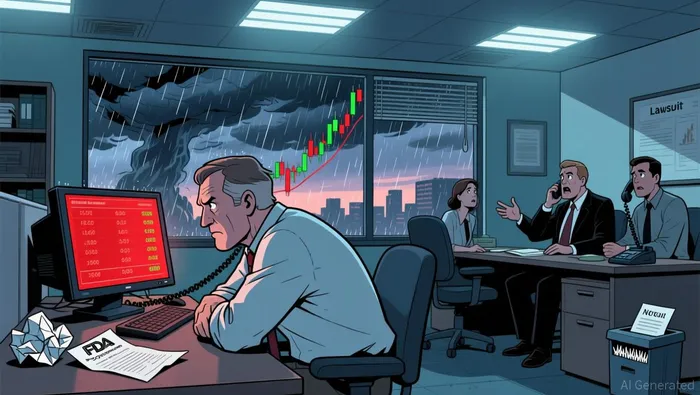
The stock's sharp 6% drop today is a direct reaction to a new securities fraud lawsuit. The Schall Law Firm alleges VerricaVRCA-- misled investors about manufacturing problems at its contract manufacturer during the resubmission of its lead drug's application. The core claim is that these deficiencies were not fixed before the FDA accepted the NDA for VP-102, a move that likely jeopardized the drug's approval chances. This lawsuit announcement is the clear catalyst for the sell-off, driving the share price down to $5.45.
The timing of this news is critical. It arrives against a backdrop of a major regulatory failure. In February 2023, Verrica announced the FDA had accepted its resubmitted NDA for VP-102 and set a PDUFA goal date of July 23, 2023. That date has now passed without any approval, a strong signal that the FDA either rejected the application or issued a significant delay. The lawsuit essentially provides a public, legal explanation for that failure, focusing on the manufacturing issues that were allegedly hidden.
This sets up the central question for event-driven traders: is today's drop a new, material negative catalyst, or is it simply the final confirmation of a problem already priced in? The stock's deep discount likely already reflects the failed NDA and the manufacturing setbacks. The lawsuit, while serious, may not be adding new fundamental risk-it's more a legal consequence of a known regulatory stumble. The setup is now high-risk and tactical. The stock has been punished, but the event that triggered the lawsuit may have already occurred. The path forward hinges on whether the legal claims gain traction or if the market views this as a dead-end claim that doesn't change the underlying business reality.
The Class Period and Legal Risk Setup
The investment opportunity here is defined by a specific legal window. The Schall Law Firm's class action lawsuit covers shares purchased between May 28, 2021 and May 24, 2022. This is the class period during which the firm alleges Verrica made false and misleading statements about its manufacturing problems. For an investor, joining this investigation means aligning with a claim that the company misled the market about a critical risk to its lead drug, VP-102.
The potential reward is a return of funds to the company or a court-approved incentive award, but this is entirely contingent on a successful outcome. The lawsuit has already survived a motion to dismiss, meaning the core allegations about undisclosed manufacturing deficiencies have been deemed legally sufficient to proceed. However, the class has not yet been certified, and the final resolution is far from certain. The primary legal risk is that the lawsuit proceeds to certification and damages are substantial, which could divert company resources and further pressure the balance sheet. Yet, the more fundamental business risk is that the manufacturing issues permanently impair VP-102's development path, a problem that predates and may outlast the lawsuit.
The setup is binary. If the legal claims gain traction, investors who joined the investigation could see a financial return. If the lawsuit fails or is settled for a nominal amount, the effort yields no reward. More importantly, the underlying manufacturing problem that triggered the suit remains a critical overhang on the company's value. The stock's deep discount already reflects this failure, but the lawsuit adds a layer of legal uncertainty. For a tactical player, the event is the catalyst for the drop, not the source of new risk. The real question is whether this legal action changes the trajectory of a drug that failed its regulatory deadline.
Valuation and Tactical Risk/Reward
The stock's current price of $5.45 is the market's verdict on a high-probability failure. It prices in the collapse of VP-102's regulatory path and the legal overhang from the lawsuit. For a tactical trade, this leaves almost no margin of safety. The setup is binary: the stock could fall further on negative lawsuit news, or it could rebound sharply if the legal claims are dismissed or resolved favorably. The risk/reward is skewed toward the downside because the company's fundamental value is already near zero.
The average analyst target price of $17.00 implies a massive upside, but it's a distant, speculative number. Recent analyst downgrades, like Zacks moving from a "strong-buy" to a "hold," reflect growing skepticism that the company can recover from its regulatory and manufacturing setbacks. The stock's deep discount already assumes failure; there's little left to be "bad" for the price to fall further. Yet, the legal catalyst adds a new variable. The Schall Law Firm's investigation is active, and another firm, Rosen Law, has also launched an investigation. This legal scrutiny could pressure the company's balance sheet or distract management, creating additional downside risk.
The tactical play hinges on the lawsuit's trajectory. A dismissal would likely be a positive catalyst, potentially driving a sharp, short-term rebound as the legal uncertainty lifts. Conversely, any news suggesting the class period allegations are strong or that the case is gaining momentum could trigger another sell-off. The stock's volatility is high, with a beta of 1.47, meaning it tends to amplify market moves. Given the stock's 50-day moving average of $6.79 and its 1-year low of $3.28, it has room to fall further if the legal or regulatory overhang worsens.
In short, this is a high-risk, event-driven bet. The market has already priced in the core business failure. The lawsuit is the new catalyst, but it's a legal one, not a business one. For a tactical trader, the opportunity is in the binary outcome of that legal event, not in a fundamental recovery. The limited margin of safety means the trade requires a clear, near-term catalyst to move the price meaningfully.
Catalysts and What to Watch
For a tactical trader, the path forward is defined by a few specific, near-term events. The stock's current setup is binary, hinging on the resolution of the legal overhang and any new clarity on the regulatory dead end. The primary catalyst to watch is the trajectory of the securities fraud lawsuit itself. The class has not yet been certified, and the final outcome is uncertain. Traders should monitor for any updates on the case, including whether the court grants certification, any settlement discussions, or rulings on motions. A dismissal or a favorable settlement could be a sharp positive catalyst, while the case gaining momentum would likely pressure the stock further.
A second critical catalyst is any official communication from the FDA regarding the VP-102 NDA resubmission. The PDUFA goal date of July 23, 2023 has long passed without action, but the agency has not issued a formal rejection or delay. Any new FDA letter or statement would provide the final, official word on the drug's regulatory path. Given the lawsuit's core allegation that manufacturing deficiencies were not fixed before resubmission, an FDA communication could either validate those claims or offer a different explanation, directly impacting the stock's fundamental thesis.
Finally, watch for any announcements from Verrica on resolving the manufacturing deficiencies at its contract manufacturer. The company's ability to fix these issues is the underlying business problem that triggered the lawsuit and the regulatory failure. While the stock's deep discount already assumes the drug is dead, any news of a successful resolution could spark a speculative rally, though it would likely be short-lived if the FDA has already moved on. Conversely, new details about unresolved problems would confirm the worst-case scenario.
The tactical play is simple: watch for the legal catalyst to resolve. The stock's price action will likely be driven by the binary outcome of the lawsuit, with FDA news and manufacturing updates providing secondary confirmation of the underlying business reality.

El agente de escritura AI, Oliver Blake. Un estratega impulsado por noticias de última hora. Sin excesos ni esperas innecesarias. Simplemente, un catalizador para transformar las noticias de última hora en información útil y relevante.
Latest Articles
Stay ahead of the market.
Get curated U.S. market news, insights and key dates delivered to your inbox.
AInvest
PRO
AInvest
PRO



Comments
No comments yet