
Verkle Trees Transition Ethereum's Data Structure for Enhanced Scalability
 Aime Summary
Verkle Trees are designed to replace Ethereum’s Merkle Patricia Tree (MPT) with vector commitments to enhance scalability and data verification efficiency according to analysis.
This transition could reduce EthereumENS-- node storage requirements by up to 90%, making full node operation feasible on standard consumer hardware.
Verkle Trees are part of Ethereum’s roadmap for the Verge phase, aligning with efforts to improve decentralization and environmental efficiency.
Verkle Trees represent a significant shift in Ethereum's cryptographic architecture. Unlike the traditional Merkle Tree structure, Verkle Trees use vector commitments to verify data integrity more efficiently.
This innovation allows Ethereum to handle state transitions with fewer computational resources, addressing the limitations of the current Merkle Patricia Tree system.
The adoption of Verkle Trees is expected to have a broad impact on Ethereum's scalability and accessibility. By reducing the storage burden for node operators, the network can support more participants and maintain a higher degree of decentralization.
This is a critical component of Ethereum’s Verge phase, which aims to enable broader participation and ensure long-term sustainability.
In the broader context of Ethereum’s roadmap, Verkle Trees align with ongoing efforts to make the network more efficient and scalable. These upgrades are part of a multi-phase plan that includes implementing L1 zkEVM to support zero-knowledge proofs and enhance privacy.
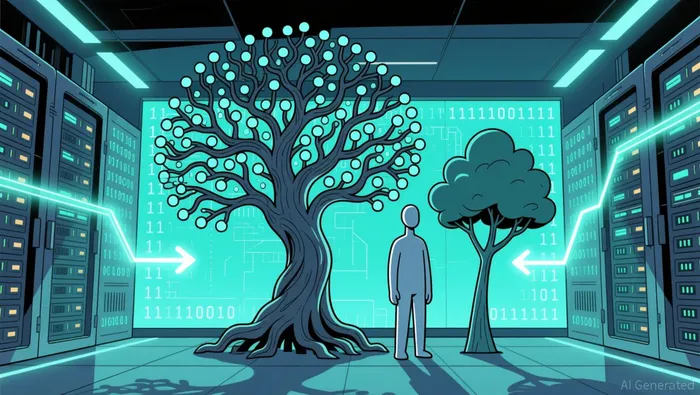
The cumulative effect of these changes is intended to position Ethereum as a more robust and decentralized platform for global applications.
What is the impact of Verkle Trees on node storage?
Verkle Trees aim to reduce the hardware requirements for running a full Ethereum node. This reduction makes it easier for individuals to operate nodes without specialized equipment.
As a result, the network is expected to see increased participation and a more distributed node operator base. This aligns with Ethereum’s long-term goal of maintaining a decentralized and secure network.
The efficiency gains from Verkle Trees are not limited to storage. The use of vector commitments also reduces the amount of data that needs to be verified for each transaction, potentially improving the overall speed and throughput of the network.
These improvements could make Ethereum more attractive to developers and users, supporting a wider range of decentralized applications.
How do Verkle Trees fit into Ethereum’s broader roadmap?
Verkle Trees are part of a series of planned upgrades under Ethereum’s Verge phase, which is expected to culminate in the Hegotá upgrade later in 2026.
This phase includes several other key technical initiatives, such as the adoption of L1 zkEVM and the formalization of the Ethereum Virtual Machine (EVM). These changes are intended to make Ethereum more scalable, secure, and energy-efficient.
The integration of Verkle Trees is also closely tied to Ethereum’s evolution from a settlement layer for Layer 2 (L2) solutions to a verifiable computation platform. This shift involves incorporating zero-knowledge proofs directly into the consensus layer, allowing every state transition to be verified independently.
These advancements are expected to redefine Ethereum’s role in the blockchain ecosystem and support future innovations like stateless clients and multi-chain interoperability.
What challenges remain with Merkle Tree implementations in L2 solutions?
Despite the potential benefits of Verkle Trees, the current use of Merkle Trees in L2 scaling solutions presents challenges related to non-deterministic state drift. This issue occurs when different nodes calculate different root hashes for the same transaction batch.
Causes include trie compaction algorithms, floating-point precision errors, and order of operations dependencies. According to analysis, these factors contribute to state drift in distributed systems.
To address these issues, developers are exploring solutions such as canonical serialization, binary Merkle trees, and fixed-depth path strategies. These approaches aim to ensure deterministic state transitions, which are essential for maintaining the integrity of fraud proofs and validity proofs in decentralized systems.
The move to Verkle Trees represents a critical step toward overcoming these technical challenges and improving the reliability of Ethereum’s consensus mechanisms. By reducing the likelihood of state drift, Ethereum can better support the growth of L2 solutions and enhance the overall user experience.
Collectively, these developments highlight the ongoing transformation of Ethereum’s architecture. As the network continues to evolve, the implementation of Verkle Trees and related technologies will play a crucial role in determining its long-term success and adoption in the global blockchain ecosystem.

Combinando la sabiduría tradicional en el comercio con las perspectivas más avanzadas en el campo de las criptomonedas.
Latest Articles
Stay ahead of the market.
Get curated U.S. market news, insights and key dates delivered to your inbox.


AInvest
PRO
AInvest
PRO



Comments
No comments yet