
Verkle Trees Set to Boost Ethereum Scalability in 2026 Upgrades
 Aime Summary
- Verkle Trees reduce EthereumETH-- node data requirements by up to 90% through compact cryptographic proofs according to Coinpedia.
- Implementation is expected in Ethereum's Hegota upgrade targeting late 2026.
- The technology could expand node participation and strengthen network decentralization as per reports.
- Previous Fusaka upgrade demonstrated 85% bandwidth reduction with Verkle Trees according to analysis.
Ethereum's Verkle Trees represent a critical scalability upgrade poised to reshape node operations. This cryptographic innovation could lower entry barriers for network participants. The 2026 roadmap strategically positions this technology within scheduled protocol enhancements. Decentralization and efficiency gains anchor the core value proposition.
What Are Verkle Trees and How Do They Improve Ethereum?
Verkle Trees replace Ethereum's existing trie structures with more efficient data commitments. They generate smaller cryptographic proofs for account and state verification. This slashes storage needs and accelerates data processing for node operators. Reduced hardware requirements could broaden participation beyond institutional validators. Network resilience increases through wider node distribution.
Bandwidth demands may drop significantly according to prior implementations. The Fusaka upgrade demonstrated 85% lower data requirements using Verkle Trees. Such efficiency supports higher transaction throughput across layer-2 networks. 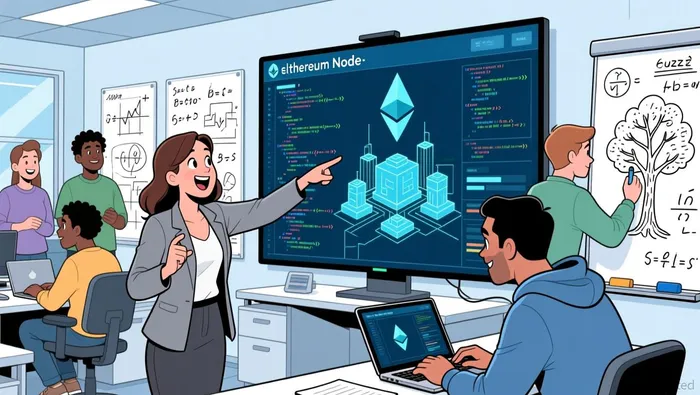 More compact proofs also enable stateless clients for lightweight devices. These advances address Ethereum's historical scaling challenges.
When Will Verkle Trees Launch on Ethereum Mainnet?
Verkle Trees are slated for Hegota, Ethereum's second major 2026 upgrade. This follows the Glamsterdam fork planned for early-to-mid 2026. The accelerated roadmap reflects developer efforts to match network growth. Hegota specifically targets complex features deferred from earlier cycles. Development timelines remain contingent on rigorous testing protocols.
Glamsterdam will first establish foundational enhancements like enshrined PBS. Scope finalization is expected by January 2026 before Hegota features formalize. Verkle Tree implementation requires extensive testnet validation before activation. The staged approach mitigates technical risks from major protocol changes. Node operators should monitor client releases for compatibility requirements.
How Could Verkle Trees Impact Ethereum's Market Position?
Lower operational costs may attract new institutional validators. Reduced infrastructure demands align with corporate treasury management needs. Enhanced scalability could further solidify Ethereum's layer-2 dominance. Transaction throughput via rollups might exceed 100,000 TPS post-implementation. These improvements support Ethereum's institutional adoption narrative.
Network upgrades could influence ETH's value proposition long-term. Deflationary mechanics and staking yields already drive institutional allocations. Verkle Trees complement these fundamentals by improving network efficiency. Market participants note potential ETH price catalysts from successful implementations. Still, technical execution risks warrant monitoring through 2026 test phases.

Blending traditional trading wisdom with cutting-edge cryptocurrency insights.
Latest Articles
Stay ahead of the market.
Get curated U.S. market news, insights and key dates delivered to your inbox.






Comments
No comments yet