
Verkle Trees Enable Ethereum Statelessness And Reduce Node Storage 90 Percent
 Aime Summary
- Ethereum’s upcoming Hegotá hard fork will replace the Merkle Patricia Trie with Verkle trees to enable stateless validation and reduce node storage by 90 percent .
- This architectural shift drastically reduces cryptographic witness sizes from megabytes to kilobytes, allowing low-power hardware to verify blocks efficiently .
- JPMorgan analysts report that recent upgrades have not generated sustained increases in on-chain activity, with daily transactions remaining flat .
- Capital fragmentation and competition from faster blockchains like SolanaSOL-- present significant headwinds for Ethereum’s growth trajectory .
Ethereum is preparing for the Hegotá hard fork in late 2026, which will replace the Merkle Patricia Trie with Verkle trees . This architectural change reduces cryptographic witness sizes from megabytes to kilobytes . The shift enables stateless validation on low-power hardware like Raspberry Pis . By allowing validators to verify blocks without storing the full state database, the upgrade aims to preserve decentralization .
The reduction in storage requirements lowers barriers to entry for home stakers . This helps prevent centralization pressures as the network grows . Stateless validation allows nodes to verify blocks using compact cryptographic proofs . These proofs are typically 1-2KB in size .
This approach contrasts with the legacy hexary Patricia tree, where witnesses can average 3 kB per account . Worst-case scenarios for the Patricia tree reach approximately 18 MB per block . Such large witnesses are too big for safe p2p broadcasting within a 12-second slot . Verkle trees reduce witness sizes to approximately 200 bytes per account .
EIP-6800 proposes introducing a new Verkle state tree alongside the existing hexary Patricia tree . After the hard fork, the Verkle tree stores all edits to state and a copy of all accessed state . The hexary Patricia tree becomes frozen during this transition . This is a first step in a multi-phase transition to EthereumETH-- exclusively relying on Verkle trees .
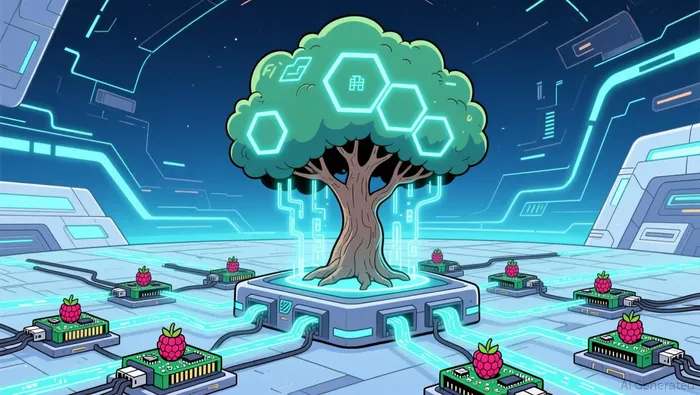
The specification defines a single-layer tree structure with 32-byte keys and values . This design embeds all state information into a unified key-value tree . It offers simplicity, uniformity, and extensibility for future protocol developments .
The transition to Verkle trees is part of Ethereum’s broader 2026 strategy centered on modularity . The base layer remains secure and decentralized while offloading transaction execution to Layer-2 rollups . This allows L2s to offer lower, more predictable fees and higher throughput .
Ethereum serves as the ultimate settlement and security anchor for these Layer-2 networks . Additional improvements include Account Abstraction to enhance user experience . This includes features like social recovery and batched transactions .
Despite these technical advancements, JPMorgan analysts report that recent upgrades have not generated sustained increases in on-chain activity . Daily transactions and active addresses remain flat . Total value locked is weakening as liquidity shifts to L2s and application-specific chains .
Capital fragmentation and competition from faster, cheaper blockchains like Solana present significant headwinds . Market sentiment has deteriorated, with altcoins hitting multiyear lows . Liquidity flows into AI narratives instead of traditional crypto assets .
However, institutional interest persists in the ecosystem . JPMorgan notes a sharp increase in long positions via CME ETH futures . Treasury firms like BitMine Immersion Technologies continue accumulating ETH . They cite demand for decentralized infrastructure driven by AI .
While ETH trades near $1,652, down significantly from all-time highs, co-founder Vitalik Buterin’s continued heavy investment in ETH underscores long-term conviction . This investment highlights the network’s focus on decentralized ownership .
The successful deployment of the previous Fusaka update on December 3, 2025, sets the stage for this continued progression . The network continues its biannual upgrade cycle to ensure gradual, predictable changes .
How Do Verkle Trees Improve Node Efficiency?
Verkle trees address the increasing network bloat problem for node operators . They optimize state storage and history expiration mechanisms . This upgrade aims to solve storage issues that hinder full node operation .
The reduced witness size makes stateless client witnesses acceptably small . This enables efficient proof verification for validators . It also supports executionless state reconstruction for light clients .
What Are the Market Implications of These Upgrades?
JPMorgan analysts highlight stagnant on-chain activity despite technical upgrades . This suggests that technical improvements alone may not drive immediate market growth . Investors are watching for sustained increases in transaction volume and active addresses .
The shift to Layer-2 modularity may further fragment liquidity . However, it also positions Ethereum as a foundational settlement layer . This supports long-term sustainability and security for decentralized applications .
Institutional interest via ETFs and CME futures indicates continued confidence in the asset . Analysts note that organic on-chain activity remains subdued due to competition . The focus remains on long-term infrastructure development rather than short-term price action .

Blending traditional trading wisdom with cutting-edge cryptocurrency insights.
Latest Articles
Stay ahead of the market.
Get curated U.S. market news, insights and key dates delivered to your inbox.


AInvest
PRO
AInvest
PRO




Comments
No comments yet