
Verkle Trees Advance: Ethereum's Verifiable Computation Transition Gains Momentum
 Aime Summary
Ethereum is undergoing a structural shift from a settlement layer for L2s to a verifiable root of trust for computation by implementing L1 zkEVM.
The implementation of L1 zkEVM integrates zero-knowledge proofs into the consensus layer, enabling faster finality, higher throughput (up to 10,000 TPS), and native privacy.
The roadmap includes eight workstreams, such as EVM formalization, hash function replacement, and Verkle Tree adoption, to mathematically verify state transitions via ZK proofs.
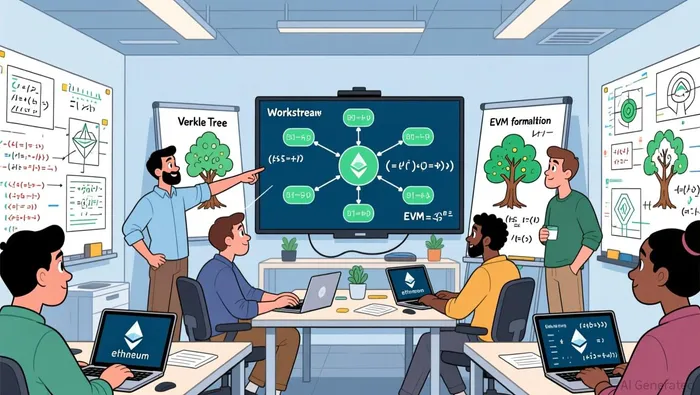
Ethereum's development strategy is evolving to integrate verifiable computation into its core architecture. This shift moves beyond Ethereum's previous role as a settlement layer for L2s and aims to position it as a verifiable root of trust for decentralized computation. The integration of L1 zkEVM represents a major step in this direction, leveraging zero-knowledge proofs to verify on-chain operations with mathematical certainty. This transition is not a standalone feature but part of a broader strategic shift in Ethereum's roadmap.
The move to L1 zkEVM is being driven by the need for higher throughput, privacy, and trust. By embedding ZK proofs directly into the consensus layer, EthereumENS-- aims to reduce reliance on external systems for verification and enable faster, more secure on-chain transactions. The eight interdependent workstreams include formalizing the EVM, replacing hash functions, and adopting Verkle Trees, each of which contributes to the foundational infrastructure for verifiable computation. These changes will allow Ethereum to scale while maintaining its role as a secure and trusted decentralized platform.
The integration of ZK proofs into Ethereum's consensus layer is a complex process that requires compatibility with existing developer toolchains and long-term ecological positioning of L2s. As L1 evolves into a verifiable computation platform, the role of L2s is expected to remain significant, but their positioning within the broader Ethereum ecosystem will require careful coordination. This transition is also expected to impact the broader blockchain industry by setting a precedent for how computation can be verified at the protocol level.
What is Ethereum's new strategic focus?
Ethereum is transitioning from a settlement layer for L2s to a verifiable root of trust for computation. This means Ethereum will no longer just facilitate transactions but will mathematically verify each state transition through ZK proofs. The roadmap emphasizes this shift by outlining a timeline from 2024 to 2025 for integrating L1 zkEVM into the consensus layer. This change is intended to make Ethereum a more robust and trusted platform for decentralized computation.
What are the key components of the new roadmap?
The roadmap includes eight key workstreams, including EVM formalization, hash function replacement, and Verkle Tree adoption. These changes are not isolated but interdependent, requiring careful coordination to ensure compatibility and efficiency. The integration of L1 zkEVM is at the center of this transition, as it enables faster finality, higher throughput (up to 10,000 TPS), and native privacy. These improvements are foundational for Ethereum to maintain its role as a leading decentralized platform in a rapidly evolving blockchain landscape.
How does this transition affect the broader market and investors?
The transition to a verifiable computation platform could have significant implications for the broader market. By embedding ZK proofs into the consensus layer, Ethereum aims to reduce reliance on external systems for verification and enable faster, more secure on-chain transactions. This could lead to increased adoption of Ethereum-based applications and services. For investors, the success of this transition depends on several factors, including the compatibility of existing developer toolchains and the long-term ecological positioning of L2s. These factors will determine whether Ethereum can maintain its position as a leading decentralized platform in the years to come.

La combinación de la sabiduría tradicional en el comercio con las perspectivas más avanzadas sobre las criptomonedas.
Latest Articles
Stay ahead of the market.
Get curated U.S. market news, insights and key dates delivered to your inbox.


AInvest
PRO
AInvest
PRO



Comments
No comments yet