
Verkle Trees Advance as Ethereum Focuses on Scalability and Institutional Adoption
 Aime Summary
Verkle Trees are part of Ethereum's 2026 scalability roadmap, reducing node hardware demands and improving verification efficiency according to reports.
Institutional confidence remains strong, as shown by extended staking queues and low network fees post-Dencun upgrade.
The Glamsterdam and Hegota hard forks will introduce parallel processing and increased gas limits to support higher transaction throughput.
Ethereum is implementing Verkle Trees to improve node verification efficiency and reduce hardware requirements as part of its 2026 scalability goals. These changes are designed to support a more decentralized and accessible network by lowering entry barriers for node operators. This development is part of a broader strategy to enhance Ethereum's performance and maintain its leadership in decentralized applications and DeFi.
Verkle Trees are a technical upgrade that allows nodes to verify the state of the EthereumETH-- network more efficiently, reducing the computational and storage burden on node operators. This improvement supports Ethereum's decentralization goals and 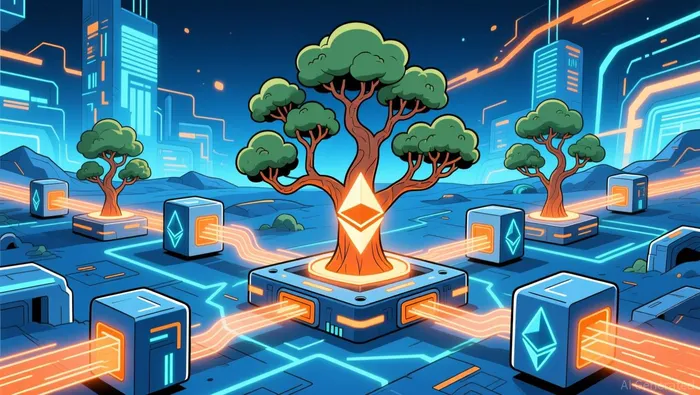 to contribute to the network's security and integrity.
The implementation of Verkle Trees is expected to support further innovations in decentralized finance and smart contracts. These changes are critical as Ethereum continues to evolve into a more scalable and accessible platform. The upgrade is also part of the Prague/Electra upgrade, which brings additional efficiency improvements to the network.
What Role Do Verkle Trees Play in Ethereum's Scalability Goals?
Verkle Trees are a key component of Ethereum's 2026 scalability roadmap, enhancing node state efficiency and reducing data storage costs. These trees improve the way nodes store and verify data, allowing for faster and more efficient transactions. This is particularly important for supporting higher transaction throughput and lower fees, which are critical for attracting more developers and institutional participants.
The introduction of Verkle Trees is part of the broader Prague/Electra upgrade, which includes other efficiency improvements to the Ethereum protocol. These upgrades are expected to support the increasing demand for tokenized assets and decentralized applications. The implementation is also anticipated to support parallel processing and increased gas limits, further enhancing Ethereum's capacity to handle transactions.
How Do These Upgrades Impact Institutional Adoption and Decentralized Finance?
Ethereum's 2026 upgrades are expected to boost institutional adoption and support the growth of decentralized finance. The implementation of Verkle Trees and other efficiency improvements will make it easier for financial institutions to engage with the Ethereum network through staking and other long-term strategies.
With increased scalability and reduced transaction costs, Ethereum is well positioned to attract more institutional capital. The European Union's Markets in Crypto-Assets (MiCA) regulation is expected to further support this trend by lowering barriers for traditional institutions entering the market. These developments are expected to provide Ethereum with new sources of capital and stability.
The upgrades are also expected to support the tokenization of real-world assets, with major financial institutions like BlackRock and JPMorgan investing in the network. This will further expand Ethereum's utility beyond speculative trading, shifting the focus toward real-world applications in supply chain and financial settlements.
What Are the Key Technical and Market Implications of These Upgrades?
The implementation of Verkle Trees and other efficiency improvements is expected to have significant technical and market implications for Ethereum. By reducing node hardware demands and improving verification efficiency, the upgrades support a more decentralized and accessible network.
These changes are critical for Ethereum's long-term success as it continues to evolve into a more scalable and efficient platform. The upgrades are expected to attract more developers and AI agents to the platform, supporting further innovations in decentralized finance and smart contracts.
The combination of improved scalability, reduced transaction costs, and increased institutional adoption is expected to position Ethereum for continued dominance in the decentralized applications space. These developments will also support the tokenization of real-world assets and increase Ethereum's total value locked (TVL) and institutional participation.

Blending traditional trading wisdom with cutting-edge cryptocurrency insights.
Latest Articles
Stay ahead of the market.
Get curated U.S. market news, insights and key dates delivered to your inbox.


AInvest
PRO
AInvest
PRO



Comments
No comments yet