
Verkle Trees Advance as Ethereum Focuses on Scalability and Institutional Adoption
 Aime Summary
Ethereum is enhancing its protocol with Verkle Trees to improve the efficiency of node verification and reduce hardware requirements. This development is part of broader efforts to boost decentralization and scalability according to industry analysis.
Institutional demand for EthereumETH-- remains strong, with staking queues extending to 70 days. Experts argue this reflects sustained confidence in the network's long-term value, despite recent price volatility as market data shows.
Network fees have reached all-time lows due to the Dencun upgrade and increased Layer 2 adoption. This has positioned Ethereum as a more accessible and efficient platform for both institutional and everyday users according to recent reports.
How Are Verkle Trees Reshaping Ethereum's Network Efficiency?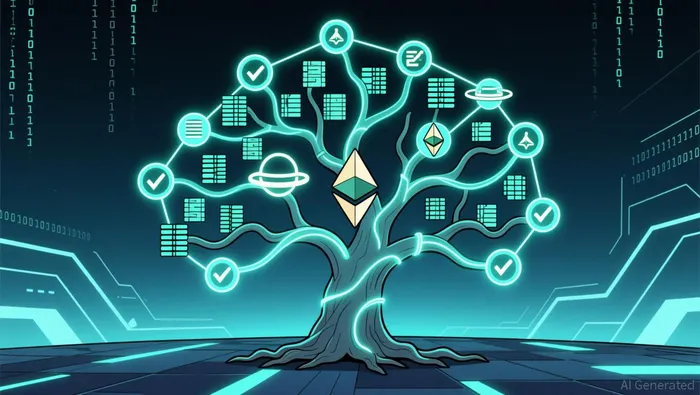
Verkle Trees are a technical upgrade that allows nodes to verify the state of the Ethereum network more efficiently. This improvement reduces the computational and storage burden on node operators, making it easier for a broader range of participants to contribute to the network's decentralization as technical documentation indicates. The upgrade is a key part of Ethereum's 2026 roadmap and is expected to support further innovations in decentralized finance (DeFi) and smart contracts according to market analysis.
The implementation of Verkle Trees is also part of the Prague/Electra upgrade, which is expected to bring additional efficiency improvements. These changes are critical for Ethereum as it continues to evolve into a more scalable and accessible platform as industry reports note.
What Role Do Institutional Investors Play in Ethereum's Growth?
Institutional adoption is a major driver of Ethereum’s growth. Major financial institutions, including Fidelity, BlackRock, and Goldman Sachs, have steadily increased their Ethereum exposure through staking and other long-term strategies according to institutional data. This trend indicates that institutional investors see Ethereum as a credible and valuable asset, despite short-term price fluctuations.
The expansion of Ethereum into institutional finance has also been supported by the European Union's Markets in Crypto-Assets (MiCA) regulation. These regulatory developments are expected to lower barriers for traditional institutions entering the market, providing Ethereum with new sources of capital and stability as regulatory analysis shows.
Ethereum co-founder Vitalik Buterin has also noted that the network’s reduced transaction fees and increased base layer capacity have lessened its reliance on Layer 2 solutions. This shift has prompted a reevaluation of how Layer 2s fit into Ethereum's broader scaling strategy according to recent statements.
What Are the Risks of Ethereum's Current Momentum?
While Ethereum has made significant progress in scalability and institutional adoption, there are risks to consider. If speculative trading increases or network congestion returns, transaction fees could rise again, reversing some of the recent gains in usability and accessibility as market indicators suggest.
Additionally, the reliance on technical upgrades to drive growth means that Ethereum's success will depend on the timely and effective implementation of its roadmap. Delays or inefficiencies in key upgrades like Verkle Trees could slow the network's progress according to industry forecasts.
Despite these risks, the current momentum in Ethereum’s network efficiency and institutional adoption highlights its potential to maintain a dominant position in the digital asset landscape. The Ethereum Community Conference in March 2026 is expected to provide further clarity on how the ecosystem will evolve in the coming months as industry reports indicate.

Blending traditional trading wisdom with cutting-edge cryptocurrency insights.
Latest Articles
Stay ahead of the market.
Get curated U.S. market news, insights and key dates delivered to your inbox.


AInvest
PRO
AInvest
PRO



Comments
No comments yet