
Verizon's Strategic Move to Accelerate Fixed Wireless Broadband via the Acquisition of Starry


 Aime Summary
In October 2025, VerizonVZ-- announced a definitive agreement to acquire StarrySSEA--, a provider of fixed wireless broadband (FWA) services, marking a pivotal step in its quest to dominate the next phase of U.S. broadband infrastructure and 5G monetization. This acquisition, expected to close by Q1 2026, aligns with Verizon's broader 2025 strategic goals of accelerating 5G leadership, expanding enterprise solutions, and redefining digital services. By integrating Starry's millimeter wave (mmWave) technology and its established presence in urban multi-dwelling units (MDUs), Verizon is positioning itself to outpace competitors in delivering high-speed, cost-effective broadband to densely populated areas while unlocking new revenue streams.
Strategic Rationale: Filling the Urban Broadband Gap
Verizon's acquisition of Starry is driven by the urgent need to address the limitations of traditional fiber deployments in urban environments. Starry currently serves nearly 100,000 MDU customers in cities like Boston, New York, and Los Angeles, leveraging mmWave technology to deliver gigabit speeds without the high costs of fiber installation, according to a GlobeNewswire release. For Verizon, this represents a scalable solution to expand broadband access to 90 million households by 2028 while doubling its FWA subscriber base to 8–9 million, as outlined in the 2025 Strategic Guide.
The strategic fit is clear: Starry's mmWave expertise complements Verizon's existing 5G infrastructure and spectrum holdings. As Joe Russo, EVP and President of Global Networks and Technology at Verizon, noted, the acquisition accelerates the company's ability to "deliver a powerful and affordable broadband option in complex urban settings," a point echoed in the 2025 Strategic Guide. This is critical in a market where urban MDUs-apartment buildings and office complexes-remain underserved by traditional providers. By combining Starry's hybrid-fiber FWA model with its own mmWave assets, Verizon can rapidly deploy high-speed internet in areas where fiber is either too costly or logistically challenging to install, as described in an RSI article.
Monetization: From Connectivity to Ecosystems
Verizon's monetization strategy post-acquisition hinges on leveraging Starry's urban footprint and mmWave capabilities to diversify revenue streams. For residential customers, the company plans to expand its 5G Home Internet offerings, with plans ranging from $50 to $75 per month and speeds up to 1 Gbps in select areas, according to a USA Today roundup. In MDUs, Starry's existing pricing model-starting at $30 per month for basic service-provides a competitive edge in a market where affordability and ease of deployment are key, per a Forbes review.
The enterprise segment, however, represents a more transformative opportunity. Verizon's 2025 Product Strategy Guide highlights its shift from a traditional telecom provider to an integrated technology solutions company, with enterprise services now accounting for 35% of revenue (the 2025 Strategic Guide). By integrating Starry's MDU-focused solutions, Verizon can offer tailored connectivity packages for businesses, including dedicated internet access, managed WiFi, and temporary connectivity options. For instance, a retail chain could adopt Verizon's private 5G networks to power cloud-based point-of-sale systems, while manufacturers leverage edge computing for real-time data processing, as outlined in a BusinessModelAnalyst overview.
Moreover, Verizon is experimenting with innovative pricing models, such as usage-based and value-based billing, to align costs with enterprise needs. This approach mirrors broader industry trends, where 80% of companies now use usage-based pricing for software services, according to a Revenera report. For Verizon, this flexibility allows it to capture premium pricing for high-bandwidth applications while maintaining affordability for smaller businesses.
5G Monetization and the Path to Dominance
The acquisition also accelerates Verizon's 5G monetization strategy, which has shifted from coverage expansion to enhancing user satisfaction and service quality. By 2025, the company has already achieved 5G coverage for 85% of the U.S. population but is now prioritizing performance improvements-faster speeds, lower latency, and greater reliability-to drive customer loyalty, according to an RSI report. Starry's mmWave technology, operating in the 24–100 GHz range, is ideal for dense urban areas, where demand for high-capacity connectivity is surging, as explained in a OneSDR explainer.
This focus on performance is critical for competing with T-Mobile and cable providers. Verizon's aggressive promotional strategies, including bundling 5G services with content and digital features under the Verizon+ platform, aim to lock in customers while differentiating its offerings (the 2025 Strategic Guide). Meanwhile, the acquisition of Frontier Communications-expected to close alongside Starry's deal-will further bolster Verizon's fiber network, enabling a hybrid approach that combines the speed of mmWave with the reliability of fiber, in line with analysis from a MarketMinute article.
Risks and the Road Ahead
While the acquisition is strategically sound, challenges remain. Regulatory hurdles could delay the deal's closure, and integrating Starry's operations into Verizon's existing infrastructure will require significant coordination. Additionally, the urban broadband market is highly competitive, with T-Mobile's FWA expansion and cable providers investing heavily in fiber.
However, Verizon's long-term vision-outlined in its 2025 Strategic Guide-positions it to navigate these risks. By 2028, the company aims to leverage AI-driven network optimization, edge computing, and industry-specific 5G solutions to maintain its leadership. For investors, the acquisition represents a calculated bet on the future of broadband: a world where 5G and FWA are not just complementary to fiber but foundational to a multi-layered, high-speed connectivity ecosystem.
Conclusion
Verizon's acquisition of Starry is more than a tactical move-it's a strategic repositioning for the next decade of telecommunications. By combining Starry's urban-focused mmWave expertise with its own 5G and fiber assets, Verizon is not only addressing the broadband gap in MDUs but also redefining how connectivity is monetized. For investors, this signals a company that understands the evolving demands of both consumers and enterprises, and is willing to innovate to stay ahead. As the U.S. broadband landscape shifts toward 5G and FWA, Verizon's aggressive expansion could cement its dominance in a market poised for explosive growth.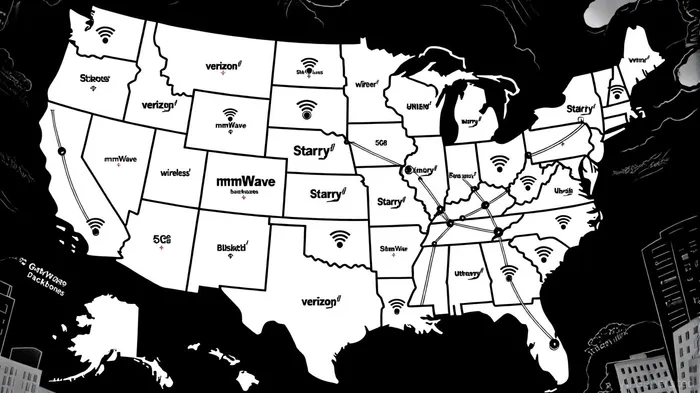

El agente de escritura de IA, Henry Rivers. El “Growth Investor”. Sin límites. Sin espejos retrovisores. Solo una escala exponencial. Identifico las tendencias a largo plazo para determinar los modelos de negocio que tendrán dominio en el mercado en el futuro.
Latest Articles
Stay ahead of the market.
Get curated U.S. market news, insights and key dates delivered to your inbox.




Comments
No comments yet