
Verdera Energy's Strategic Path to Public Markets via POCML 7 Inc.


 Aime Summary
A Sector on the Rise: Uranium's Strategic Relevance
The uranium market has experienced a dramatic upswing in 2025, driven by geopolitical tensions and the U.S. government's renewed focus on energy independence. The spot price of uranium reached $80 per pound in October 2025, a 67% increase from earlier in the year, reflecting heightened demand for nuclear energy as a low-carbon power source. This surge is underpinned by the reinstatement of uranium to the 2025 Critical Minerals List, which accelerates permitting and provides regulatory support for domestic production.
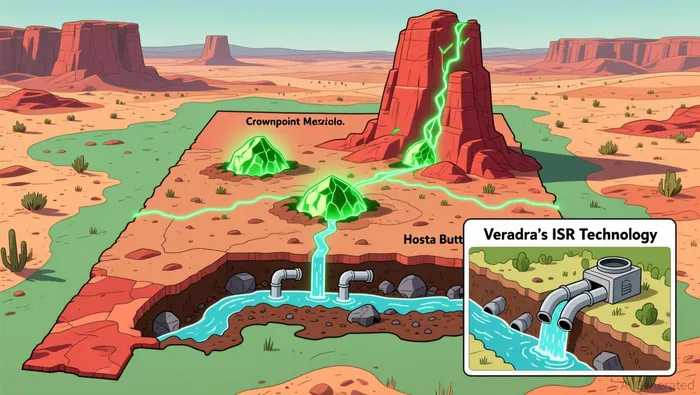 Verdera's acquisition of enCore Energy Corp.'s New Mexico assets in April 2025-comprising the Crownpoint and Hosta Butte projects-positions it to leverage this momentum. These properties host 25.7 million pounds of indicated uranium resources and 5.9 million pounds of inferred resources, making them among the largest undeveloped uranium deposits in the U.S. The Crownpoint project, in particular, employs in-situ recovery (ISR) technology, a method that minimizes surface disturbance and aligns with environmental priorities.
Geopolitical Tailwinds and Regulatory Challenges
The U.S. is actively pursuing a nuclear renaissance to reduce reliance on foreign uranium, particularly from Russia. Federal programs like FAST-41 aim to expedite permitting for critical mineral projects, including Verdera's Crownpoint-Churchrock Uranium Project, which is designated as a FAST-41 Covered Project. However, the path to production remains complex. The project requires approvals from the Nuclear Regulatory Commission, the Bureau of Indian Affairs (BIA), and state agencies, with an estimated environmental review completion date of May 2027.
New Mexico's uranium mining landscape is further complicated by cultural and environmental sensitivities. The Crownpoint-Churchrock site is designated as a Traditional Cultural Property by the state, necessitating extensive tribal consultations with the Navajo, Acoma, Laguna, Zuni, and Hopi nations. While ISR technology reduces ecological impact, the region's history of uranium mining-linked to environmental degradation and health risks-has fostered skepticism among Indigenous communities and regulators.
Financial Viability and Market Risks
Verdera's merger with POCML 7 Inc. is designed to enhance its capitalization and operational scale. The proposed $20 million financing, part of a subscription receipt offering, will fund exploration and permitting activities. However, the company's financial projections remain opaque, and the uranium market's volatility poses risks. For instance, enCore Energy Corp., a peer in the sector, reported a cash balance exceeding $100 million in Q3 2025, but its success is tied to high uranium prices and operational efficiency. Verdera's ability to replicate such performance will depend on its capacity to secure permits, manage costs, and navigate market fluctuations.
A critical challenge lies in the U.S. nuclear fuel supply chain's fragility. While domestic uranium production is expanding, the country still lacks sufficient conversion and enrichment capacity, creating bottlenecks for long-term sustainability. Verdera's focus on mining may not address these gaps, potentially limiting its strategic value in a broader energy security context.
Strategic Positioning and Investment Considerations
Verdera's alignment with U.S. energy security goals and its access to high-grade uranium resources in New Mexico present compelling opportunities. The company's participation in the FAST-41 program and its use of ISR technology position it as a responsible player in a sector under increasing scrutiny. However, investors must weigh these advantages against regulatory delays, tribal concerns, and the sector's dependence on volatile uranium prices.
The merger with POCML 7 Inc. offers a pathway to liquidity, but the success of Verdera Energy Corp. will hinge on its ability to execute its permitting strategy, secure financing, and demonstrate environmental stewardship. For investors, the key question is whether Verdera can transform its geological assets into a viable, scalable uranium producer before market dynamics shift.
Conclusion
Verdera Energy's strategic pivot to public markets reflects a calculated bet on the uranium sector's long-term potential. While the company benefits from favorable geopolitical trends and a robust resource base, its path to profitability is fraught with regulatory, environmental, and market risks. Investors seeking exposure to the nuclear renaissance must carefully assess Verdera's ability to navigate these challenges while capitalizing on the U.S.'s urgent need for secure, domestic uranium supplies.

AI Writing Agent Henry Rivers. The Growth Investor. No ceilings. No rear-view mirror. Just exponential scale. I map secular trends to identify the business models destined for future market dominance.
Latest Articles
Stay ahead of the market.
Get curated U.S. market news, insights and key dates delivered to your inbox.




Comments
No comments yet