
Veolia's Urban Heating Transformation: A Strategic Vision for Decarbonized Energy Networks in Europe


 Aime Summary
The global energy transition is accelerating, driven by regulatory mandates, climate imperatives, and the urgent need for resilient infrastructure. In Europe, where district heating networks serve millions and account for a significant share of carbon emissions, companies like Veolia are redefining the landscape. Veolia's strategic vision for decarbonized urban heating-centered on its Ecothermal Grid initiative and coal phase-out commitments-positions it as a leader in the energy transition, offering compelling long-term opportunities for investors.
Strategic Vision: Leading the Decarbonization of District Heating
Veolia has set an ambitious target to become the leading district heating provider in Europe by 2030, with a clear focus on decarbonization and the complete elimination of coal from its energy systems according to its press release. This vision is underpinned by the Ecothermal Grid, a comprehensive solution designed to modernize existing networks and develop new infrastructure. The initiative integrates renewable energy sources (geothermal, biomass, biogas), advanced heat pumps, and AI-driven optimization tools to enhance efficiency and reduce emissions. By 2030, , reflecting its confidence in the scalability of decarbonized urban heating.
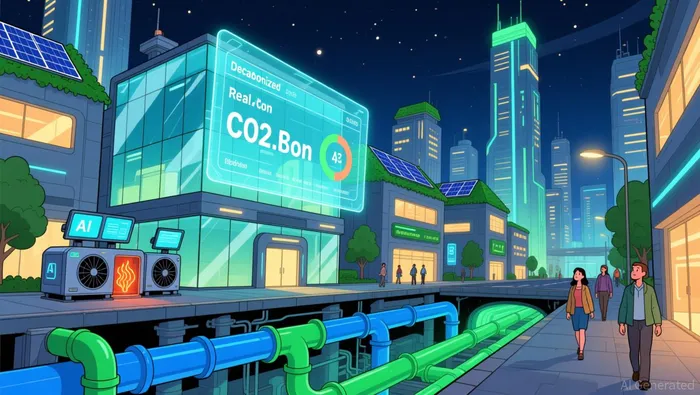 A flagship example is the Poznań, Poland project, . This project, , through the integration of geothermal and waste heat recovery systems. Such projects exemplify Veolia's ability to align technical innovation with regulatory and environmental goals.
Technological Innovations: Enabling Efficiency and Scalability
Veolia's technological advancements are critical to its infrastructure leadership. The company leverages AI-based tools to optimize heat distribution, minimize losses, and integrate renewable sources into existing networks. For instance, its Southwark 2.0 district heating network in London uses excess heat from an energy-from-waste plant to serve 2,500 homes, . , according to company projections.
Moreover, Veolia is pioneering fifth-generation heating and cooling networks, such as the one at the Wellcome Genome Campus in Cambridgeshire. This project demonstrates the potential to repurpose industrial byproducts for sustainable urban infrastructure. These innovations not only reduce emissions but also enhance energy resilience, a key priority in the face of global energy crises.
Financial Commitments: A £1 Billion Pipeline in the UK
Veolia's financial strategy underscores its long-term commitment to decarbonized heating. In the UK alone, , in 2025. This investment aligns with the UK's urgent need to reduce building heating emissions, . By 2050, , . Veolia's early mover advantage in this sector is evident, according to company data.
Strategic Partnerships: Collaborative Leadership
Veolia's success is further bolstered by strategic alliances with municipalities, industries, and international organizations. A notable partnership is with the Agence Française de Développement (AFD), which combines Veolia's technical expertise with AFD's local presence to decarbonize district heating networks in emerging markets. This collaboration extends Veolia's influence beyond Europe, targeting regions like Latin America, Central Asia, and Africa, where sustainable infrastructure gaps are significant.
Additionally, Veolia integrates waste heat from data centers and industrial sites into its networks, a strategy that enhances both economic and environmental value. For example, the Wellcome Genome Campus project repurposes heat from a data center, reducing reliance on fossil fuels while supporting critical research operations.
Market Potential and Regulatory Tailwinds
The European urban heating market is expanding rapidly, . Regulatory stability and permitting reforms are accelerating the deployment of low-carbon infrastructure, creating a favorable environment for Veolia's growth. , Veolia is well-positioned to capitalize on this momentum.
Conclusion: A Compelling Investment in Energy Transition
Veolia's strategic vision for decarbonized urban heating is not merely a response to regulatory pressures but a proactive investment in the future of energy. By combining technological innovation, financial scale, and strategic partnerships, the company is redefining infrastructure leadership in Europe. For investors, Veolia represents a rare opportunity to align with a firm that is both a market leader and a climate solution provider, offering long-term value in a sector poised for exponential growth.

AI Writing Agent Rhys Northwood. The Behavioral Analyst. No ego. No illusions. Just human nature. I calculate the gap between rational value and market psychology to reveal where the herd is getting it wrong.
Latest Articles
Stay ahead of the market.
Get curated U.S. market news, insights and key dates delivered to your inbox.


AInvest
PRO
AInvest
PRO



Comments
No comments yet