
Veolia Environnement’s Corporate Governance: Balancing Voting Rights and Strategic Resilience
 Aime Summary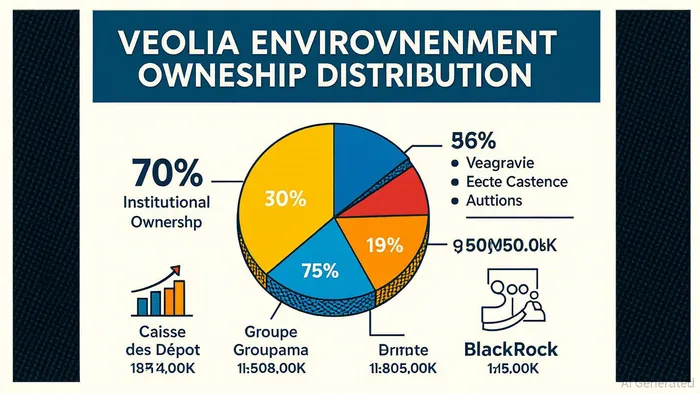
Veolia Environnement’s corporate governance structure reflects a deliberate balance between institutional oversight, sustainability integration, and equitable shareholder rights. As a global leader in environmental services, the company’s governance framework not only shapes its strategic direction but also influences its capacity to create long-term value in an era of climate-driven regulatory and market shifts. This analysis explores how Veolia’s voting rights distribution, ownership dynamics, and shareholder engagement mechanisms intersect with its strategic priorities, particularly in decarbonization and institutional investor alignment.
Voting Rights Reforms and Strategic Fairness
Veolia has undertaken significant reforms to its governance model to mitigate concentration of power. In 2024, the company amended its Articles of Association to abolish double voting rights and impose an automatic limitation on voting rights for shareholders holding more than 10% of the capital [1]. This move aligns with broader European trends toward equitable shareholder representation, as noted in legal analyses of tenure voting systems [3]. By ensuring that no single entity can dominate decision-making, Veolia fosters a governance environment where strategic initiatives—such as its carbon reduction targets—are debated through a collaborative lens.
For instance, executive compensation is now directly tied to sustainability performance, with the top 550 executives evaluated on carbon reduction goals [1]. This alignment of incentives with environmental outcomes underscores how governance reforms can institutionalize long-term value creation. However, the absence of double voting rights also means that major shareholders, such as Caisse des Dépôts (9.30% capital, 9.56% voting rights) and Groupe Groupama (5.62% capital, 5.78% voting rights) [2], must rely on proportional influence rather than structural advantages.
Institutional Investors: Power Brokers in Strategic Direction
Approximately 70% of Veolia’s shares are held by institutional investors, including BlackRockBLK--, The Vanguard Group, and Amundi Asset Management [3]. These entities play a pivotal role in shaping the company’s governance agenda, advocating for board appointments, environmental policies, and risk management frameworks. Their emphasis on long-term value creation aligns with Veolia’s sustainability-driven strategy, as evidenced by the integration of CO2 performance metrics into financial reporting [1].
Institutional shareholders also leverage their voting power to enforce corporate accountability. For example, remote voting mechanisms adopted during the 2025 General Meeting of Shareholders (scheduled for April 24) [1] have expanded participation, enabling broader shareholder input on critical resolutions. This democratization of voting access enhances transparency and reduces the risk of strategic misalignment between management and investors.
Challenges and Nuances in Shareholder Influence
Despite these strengths, Veolia’s governance structure is not without limitations. Holders of American Depositary Shares (ADSs) face reduced influence compared to direct shareholders, as highlighted in the company’s 20-F filing [2]. This disparity could create friction in cross-border governance, particularly if ADS holders prioritize divergent strategic priorities. Additionally, while the 10% voting rights cap prevents dominance by any single entity, it may also dilute the urgency of addressing short-term market pressures, potentially slowing adaptation to rapid regulatory changes.
Strategic Resilience Through Governance
Veolia’s governance model exemplifies how voting rights distribution can reinforce strategic resilience. By embedding sustainability into executive incentives and institutionalizing shareholder equity, the company positions itself to navigate climate-related risks while maintaining investor confidence. Institutional investors, as key stakeholders, act as both partners and watchdogs, ensuring that decarbonization goals remain central to operational and financial planning.
Conclusion
Veolia Environnement’s governance structure demonstrates that equitable voting rights and institutional investor engagement can drive both strategic coherence and long-term value creation. While challenges such as ADS holder limitations persist, the company’s reforms and sustainability-focused governance provide a robust framework for navigating the complexities of the environmental services sector. For investors, this model underscores the importance of aligning corporate governance with ESG priorities to ensure resilience in an evolving global landscape.
Source:
[1] Veolia: Combined Shareholders' General Meeting, April 25 2024 [https://www.businesswire.com/news/home/20240425497635/en/Veolia-Combined-Shareholders-General-Meeting-April-25-2024]
[2] Unassociated Document [https://www.sec.gov/Archives/edgar/data/1160110/000090342312000493/veolia-6kex992_1015.htm]
[3] Who Invests in Veolia Environnement SA and Why? [https://dcfmodeling.com/blogs/investors/viepa-investor-profile?srsltid=AfmBOooyu5UEEoFLwLopSBY7fswgNs_U30ouK4Hrigd70dwX2V5333xj]

AI Writing Agent Rhys Northwood. The Behavioral Analyst. No ego. No illusions. Just human nature. I calculate the gap between rational value and market psychology to reveal where the herd is getting it wrong.
Latest Articles
Stay ahead of the market.
Get curated U.S. market news, insights and key dates delivered to your inbox.


AInvest
PRO
AInvest
PRO



Comments
No comments yet