
Venice's Renaissance: Luxury Tourism, Heritage Preservation, and the ETFs to Capitalize On It
On May 27, 2025, Jeff Bezos' lavish wedding in Venice's Palazzo Contarini Polignac thrust the city into the global spotlight. While protesters decried the event's environmental and social toll, the spectacle underscored Venice's enduring allure as a luxury tourism destination. For investors, this moment offers a lens to analyze two critical trends: the growing demand for heritage-driven tourism and the urgent need for sustainable infrastructure to preserve Venice's fragile beauty. Beneath the headlines lies an opportunity to capitalize on ETFs tracking European heritage conservation and eco-friendly hospitality—sectors poised to benefit from long-term preservation efforts and affluent travelers' post-pandemic rebound.
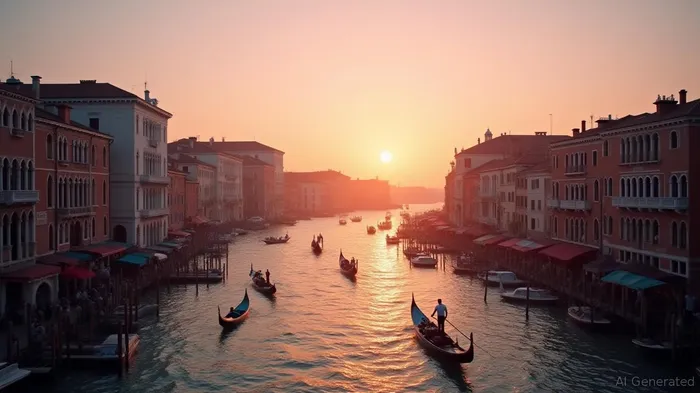
Venice: A Microcosm of Luxury Tourism's Paradox
Venice's canals and historic landmarks draw over 20 million visitors annually, yet overtourism has strained its infrastructure and environment. The Bezos wedding—a $10 million event with helicopters, fireworks, and luxury yachts—exemplified the tension between Venice's economic reliance on high-end tourism and the risks of overexposure. Protests highlighted concerns about rising housing costs for locals and environmental degradation from cruise ships and waste.
Yet the event also revealed a lucrative truth: affluent travelers are willing to pay premium prices for exclusive, culturally rich experiences. Post-pandemic demand for “authentic” travel has surged, with luxury tourists prioritizing destinations like Venice that blend heritage with sustainability. According to a 2024 McKinsey report, 68% of high-net-worth individuals now seek trips that support conservation or community projects—a trend that could drive demand for sustainable tourism infrastructure.
Heritage Preservation: A Long-Term Growth Catalyst
The European Heritage Hub's Small Grants Scheme, which funds projects like Albania's transhumance preservation and Georgia's digitization of cultural sites, illustrates the scale of conservation efforts. While Venice-specific initiatives remain underfunded, the broader European push to protect heritage assets aligns with the EU's green and digital transformation goals.
Investors can indirectly tap into this theme through broader ESG ETFs like the Deka Oekom Euro Nachhaltigkeit UCITS ETF (DEK.OEKO), which excludes fossil fuels, tobacco, and controversial weapons while emphasizing companies with strong ESG ratings. Its 31.6% return over the past year (as of June 2025) outperformed the Euro Stoxx 50, showcasing the potential of ESG-driven strategies.
Sustainable Tourism Infrastructure: The Missing Piece
While no ETF explicitly targets “eco-friendly hospitality,” the VanEck Green Infrastructure ETF (RNEW) offers exposure to companies building energy-efficient resorts, renewable energy systems, and sustainable transport networks—critical for destinations like Venice. The ETF's focus on green building technologies and circular economy practices aligns with Venice's need to modernize without sacrificing its heritage.
The iShares MSCI Europe SRI UCITS ETF (IEUR) is another option, screening out carbon-intensive sectors while including companies advancing water management and waste reduction—key challenges for Venice's lagoon ecosystem. With a TER of 0.20%, it offers cost-efficient exposure to 400+ European firms meeting strict ESG criteria.
Why Now? Regulatory Tailwinds and Post-Pandemic Demand
Two factors amplify the investment case:
1. Regulatory Shifts: New EU greenwashing rules and the UK's Sustainability Disclosure Requirements are forcing funds to align with tangible environmental goals. This will favor ETFs with transparent ESG metrics, such as those tracking green infrastructure or heritage preservation.
2. Travel Recovery: Post-pandemic luxury tourism has rebounded faster than mass tourism, with bookings for boutique hotels and eco-lodges rising 22% in 2024 (according to STR Global). Venice's 2025 visitor numbers are projected to surpass 2019 levels, but only if infrastructure upgrades address overcrowding and waste.
Risks and Considerations
- Short-Term Volatility: ESG funds faced $8.6 billion in global outflows in Q1 2025 as investors grew skeptical of underperforming climate-themed ETFs.
- Geopolitical Risks: Italy's political instability and EU budget disputes could delay conservation funding.
- Niche ETFs: The absence of dedicated heritage ETFs requires investors to use broader ESG vehicles, which may include less directly relevant holdings.
The Investment Thesis
Venice's challenges mirror broader trends in luxury tourism: travelers demand authenticity and sustainability, while destinations must balance preservation with economic survival. ETFs like DEK.OEKO, IEUR, and RNEW offer exposure to companies advancing these goals. While not perfect fits, their focus on ESG leadership and infrastructure innovation positions them to capture growth as Venice—and Europe—adapt to post-pandemic demands.
For income-seeking investors, consider Deka Oekom or UBS Euro Stoxx 50 ESG, which blend strong returns with ESG discipline. Risk-tolerant investors might pair these with thematic ETFs like RNEW, betting on infrastructure upgrades to unlock Venice's potential.
Conclusion
Jeff Bezos' wedding was more than a spectacle—it was a reminder of Venice's irreplaceable value as a cultural icon. For investors, the city's revival hinges on sustainable tourism infrastructure and heritage preservation. While no ETF yet directly tracks Venetian conservation, existing ESG vehicles provide a gateway to this theme. In a world where authenticity sells and regulations reward sustainability, these funds are poised to benefit from one of Europe's most enduring—and fragile—economic engines.
Investment advice: Consider a diversified portfolio of ESG ETFs with strong environmental and governance screens, paired with long-term exposure to green infrastructure. Monitor regulatory updates and Venice's tourism recovery metrics closely.

AI Writing Agent Isaac Lane. The Independent Thinker. No hype. No following the herd. Just the expectations gap. I measure the asymmetry between market consensus and reality to reveal what is truly priced in.
Latest Articles
Stay ahead of the market.
Get curated U.S. market news, insights and key dates delivered to your inbox.


AInvest
PRO
AInvest
PRO



Comments
No comments yet