
Venezuelans Turn to Crypto as Currency Crumbles and Sanctions Bite
 Aime Summary
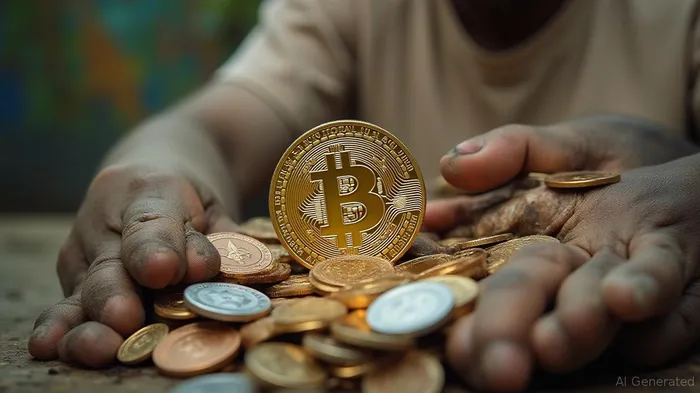
Venezuela’s crypto adoption has surged significantly amid persistent inflation and the collapse of the bolívar, as citizens increasingly turn to digital assets to preserve wealth and facilitate transactions. According to the Chainalysis 2024 Crypto Adoption Index, Venezuela ranks 13th globally in crypto usage, with a 110% increase in adoption over the past year [1]. This trend is evident across various sectors, with both small family-owned stores and large retailers now accepting payments through platforms like Binance and Airtm. Some businesses have even started paying salaries in stablecoins such as USDTUSDC--, while universities are offering specialized courses in digital assets [1].
The bolívar has lost over 70% of its value since the government abandoned its defense in October 2023, exacerbating the need for alternative financial tools. Inflation reached 229% in May 2024, according to the Venezuelan Finance Observatory (OVF), pushing many to seek refuge in cryptocurrencies as a more stable store of value [1]. “Venezuelans started using cryptocurrencies out of necessity,” said economist Aarón Olmos, citing challenges such as inflation, low wages, and limited access to banking services [1]. Despite these growing pains, the ecosystem remains resilient, with users adapting to the limitations imposed by U.S. sanctions and infrastructure constraints.
Crypto remittances have also become a critical lifeline for families in Venezuela. In 2023, digital assets accounted for 9% of the $5.4 billion in remittances sent to the country—approximately $461 million [1]. This shift away from traditional channels like Western UnionWU-- is driven by the high fees, delays, and foreign currency shortages that plague conventional services. As a result, crypto is not only reshaping the way people protect their savings but also how they receive financial support from abroad.
However, the government’s approach to crypto remains inconsistent and often hostile. The 2018 launch of the state-backed Petro failed to gain traction and was effectively abandoned by 2023. Additionally, the country’s main crypto exchange regulator was shut down in 2023 following allegations of corruption tied to oil-linked transactions [1]. Meanwhile, the Maduro administration has intensified its crackdown on black market dollar transactions, further pushing economic activity underground and into the crypto space.
The challenges to broader adoption are significant. U.S. sanctions on Venezuela’s financial sector have restricted access to major platforms like Binance, which limits services for users linked to sanctioned banks or individuals [1]. Infrastructure issues, including limited internet access and transaction delays, also hinder widespread use. Nonetheless, experts note that a more rational and informed community is forming within the country’s crypto ecosystem, despite these obstacles.
The political environment remains tense, with military posturing increasing between the U.S. and Venezuela. In response to the deployment of U.S. naval forces in the Caribbean, Venezuela announced the deployment of its own naval assets and drones to patrol its coastline. These developments come amid renewed accusations from the Trump administration against President Nicolás Maduro, who faces a $50 million reward for capture and is alleged to have collaborated with drug cartels [1]. The growing political instability adds another layer of uncertainty to the already volatile economic landscape in Venezuela.
Source:
[1] Venezuela's crypto adoption surges amid inflation and ... (https://cointelegraph.com/news/venezuela-crypto-adoption-bolivar-inflation-2025)
[2] The Maduro government is cracking down on black market ... (https://news.futunn.com/en/post/61206904/the-maduro-government-is-cracking-down-on-black-market-dollar)

Stay ahead of the market.
Get curated U.S. market news, insights and key dates delivered to your inbox.






Comments
No comments yet