
Venezuela President Nicolas Maduro: Venezuela is facing the biggest threat seen in the continent in a century
ByAinvest
Monday, Sep 1, 2025 12:55 pm ET1min read
Venezuela President Nicolas Maduro: Venezuela is facing the biggest threat seen in the continent in a century
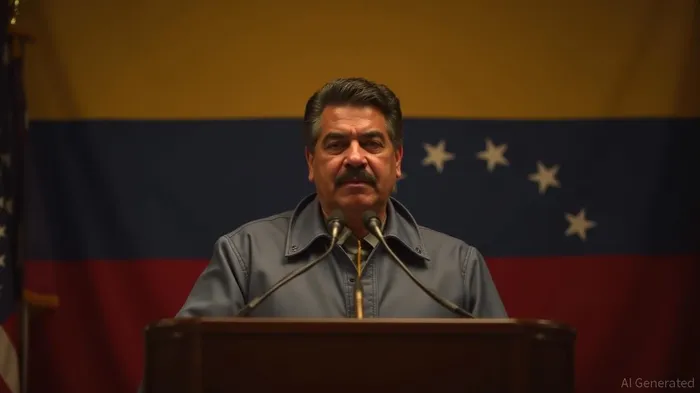
Venezuelan President Nicolas Maduro has declared that his country is facing the most significant threat in the continent's history, as the United States ramps up its military presence in the southern Caribbean. This escalation marks a significant shift in U.S. foreign policy, with the deployment of multiple warships, a nuclear-powered submarine, and 4,500 troops [1].Maduro, speaking at a military ceremony in Caracas, described the U.S. naval presence as a "siege" that only strengthens his government. He called the deployment part of President Donald Trump's intensified anti-drug cartel operations, which has sparked the most serious U.S.-Venezuela confrontation in years [1]. Maduro has been under Trump's scrutiny since his return to the White House in January, with U.S. efforts targeting Venezuela's powerful gangs and accusing Maduro of leading the cocaine trafficking network Cartel de los Soles—designated a terrorist organization by the Trump administration [1].
The standoff has significant implications for the region. It signals Washington's growing willingness to project military force in Latin America, under the banner of countering drug cartels, while simultaneously putting pressure on the Maduro regime [1]. For Venezuela, the deployment reinforces Maduro's narrative of foreign aggression and allows him to rally domestic support amid mounting political and economic pressures [1].
The escalation also tests regional diplomacy, particularly with Colombia, and challenges the U.N.'s capacity to mediate conflicts in the hemisphere [1]. Venezuela's ambassador to the U.N., Samuel Moncada, lodged a formal protest against the U.S. military buildup, describing it as a "massive propaganda operation" to justify military intervention [1]. Meanwhile, Maduro has countered U.S. threats by deploying warships and drones along its coastline and launching a campaign to recruit thousands of militia members to strengthen domestic defenses [1].
The U.S. has confirmed that its warships were deployed to waters off South America, citing concerns that some Venezuelans were participating in large-scale drug operations, though Washington has made no public threat to invade [1]. The U.S. Attorney General, Pam Bondi, announced a $50-million reward for information leading to Maduro's arrest [1].
The standoff is expected to continue, with U.S. forces maintaining a strong presence in the southern Caribbean while Maduro strengthens Venezuela's defenses. Diplomatic engagement through the U.N. and coordination with regional allies, particularly Colombia, may influence the next phase, although both sides appear determined to demonstrate strength without triggering open conflict [1].
References:
[1] https://www.newsweek.com/venezuela-maduro-us-forces-trump-warning-2121426
Stay ahead of the market.
Get curated U.S. market news, insights and key dates delivered to your inbox.


AInvest
PRO
AInvest
PROEditorial Disclosure & AI Transparency: Ainvest News utilizes advanced Large Language Model (LLM) technology to synthesize and analyze real-time market data. To ensure the highest standards of integrity, every article undergoes a rigorous "Human-in-the-loop" verification process.
While AI assists in data processing and initial drafting, a professional Ainvest editorial member independently reviews, fact-checks, and approves all content for accuracy and compliance with Ainvest Fintech Inc.’s editorial standards. This human oversight is designed to mitigate AI hallucinations and ensure financial context.
Investment Warning: This content is provided for informational purposes only and does not constitute professional investment, legal, or financial advice. Markets involve inherent risks. Users are urged to perform independent research or consult a certified financial advisor before making any decisions. Ainvest Fintech Inc. disclaims all liability for actions taken based on this information. Found an error?Report an Issue


ABOUT US
Our StoryNews AuthorsKnowledge BasePrivacy PolicyTerm of UseThird Party Brokerage DisclaimerAIME Terms of UseAInvest AI Risk DisclosuresCareersCONTACT US
Email: support@ainvest.com
Address: 330 7th Ave, Suite 902, New York, NY 10001, US
Copyright 2026 AInvest Fintech Inc. All rights reserved.


Comments
No comments yet