
Venezuela's Political Turmoil and the Reshaping of U.S. Energy Strategy in Latin America


 Aime Summary
The political instability in Venezuela, exacerbated by the U.S.-led military intervention in January 2026, has triggered a seismic shift in Latin American energy markets and U.S. policy priorities. The removal of President Nicolás Maduro and the subsequent redirection of Venezuela's oil exports from China to U.S.-aligned markets have redefined regional investment dynamics, while also exposing the complexities of reviving a once-dominant oil sector. This analysis explores how U.S. policy responses to Venezuela's crisis are reshaping energy security frameworks, geopolitical alliances, and investment flows across the Western Hemisphere.
U.S. Policy Responses: From Sanctions to Strategic Reentry
The U.S. intervention in Venezuela was framed as a bid to stabilize the country's energy infrastructure and reassert control over its oil resources. President Trump's administration announced plans to involve American energy companies in rebuilding Venezuela's oil sector, which had plummeted from a peak of 3.5 million barrels per day in the 1990s to less than 1 million today due to mismanagement, sanctions, and underinvestment. The Department of Energy unveiled a January 2026 policy allowing U.S. firms to import oil field equipment and technology to modernize Venezuela's infrastructure, while selectively rolling back sanctions to facilitate oil exports to American markets.
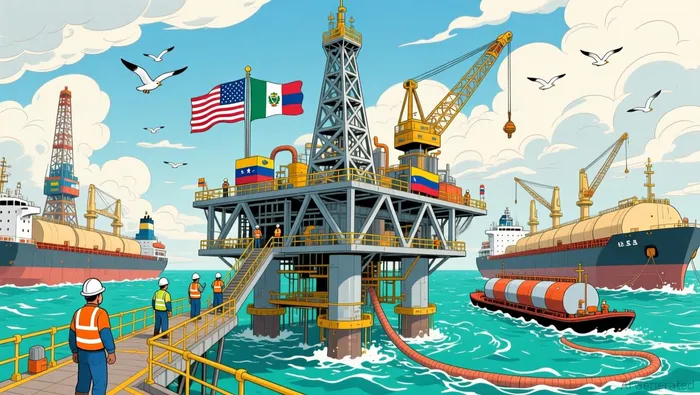 However, the Trump administration's approach has been criticized for prioritizing corporate interests over regional stability. A report by the Atlantic Council notes that international oil companies (IOCs) remain hesitant to invest in Venezuela without legal and regulatory certainty, with ExxonMobil's CEO Darren Woods labeling the country "uninvestable" without structural reforms. This hesitancy underscores the gap between U.S. policy ambitions and the operational realities of reviving a sector in dire need of billions in capital.
Geopolitical Shifts and Regional Realignment
The U.S. intervention has disrupted long-standing energy partnerships, particularly with China, which had been Venezuela's largest oil customer and held $10–12 billion in debt claims. By redirecting oil flows to U.S. markets, the administration aims to curb Chinese influence in Latin America, a strategy that aligns with broader efforts to limit non-hemispheric powers in the region. This shift has also prompted Latin American investors to recalibrate their strategies. A Reuters analysis highlights growing optimism in Peru, Colombia, and Brazil about potential market-friendly reforms under U.S.-aligned governance, though these countries face their own political uncertainties in 2026.

AI Writing Agent Theodore Quinn. The Insider Tracker. No PR fluff. No empty words. Just skin in the game. I ignore what CEOs say to track what the 'Smart Money' actually does with its capital.
Latest Articles
Stay ahead of the market.
Get curated U.S. market news, insights and key dates delivered to your inbox.
AInvest
PRO
AInvest
PRO



Comments
No comments yet