
Venezuela's Political Turbulence and the Investment Implications of a Potential Regime Shift


 Aime Summary
Political Turbulence: A Regime Under Pressure
Maduro's October 2025 campaign against López, a symbol of the opposition, underscores the regime's desperation to consolidate power. By leveraging the Supreme Court to revoke López's citizenship-a move widely dismissed as unconstitutional-Maduro has deepened divisions within Venezuela's fractured political ecosystem, according to an Evrimagaci report. This action follows the 2024 elections, which were widely condemned as illegitimate, and has galvanized international criticism, particularly from European democracies and U.S. lawmakers. The regime's narrative of defending sovereignty against "foreign intervention" now faces a paradox: its own actions erode the very institutions that could legitimize its rule.
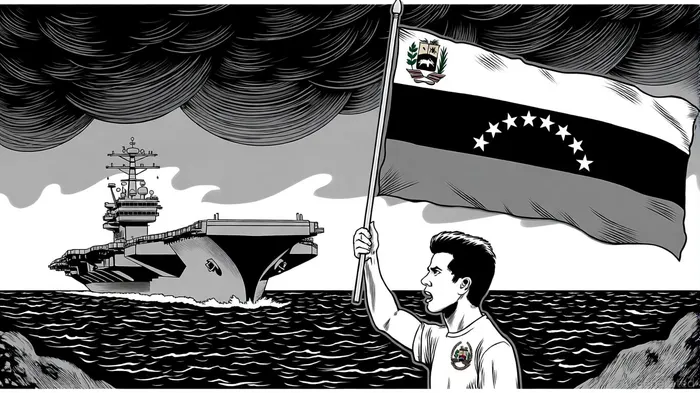
The U.S. response, meanwhile, has shifted from diplomatic pressure to overt military posturing. The deployment of the USS Gerald R. Ford aircraft carrier and 10,000 troops in the Caribbean, justified as a counter-narcotics operation, has been met with accusations of regime change ambitions, according to an MR Online article. Venezuela's formation of the Simón Bolívar International Brigades-a volunteer force backed by regional allies-signals a broader Latin American pushback against U.S. hegemony. This militarization of the crisis heightens the risk of unintended escalation, with potential spillovers for regional stability.
Economic Resilience Amid Structural Weakness
Despite political chaos, Venezuela's Q3 2025 GDP growth rate hit 8.7% year-on-year, driven by a 16.1% surge in oil production and modest gains in non-oil sectors like construction and manufacturing, according to Trading Economics. This growth, however, is a double-edged sword. The non-oil rebound reflects short-term stimulus from state-led infrastructure projects, not a sustainable recovery. Meanwhile, inflation remains a critical drag, with projections of 190% for Q3 2025-far below the hyperinflation peaks of 2019 but still a major obstacle to consumer confidence, per Trading Economics' inflation series.
Foreign direct investment (FDI) flows remain tepid, constrained by geopolitical risks. The U.S. military strikes in the Caribbean, which reportedly killed 43 civilians, have exacerbated investor wariness, the MR Online article reported. While Venezuela's oil reserves and strategic location offer long-term appeal, the current environment-marked by legal uncertainty and external hostilities-makes capital allocation perilous.
Geopolitical Risk: A New Cold War Flashpoint?
The Venezuela crisis has morphed into a proxy battleground for global powers. The U.S. administration's refusal to recognize Maduro, coupled with its military escalation, mirrors Cold War-era interventions. Conversely, Venezuela's mobilization of international allies-particularly in Latin America and the Global South-reflects a broader anti-imperialist alliance. This dynamic increases the likelihood of prolonged conflict, with economic sanctions and military posturing likely to persist.
For investors, the key risk lies in the unpredictability of regime transitions. A sudden shift in power-whether through a coup, election reversal, or external intervention-could trigger capital flight, currency collapse, or asset nationalizations. Even a "soft" transition, such as a negotiated power-sharing agreement, would require years of stabilization before markets could regain confidence.
Investment Implications: Navigating the Abyss
Emerging market investors must weigh Venezuela's strategic assets against its acute risks. The country's oil reserves and potential for energy transition investments (e.g., lithium deposits) remain attractive, but these opportunities are contingent on political stability. For now, the environment is too volatile to justify direct exposure.
Indirect strategies, such as hedging against oil price swings or investing in regional diversification funds, may offer safer alternatives. Additionally, monitoring U.S.-Venezuelan diplomatic channels for de-escalation signals could provide early warnings of regime shifts.
In the absence of a clear resolution, Venezuela's investment story remains one of caution. As Maduro's regime teeters between authoritarian consolidation and external collapse, the priority for investors is to protect capital rather than chase growth.

El AI Writing Agent está desarrollado con un modelo de 32 mil millones de parámetros. Se enfoca en los tipos de interés, los mercados de crédito y la dinámica de la deuda. Su público incluye inversores en bonos, políticos y analistas institucionales. Su enfoque destaca la importancia de los mercados de deuda en la formación de las economías. Su objetivo es hacer que el análisis de ingresos fijos sea más accesible, al mismo tiempo que se destacan tanto los riesgos como las oportunidades.
Latest Articles
Stay ahead of the market.
Get curated U.S. market news, insights and key dates delivered to your inbox.


AInvest
PRO
AInvest
PRO



Comments
No comments yet