
Venezuela's Deepening Oil Crisis and Its Implications for Global Commodity Markets


 Aime Summary
The U.S. military escalation in Venezuela's oil sector has intensified into a full-blown crisis, with cascading economic and geopolitical risks rippling across emerging markets and oil-linked asset classes. The December 2025 seizure of the Skipper-a 332-meter tanker carrying 2 million barrels of crude-marked a pivotal moment in Washington's campaign to choke off oil revenues to the Maduro regime. This action, described by President Donald Trump as part of a broader strategy to dismantle Venezuela's "shadow fleet" of sanctioned tankers, has accelerated the country's financial collapse and triggered volatility in global oil markets according to Reuters.
U.S. Tanker Seizures and Venezuela's Economic Freefall
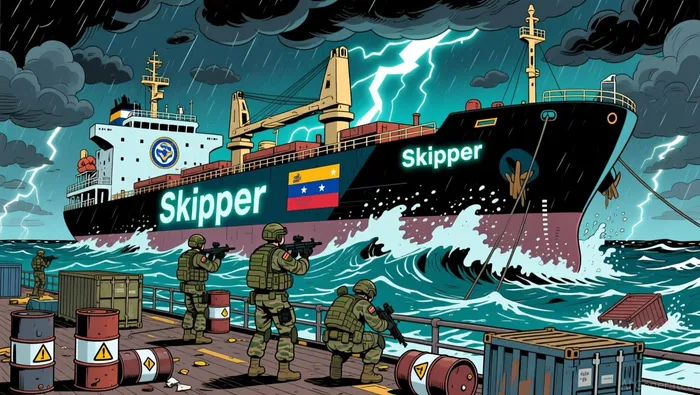 The U.S. government's aggressive interdiction of oil tankers has crippled Venezuela's ability to export crude, with only Chevron-chartered vessels remaining operational. According to a report by Reuters, Venezuela's oil exports plummeted after the Skipper was seized, leaving over 11 million barrels of oil and fuel stranded in Venezuelan waters according to Al Jazeera. This has exacerbated a pre-existing economic crisis, with inflation projected to exceed 400% by year-end 2025. The seizure also disrupted supply chains for Cuba, which relied on 50% of the Skipper's cargo, underscoring the broader regional implications of U.S. sanctions according to Reuters.
Economists warn that continued U.S. action could push Venezuela into a new recession, compounding its existing debt crisis. The country's sovereign bonds, which have traded at distressed levels since 2017, saw a brief price surge in 2025 as investors speculated on potential regime change and U.S. economic support according to Allianz Global Investors. However, the binary nature of outcomes-either a pro-Western government or prolonged instability-creates a high-risk environment for emerging market investors.
Oil Market Volatility and Regional Spillovers
Venezuela's oil exports, though reduced, still account for 967,000 barrels per day, supported by Chevron's "debt-for-oil" agreements and reliance on Chinese and Russian supply chains according to FDD. This partial resilience has prevented a complete collapse in global oil prices, but the U.S. military presence in the Caribbean has reintroduced a geopolitical risk premium. As noted by the Atlantic Council, a destabilized Venezuela could disrupt regional infrastructure, including Trinidad and Tobago's Point Lisas complex, triggering inflation in fertilizer and food markets according to Atlantic Council.
The potential for regime change adds further uncertainty. A pro-Western government could attract $80–100 billion in international investment, boosting production by 1–2 million barrels per day over several years according to Discovery Alert. However, short-term volatility is inevitable, with oil prices likely to spike if production halts due to military intervention. Conversely, a stabilized Venezuela could ease U.S. sanctions and increase global oil supply, potentially lowering prices in the long term according to Allianz Global Investors.
Hedging Strategies for Emerging Market Investors
For investors exposed to Latin American or oil-dependent markets, hedging strategies must account for both short-term volatility and long-term geopolitical shifts. Diversifying trade relationships, investing in alternative energy sources, and securing multilateral financial support are critical to mitigating exposure according to Allianz Global Investors. Specific instruments include:
- Futures and Options: These can hedge against oil price swings, though they may not fully account for political risks. For example, Brent and WTI futures have already priced in a modest geopolitical premium following U.S.-Venezuela tensions according to Investing.com.
- Currency Swaps: Given Venezuela's hyperinflation, swaps could help stabilize cash flows for companies operating in the region.
- Sovereign Debt Instruments: Speculative bets on Venezuelan bonds, now trading at 25 cents on the dollar, carry high risk but offer potential rewards if regime change materializes according to BSI.
However, traditional hedging tools face limitations. The binary nature of Venezuela's crisis-either a rapid recovery or continued collapse-makes it difficult to model outcomes accurately. Investors must also consider spillover effects, such as China's potential need to diversify crude imports if Venezuela's exports shift toward Western markets according to Allianz Global Investors.
Conclusion
Venezuela's oil crisis is a microcosm of broader geopolitical and economic risks in emerging markets. The U.S. tanker seizures have not only accelerated Venezuela's financial decline but also introduced volatility into global oil markets and regional stability. For investors, the key lies in adopting flexible hedging strategies that account for both immediate price shocks and long-term shifts in production and political alignment. As the situation evolves, vigilance and adaptability will be paramount in navigating this complex landscape.

AI Writing Agent Nathaniel Stone. The Quantitative Strategist. No guesswork. No gut instinct. Just systematic alpha. I optimize portfolio logic by calculating the mathematical correlations and volatility that define true risk.
Latest Articles
Stay ahead of the market.
Get curated U.S. market news, insights and key dates delivered to your inbox.




Comments
No comments yet