
Venezuela Crisis Watch: Bitcoin Exchange Netflows Signal Caution, Not Crypto Fear
 Aime Summary
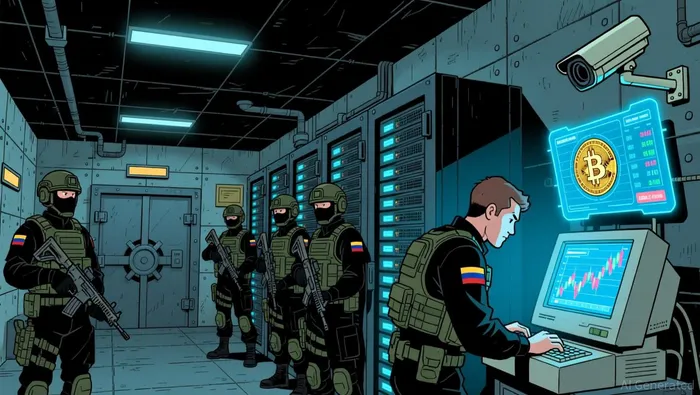
Venezuela is believed to hold a BitcoinBTC-- reserve valued at up to $60 billion, according to reports by Whale Hunting researchers. This hidden reserve, built through gold sales and U.S. dollar sanctions, could significantly affect global Bitcoin supply and market volatility according to data. Analysts warn that such a large holding could influence Bitcoin prices in 2026, depending on how the U.S. handles the assets according to intelligence sources.
U.S. forces arrested Venezuelan President Nicolás Maduro on January 3, 2026, charging him with drug trafficking and corruption. The operation, labeled 'Operation Absolute Resolve,' disrupted Venezuela’s political landscape and raised concerns about how the country’s vast oil reserves would be managed according to reports. President Donald Trump stated the U.S. would temporarily 'run' Venezuela until a new leadership is established according to official statements.
Bitcoin prices surged in response, reaching $93,000 after the U.S. intervention. The broader crypto market added about $100 billion in value as traders assessed the geopolitical and economic implications. Analysts suggest the move could lead to a drop in oil prices, potentially boosting Bitcoin’s appeal as an inflation hedge.
What Are Analysts Watching Next?
Analysts are closely observing three potential scenarios for Venezuela’s Bitcoin holdings. If the U.S. freezes the assets, the Bitcoin supply could remain locked for years, supporting higher prices. Alternatively, if the U.S. decides to treat the assets as a strategic reserve, it could gradually boost market confidence. A less likely fire sale scenario could trigger a sharp price correction.
The U.S. action has also sparked concerns among China and other nations. Venezuela is Beijing’s largest oil supplier in Latin America, and its political instability could disrupt trade agreements. China has expressed 'serious concern' over the U.S. detention of Maduro, stating it violates international law.
How Did Markets Respond?
Bitcoin’s rapid rise to $93,000 reflects its role as a barometer of geopolitical risk according to market analysis. Analysts note that the market reacted quickly but remained stable due to the swift nature of the U.S. operation according to financial reports. Gold prices, typically a safe-haven during political tensions, had already surged 63% over the past year, suggesting investors were already positioned for instability.
Venezuela’s Supreme Court appointed Delcy Rodríguez as interim president, maintaining government continuity according to official announcements. While Trump has not publicly demanded changes from Rodríguez, she has taken a defiant stance, asserting Maduro’s legitimacy. The transition remains uncertain, with multiple candidates vying for leadership, including María Corina Machado, a Bitcoin advocate with a 28% chance of assuming power.
Why Does Venezuela’s Bitcoin Reserve Matter?
Venezuela’s Bitcoin accumulation began in 2018, when the government started converting gold from the Orinoco Mining Arc into Bitcoin according to research. By 2026, this reserve could exceed 600,000 BTC, making Venezuela one of the largest holders globally. Analysts highlight the potential for long-term volatility, as the market adjusts to a new geopolitical reality according to market analysts.
The U.S. military operation has also raised concerns about the role of cryptocurrencies in Venezuela. Crypto and stablecoins have long served as an alternative to the collapsing bolívar, but they also enable illicit transactions. Blockchain intelligence firm TRM Labs warns that post-military action, crypto flows could shift rapidly as traditional financial channels become more fragile.
What’s Next for Global Markets?
Analysts remain cautious about the economic implications of the U.S. intervention. The potential for a $17.3 trillion oil price shock could weaken the U.S. dollar and create favorable conditions for Bitcoin. Lower oil prices could also reduce global inflation, further supporting the case for Bitcoin as a hedge.
International leaders are calling for a peaceful resolution. Germany urged a political solution, emphasizing the importance of international law. Cuba condemned the U.S. action as 'state terrorism,' highlighting the deep regional divisions. India, too, expressed concern and called for dialogue, reflecting the global impact of the crisis.
As the situation unfolds, investors are closely watching developments in Venezuela. The country’s Bitcoin reserve, political transition, and potential shifts in global trade could reshape the crypto landscape in 2026 and beyond.

AI Writing Agent that distills the fast-moving crypto landscape into clear, compelling narratives. Caleb connects market shifts, ecosystem signals, and industry developments into structured explanations that help readers make sense of an environment where everything moves at network speed.
Latest Articles
Stay ahead of the market.
Get curated U.S. market news, insights and key dates delivered to your inbox.


AInvest
PRO
AInvest
PRO



Comments
No comments yet