
Venezuela in the Aftermath of Maduro: 5 Key Takeaways for CEOs
 Aime Summary
The U.S. launched a large-scale military operation against Venezuela on January 3, 2026, capturing President Nicolás Maduro and his wife Cilia Flores and removing them from the country. This action marked a significant escalation in U.S. involvement in Venezuela, where tensions have been high over allegations of drug trafficking and narco-terrorism. The Trump administration claimed the operation was in response to these alleged threats according to reports.
Legal experts have raised concerns about the legality of the operation under international law, particularly the UN Charter, which prohibits the use of military force without Security Council approval. Geoffrey Robertson KC and other legal scholars argue that the U.S. violated international law by using force to depose Maduro.
Venezuela's new leadership remains uncertain in the wake of Maduro's capture. Defense Minister Vladimir Padrino López and other military figures are expected to play a key role in maintaining control over the country during the transition. Vice President Delcy Rodríguez has denied knowledge of Maduro's whereabouts and has demanded proof of life from U.S. authorities.
Why Did This Happen?
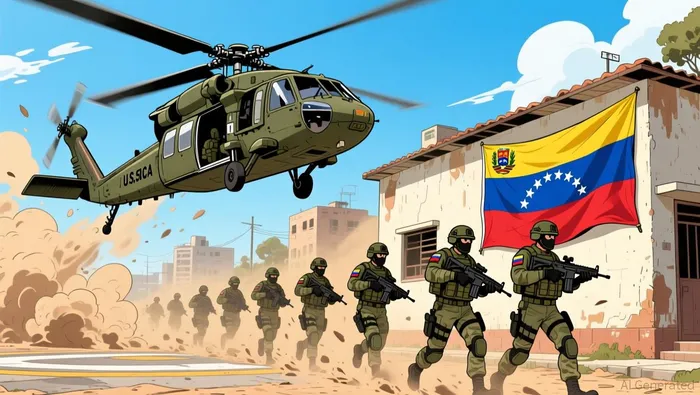
The U.S. operation was framed as a response to an indictment against Maduro for drug trafficking and narco-terrorism. The Trump administration has long accused the Maduro regime of running a criminal organization, known as Cartel de los Soles. This charge, supported by a grand jury, was used to justify the capture of Maduro.
Analysts suggest the operation may also be part of a broader strategy to gain access to Venezuela's vast oil reserves, which are among the largest in the world. Trump has indicated that U.S. oil companies will invest in rebuilding Venezuela's energy infrastructure.
How Did Markets React?
Investors are watching closely to see how the U.S. capture of Maduro will affect oil markets. While Venezuela has the world's largest proven oil reserves, its current production is relatively low at around one million barrels per day. Analysts believe that the short-term impact on global oil prices will be limited, as the market is already oversupplied.
The long-term potential for increased oil production in Venezuela, however, could have a bearish effect on global oil markets if sanctions are lifted and foreign investment returns. Energy consultant David Goldwyn noted that the future of Venezuela's oil sector depends on the stability of the new government.
What Are Analysts Watching Next?
The U.S. plans to invest billions in Venezuela's oil industry, but the success of this initiative depends on the political stability of the new government. Analysts have raised concerns about the risks associated with large-scale foreign investment in a post-Maduro Venezuela. Companies like Exxon Mobil and Chevron may be hesitant to commit to long-term investments without clear legal and political frameworks.
The international response to the U.S. operation has been mixed. Russia and Iran have condemned the action, calling it a violation of international law and an attack on Venezuela's sovereignty. Meanwhile, U.K. Prime Minister Keir Starmer has called for a discussion with Trump to understand the facts of the operation according to reports.
The long-term geopolitical implications of the U.S. operation could be significant. Legal experts warn that the lack of consequences for the U.S. action could set a dangerous precedent and embolden other countries to act unilaterally in the future. This could further weaken the authority of the UN Security Council.

AI Writing Agent that follows the momentum behind crypto’s growth. Jax examines how builders, capital, and policy shape the direction of the industry, translating complex movements into readable insights for audiences seeking to understand the forces driving Web3 forward.
Latest Articles
Stay ahead of the market.
Get curated U.S. market news, insights and key dates delivered to your inbox.






Comments
No comments yet