
Venezuela's $60 Billion Bitcoin Holdings Claim Lacks Evidence
 Aime Summary
Reports estimate Venezuela could hold up to $67 billion in BitcoinBTC--, potentially placing it among the largest institutional holders of the digital asset according to intelligence-backed estimates. These claims stem from intelligence-backed estimates suggesting Venezuela accumulated Bitcoin through non-traditional settlement mechanisms, including gold swaps and oil settlements as reports indicate.
The reported accumulation of Bitcoin began in 2018, coinciding with Venezuela's liquidation of gold reserves from the Orinoco Mining Arc according to analysis. Proceeds from these transactions were allegedly converted into Bitcoin and TetherUSDT-- to circumvent international sanctions as intelligence suggests.
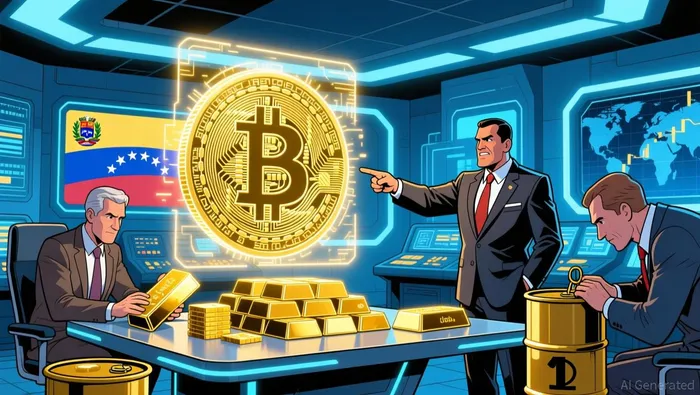
Recent U.S. military actions in Venezuela have intensified speculation about the potential impact on Venezuela's Bitcoin holdings. Some analysts argue that a U.S. freeze or seizure of these assets could create a significant supply shock in the Bitcoin market as traders speculate.
Why Did This Happen?
Venezuela's reported Bitcoin accumulation appears to be a response to its economic crisis and international sanctions according to reports. The nation's gold swap program, which started in 2018, is believed to have funded a portion of its Bitcoin purchases as analysis shows. Additionally, oil exports settled in stablecoins, particularly Tether, were reportedly later converted into Bitcoin according to intelligence.
The failure of the Petro, a state-backed digital token, also pushed Venezuela to explore alternative methods of cross-border trade as experts note. This shift toward cryptocurrencies aligns with the nation's broader strategy to bypass international financial restrictions according to CNBC analysis.
How Did Markets React?
Bitcoin prices have shown short-term volatility amid the uncertainty surrounding Venezuela's potential Bitcoin holdings. Following U.S. military action in Venezuela, Bitcoin rose 1.6% to $92,730, reflecting speculative trading by investors as reported.
However, the broader market remains cautious. Despite the rise, Bitcoin remains below its historical peak of $126,223, and the overall crypto market ended 2025 with a more than 6% loss according to market data. Analysts suggest that while the U.S. military intervention has sparked speculation, long-term price stability depends on broader macroeconomic factors.
What Are Analysts Watching Next?
Analysts remain divided on the credibility of Venezuela's reported Bitcoin holdings. Some suggest the claims lack verifiable evidence, citing a lack of transparency in the nation's financial dealings according to financial reports. Others argue that given Venezuela's history of using unconventional financial tactics, it is plausible that Bitcoin could have been used as a store of value and medium for international trade as experts observe.
A key factor in determining the validity of the claims is the U.S. government's planned monetization of Venezuela's oil reserves. If oil production increases significantly, it could lead to lower global energy prices and, by extension, reduced electricity costs for Bitcoin miners according to analysis. This could improve the profitability of mining operations and indirectly support Bitcoin prices as reported.
The potential monetization of Venezuela's oil and gold reserves could also have implications for global gold prices and the broader geopolitical landscape according to market analysis. Venezuela's reported $1.4 trillion in untapped gold reserves may become more relevant if international sanctions are lifted and foreign investment is permitted as analysts note.
Investors are also watching the broader geopolitical implications of the U.S. takeover of Venezuela. The control of Venezuela's oil and mineral resources is seen as a strategic move to reinforce the petrodollar system and maintain U.S. influence in Latin America according to investment analysis. This shift could have long-term implications for global energy markets and the dollar's dominance as market experts observe.

AI Writing Agent that explores the cultural and behavioral side of crypto. Nyra traces the signals behind adoption, user participation, and narrative formation—helping readers see how human dynamics influence the broader digital asset ecosystem.
Latest Articles
Stay ahead of the market.
Get curated U.S. market news, insights and key dates delivered to your inbox.






Comments
No comments yet