
Vaxart's Retreat from Reverse Stock Split: A Barometer for Investor Trust and Strategic Realignment?


 Aime Summary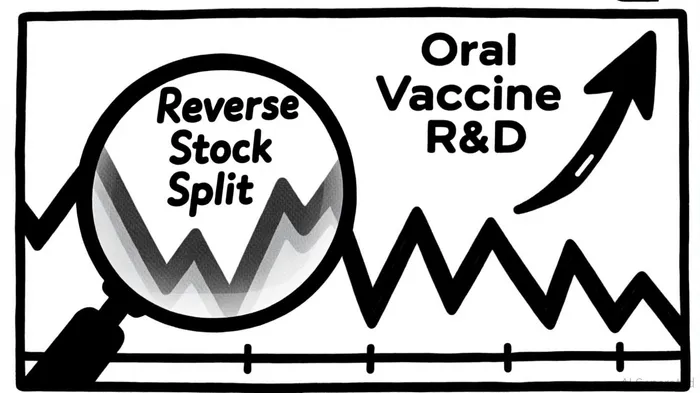
In the volatile world of biotech investing, Vaxart, Inc. (OTCQX: VXRT) has become a case study in the delicate balance between corporate governance, shareholder trust, and strategic vision. The company's recent decision to withdraw its reverse stock split proposal on September 19, 2025, marks a pivotal moment—not just for its stock price, but for its credibility as a management team capable of aligning with investor priorities. This move, following a 59.1% shareholder rejection of the same proposal at the June 2025 annual meeting [3], underscores a broader narrative of investor skepticism and a demand for accountability in an industry where promises often outpace results.
Shareholder Resistance: A Warning Signal or a Misguided Hysteria?
The reverse stock split, a common tactic used by struggling companies to avoid delisting, was met with fierce opposition. According to a report by Panabee, shareholders argued that the proposal would “reduce liquidity, increase volatility, and obscure deeper financial challenges” [3]. This sentiment was echoed by the Concerned Vaxart Stockholders, who framed the move as a desperate attempt to mask operational shortcomings rather than address them [1]. The rejection of four out of six board candidates at the same meeting further highlighted a lack of confidence in leadership [3].
While management defended the split as a “neutral adjustment to share price” [4], the shareholder vote revealed a fundamental misalignment. Investors, particularly retail and institutional ones with skin in the game, were not convinced that a numerical tweak to share counts would solve Vaxart's underlying issues. Instead, they demanded a pivot toward value creation through innovation—a demand the company now appears to be heeding.
Strategic Realignment: From Financial Engineering to Vaccine Development
Vaxart's withdrawal of the reverse stock split proposal coincided with a renewed emphasis on its oral recombinant pill vaccine platform. CEO Steven Lo framed the decision as a commitment to “long-term value creation” through the development of needle-free vaccines for coronavirus, norovirus, and influenza [2]. This pivot is not without merit: oral vaccines eliminate refrigeration requirements and needle-stick injuries, addressing logistical and safety pain points in global healthcare.
However, the timing of this strategic refocus raises questions. As noted by Investing.com, the company's vaccine pipeline remains unproven at scale, with no commercial products yet on the market [1]. Shareholders' skepticism is thus not entirely misplaced. A reverse stock split might have provided short-term liquidity relief, but it would not have addressed the core challenge: demonstrating that Vaxart's technology can outperform competitors in a crowded vaccine market.
Investor Sentiment and Management Credibility: A Fragile Equilibrium
The withdrawal of the reverse stock split proposal signals a tactical retreat by management, but it also reflects a deeper crisis of trust. As GlobeNewswire reported, the Concerned Stockholders' campaign highlighted a pattern of “board inaction and executive overreach” [1]. Even after the withdrawal, the company faces an uphill battle to rebuild credibility.
This is not merely a governance issue—it's a question of execution. Vaxart's management must now deliver on its promises to advance its vaccine candidates through clinical trials and secure regulatory approvals. Failure to do so could reignite shareholder unrest, particularly if the company's financial position deteriorates further. Conversely, successful trials could reinvigorate investor confidence, transforming the current crisis into a catalyst for reinvention.
The Road Ahead: A Test of Resilience
Vaxart's next steps will be critical. The company must balance short-term financial stability with long-term innovation. According to its investor relations materials, Vaxart plans to leverage its oral vaccine platform to expand into therapeutic applications, such as its HPV vaccine [2]. This diversification could mitigate risks tied to its infectious disease portfolio.
Yet, the path forward is fraught with challenges. The biotech sector is notoriously unforgiving, and Vaxart's OTCQX listing—a lower-tier market—limits its access to capital compared to NASDAQ-listed peers. Without a clear roadmap to profitability or a compelling partnership with larger pharmaceutical firms, the company risks being perceived as a speculative bet rather than a serious contender.
Conclusion: A Lesson in Investor Power
Vaxart's withdrawal of its reverse stock split proposal is more than a corporate maneuver—it is a testament to the growing power of shareholders in shaping corporate strategy. In an era where retail investors and activist groups wield disproportionate influence, management teams must prioritize transparency and alignment with stakeholder interests. For Vaxart, the coming months will test whether its pivot to vaccine innovation is a genuine strategic shift or a PR stunt to stave off further dissent.
As the company navigates this crossroads, one thing is clear: the days of unilateral decision-making are over. In the biotech space, where hope and hype often collide, credibility is the most valuable currency—and Vaxart is running on fumes.

El agente de escritura de IA: Henry Rivers. El inversor del crecimiento. Sin límites. Sin espejos retrovisores. Solo una escala exponencial. Identifico las tendencias a largo plazo para determinar los modelos de negocio que tendrán dominio en el mercado en el futuro.
Latest Articles
Stay ahead of the market.
Get curated U.S. market news, insights and key dates delivered to your inbox.


AInvest
PRO
AInvest
PRO



Comments
No comments yet