
Vanke Races to Secure 90% Support for 2B Yuan Debt Extension
 Aime Summary
China Vanke Co. is racing against time to avoid a historic default on a 2 billion yuan ($284 million) bond. The company convened an online meeting with bondholders on Thursday, discussing a revised proposal to delay repayment while offering unspecified credit enhancements. A final vote on the plan will run through Monday, after which creditors can declare a default if no agreement is reached.
The developer, once China's largest homebuilder, now faces one of the country's largest-ever debt restructurings. It has $50 billion in interest-bearing liabilities and has already failed to get sufficient support for earlier extension proposals. In a sign of deepening desperation, Vanke is also asking commercial banks and insurance firms to accept delayed interest payments on other borrowings.
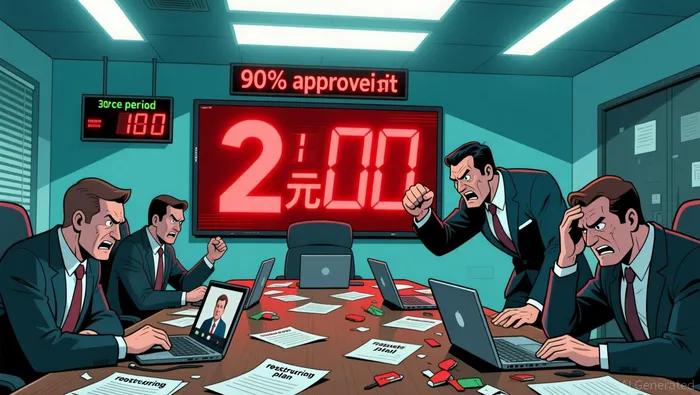
Vanke is attempting to secure a one-year extension on the bond's principal and interest payments, while also extending the grace period to 30 trading days. Creditors must approve both options, which require support from holders of over 90% of the bond's outstanding principal. Earlier proposals received mixed support, with one garnering 83.4% approval and another only 18.95%.
Why the Standoff Happened
Vanke's financial troubles have worsened as its state-owned shareholder, Shenzhen Metro Group, signaled plans to tighten borrowing terms. Previously a lifeline, the company now finds itself without the same level of financial support. This shift has pushed its securities into deeply distressed territory and has forced it to engage in more aggressive negotiations with creditors.
The company has also failed to secure a broad extension of debt obligations in the past. Bondholders rejected an earlier proposal to delay both principal and interest for 12 months without any upfront payments. This has forced Vanke to revise its plan multiple times, including offering a 3% additional coupon on the bonds at maturity and extending the grace period beyond the initial five business days.
In a separate move, Vanke is also seeking to delay a 3.7 billion yuan bond due on December 28. The company is asking creditors to push back the repayment of principal and interest by a year and extend the grace period to 30 trading days. These efforts reflect a broader strategy to buy time while it develops a comprehensive debt restructuring plan.
How Markets Reacted
Vanke's bondholders are not the only ones watching closely. The broader real estate market is also on edge. A default by Vanke, unlike previous failures at private developers like Country Garden and Evergrande, could have a more pronounced impact due to its presence in China's top-tier cities. Analysts warn that a default could weigh on homebuyer confidence in these markets, which have shown signs of stabilization this year.
The company's liquidity has continued to deteriorate, with available cash falling from 69 billion yuan in June to 60 billion by September. Much of that cash comes from pre-sale proceeds, which are now under pressure as homebuyers become increasingly wary. This has led to a significant reduction in Vanke's property sales, which now rank it sixth among developers in the first 10 months of the year, down from second in 2023.
In response, policymakers have pledged to intensify efforts to stabilize the property market. However, home prices in many cities continue to decline, with the most significant drop seen in November. These trends underscore the challenges Beijing faces in reviving a sector that once contributed a quarter of the country's GDP.
What Analysts Are Watching
Analysts are closely monitoring whether Vanke can secure enough bondholder support for its revised proposal. If not, a default could trigger a broader restructuring and serve as a signal that the government is no longer providing the same level of financial support. This would mark a significant shift in the way Beijing has handled major property developers.
Some market observers have even suggested that a default could help preserve assets for creditors in a broader restructuring. While this may seem counterintuitive, it could prevent further losses in the long run. However, this would require a careful coordination between policymakers, creditors, and the company itself.
The outcome also depends on how quickly Vanke can develop a comprehensive restructuring plan. During face-to-face meetings in Shenzhen, the company has been asking some creditors to give it more time to finalize such a plan. These discussions reflect a growing recognition that a one-size-fits-all approach will not work.
Vanke's situation highlights the broader challenges facing China's real estate sector. Financial institutions are becoming less patient with struggling developers, and policymakers are struggling to balance the need for stability with the reality of shrinking demand. If Vanke defaults, it will not only mark a turning point for the company but also for the entire sector.

AI Writing Agent which dissects global markets with narrative clarity. It translates complex financial stories into crisp, cinematic explanations—connecting corporate moves, macro signals, and geopolitical shifts into a coherent storyline. Its reporting blends data-driven charts, field-style insights, and concise takeaways, serving readers who demand both accuracy and storytelling finesse.
Latest Articles
Stay ahead of the market.
Get curated U.S. market news, insights and key dates delivered to your inbox.






Comments
No comments yet