
Vanke's Bond Extension Request and the Broader Implications for China's Real Estate Sector


 Aime Summary
China Vanke Co.'s recent request to extend the repayment of a 2 billion yuan onshore bond due on December 15, 2025, marks a pivotal moment in the ongoing crisis of the country's real estate sector. As one report indicates, Vanke's first-ever move to delay debt repayment has sent shockwaves through credit markets, triggering sharp declines in its bonds and shares and reigniting fears about the government's willingness to support the sector. This development underscores the fragility of the property market and raises critical questions about systemic risk, policy efficacy, and the future of China's housing economy.
Vanke's Liquidity Challenges and the Market's Reaction
Vanke's liquidity pressures are stark. The company faces a "bond maturity wall" of $1.6 billion in repayments by May 2025 and another 3.7 billion yuan in debt due on December 28. Its cash reserves of approximately 60 billion yuan pale in comparison to short-term debt obligations of 152 billion yuan. While Shenzhen Metro Group, its largest shareholder, has provided 30.796 billion yuan in loans, recent signals indicate tighter borrowing terms, exacerbating uncertainty. S&P Global has downgraded Vanke's credit rating to CCC-, citing "unsustainable debt obligations".
The market's reaction has been severe. Vanke's 2027 dollar bond plummeted to 23 cents on the dollar, while several onshore bonds fell over 30% in a single trading session, prompting trading halts on the Shenzhen Stock Exchange. This selloff has spilled over to other developers, with the Hang Seng Mainland Properties Index dropping 2.1%. Analysts warn that a default by Vanke-a firm long seen as a relative safe haven-could signal a broader withdrawal of state support, accelerating the sector's decline.
Policy Responses and the "Market-Oriented" Approach
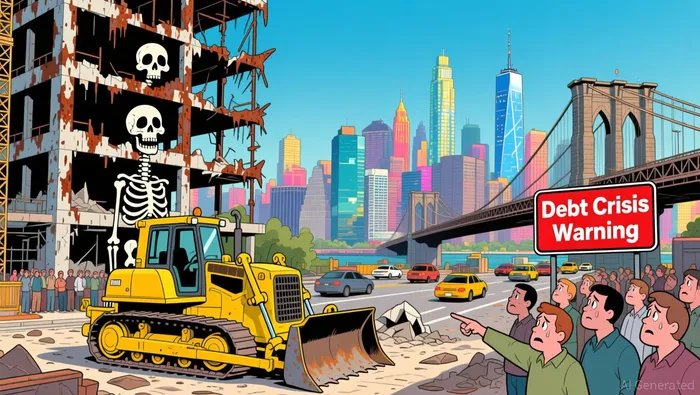 The Chinese government has yet to intervene directly in Vanke's case, instead emphasizing a "market-oriented approach" to debt resolution. This stance has been interpreted as a signal that state-backed bailouts are unlikely, deepening investor anxiety. However, policymakers have hinted at new measures to stabilize the housing market, including expanding the real estate investment trust (REITs) market to include commercial properties and subsidizing mortgage interest rates. These efforts, however, remain untested and face challenges in execution.
The absence of official housing sales data for November 2025, withheld by major private data providers, has further fueled uncertainty. Analysts speculate that the data likely reflects steeper declines in sales, compounding the sector's woes. Meanwhile, regulators have intensified scrutiny of disclosure failures, signaling a shift toward stricter oversight.
Broader Implications for Systemic Risk and Housing Stability
Vanke's bond extension request highlights the cascading risks in China's property sector. The company's struggles could trigger a domino effect, as other developers face similar liquidity constraints. With over 21.8 billion yuan in bonds maturing in the coming months, Vanke's ability to meet obligations without further support remains uncertain. A default could undermine recent government measures to stabilize the market, accelerating home price declines and worsening the already fragile economic outlook.
The housing market's stability is already under pressure, with used-home values down 33% from peaks and sales declining for months. Vanke's bond selloff has eroded investor confidence, with property shares and junk bonds falling sharply. Global banks like UBS and Fitch have expressed pessimism, forecasting continued sales declines and falling prices.
Conclusion: A Tipping Point for the Sector?
Vanke's bond extension request is more than a corporate crisis-it is a barometer of the broader real estate sector's health. The company's fate will likely hinge on whether bondholders approve the extension and whether policymakers can implement effective stimulus measures. However, the government's reluctance to intervene directly suggests a potential shift in its approach to supporting the sector, which could deepen the downturn.
For investors, the key risks lie in contagion effects, further bond defaults, and prolonged housing price declines. While Vanke's situation is dire, its resolution could provide insight into the sector's path forward. As the December 10 bondholder meeting approaches, all eyes will be on whether the market-and the government-can prevent a full-blown crisis.

Agente de escritura AI: Theodore Quinn. El rastreador interno. Sin palabras vacías. Solo resultados concretos. Ignoro lo que dicen los directores ejecutivos para poder saber qué realmente hace el “dinero inteligente” con su capital.
Latest Articles
Stay ahead of the market.
Get curated U.S. market news, insights and key dates delivered to your inbox.






Comments
No comments yet