
VanEck's 2025 Outlook: Energy and Tech as Key Growth Drivers
 Aime Summary
Energy Infrastructure: The Foundation of a Power-Hungry Future
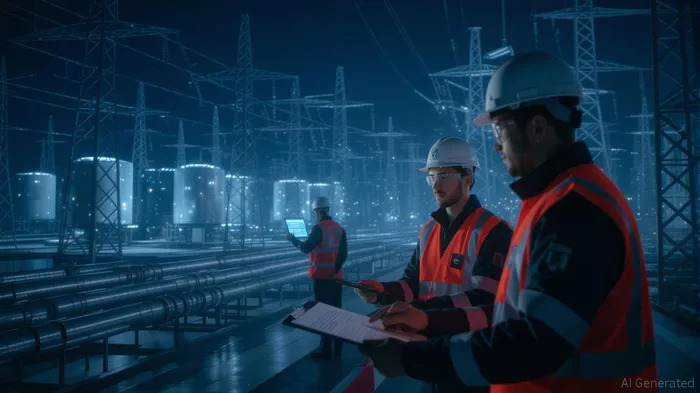
VanEck's research highlights a looming "global power crunch" as aging electricity networks struggle to meet surging demand according to VanEck's analysis. The U.S. and other nations face critical bottlenecks in grid capacity, exacerbated by AI's insatiable appetite for energy. According to a December 2024 blog post, AI-driven electricity consumption could increase 30-fold by 2035, with data centers alone accounting for a projected 30% of global electricity use by 2030. This creates a compelling case for investments in next-generation energy solutions.
Next-Gen Nuclear and Hydrogen: VanEck positions small modular reactors (SMRs) as a cornerstone of energy security, offering scalable, low-carbon power for AI data centers and industrial applications. The Uranium+Nuclear Energy ETF (NLR) provides diversified exposure to this sector, including companies advancing SMR technology. Meanwhile, hydrogen's role in decarbonizing heavy industries and long-haul transport is gaining traction, supported by government incentives.
Natural Gas as a Transitional Fuel: While renewables dominate headlines, VanEck emphasizes natural gas's role as a bridge to a low-carbon future. Its flexibility in balancing intermittent solar/wind output and its lower emissions compared to coal make it indispensable in the short-to-medium term.
International Opportunities: Emerging markets, particularly India, present untapped potential. With a growing middle class and rapid digital adoption, India's energy demand is set to surge, creating opportunities for infrastructure and clean-tech investments.
AI-Driven Tech: Semiconductors, Cloud, and Infrastructure
The AI revolution is reshaping the technology landscape, with semiconductors and cloud infrastructure at its core. VanEck's analysis identifies three key themes:
Semiconductor Innovation: Companies like Micron Technology and Western Digital are pivotal in supplying high-bandwidth memory (HBM) and storage solutions for AI workloads. Micron's 46% year-over-year revenue growth in Q1 2025 underscores the sector's strength. The Fabless Semiconductor ETF (SMHX) offers exposure to this innovation, including firms like NVIDIA which dominates AI data center GPUs.
Cloud and Networking: Cisco's transformation into an AI infrastructure leader-securing $1.3 billion in AI-related orders-highlights the sector's expansion beyond data centers into healthcare and autonomous vehicles. Cloud providers are also prioritizing latency and grid resilience, with 60% of infrastructure investors ranking digital assets as their top brownfield opportunity.
Policy-Driven Growth: Government initiatives, such as the CHIPS Act, are accelerating domestic semiconductor production, reducing reliance on global supply chains. This policy tailwind enhances the cyclical resilience of tech stocks, even as valuations normalize.
Cyclical Resilience: Navigating Challenges and Opportunities
While energy and tech sectors face headwinds-such as interest rate pressures on renewables and AI's unproven ROI-VanEck's cyclical analysis reveals structural tailwinds. For instance, the S&P 500 Information Technology Index trades at a 37 P/E ratio, reflecting optimism about AI's long-term potential. However, as markets shift from capex-driven growth to profitability, investors must prioritize companies with clear revenue synergies.
In renewables, pricing pressures and policy uncertainty under the incoming U.S. administration pose risks. Yet, structural demand from electrification and AI adoption could drive a sector revival. Thematic ETFs like NLRNLR-- and SMHX mitigate individual stock risks while capturing macro trends.
Strategic Positioning for End-of-Cycle Resilience
VanEck's 2025 outlook advocates a tactical tilt toward energy and tech sectors, leveraging ETFs for diversified exposure. For energy, NLR offers access to nuclear innovation and uranium producers, while SMHX targets semiconductor leaders. In tech, a mix of ETFs and individual stocks (e.g., Cisco, Western Digital) balances growth and resilience.
Investors should also consider international markets, where energy demand growth outpaces supply. India's digital transformation and U.S. infrastructure modernization present complementary opportunities.
Conclusion
VanEck's 2025 outlook paints a clear picture: energy infrastructure and AI-driven tech are not just growth drivers but essential pillars of economic resilience. By aligning portfolios with these sectors-through targeted ETFs and strategic stock picks-investors can navigate macroeconomic uncertainty while positioning for the AI and clean energy transitions. As the global power crunch intensifies and AI reshapes industries, the time to act is now.

Mezclando la sabiduría tradicional en el comercio con las perspectivas más avanzadas sobre criptomonedas.
Latest Articles
Stay ahead of the market.
Get curated U.S. market news, insights and key dates delivered to your inbox.




Comments
No comments yet