
Vandenberg Launch Delays: What Investors Should Know About Final 2025 Mission
 Aime Summary
The final scheduled Falcon 9 launch of 2025 has been delayed once again due to a ground systems issue at Vandenberg Space Force Base, raising questions for investors and observers about the timeline and technical hurdles involved. This mission, carrying an Earth observation satellite for the Italian government, represents a significant opportunity for SpaceX to showcase its commercial satellite deployment capabilities. , SpaceX continues to demonstrate its capacity to execute complex missions efficiently and at scale. However, the delay highlights the ongoing challenges related to ground support equipment and mission readiness, even as the company achieves record-breaking performance in other areas like Starlink satellite deployments.
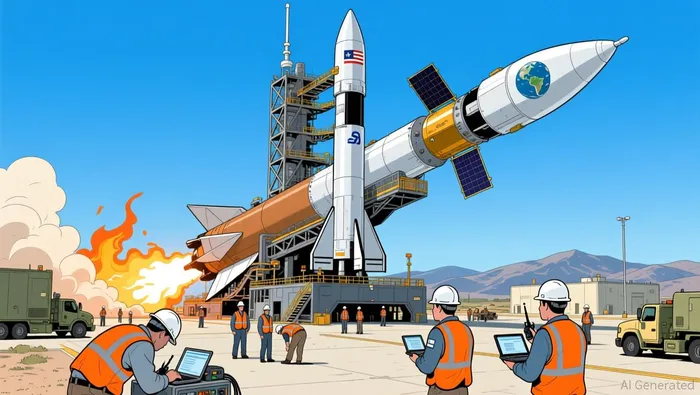
Why Is the Vandenberg Launch Delay Affecting Final 2025 Mission?
The COSMO-SkyMed Second Generation Flight Model 3 satellite is a dual-use asset for the Italian government, serving both civilian and military applications. Designed to operate in a Sun-synchronous polar orbit, the satellite is equipped with in the X-band, allowing it to capture high-resolution imagery regardless of weather or lighting conditions. This makes the satellite particularly useful for applications like emergency response, cartography, and environmental monitoring. The satellite is the third in a planned series of four, manufactured by , and it will provide data for maritime surveillance and agricultural management. The satellite’s launch represents a key step forward in Italy’s efforts to modernize its Earth observation capabilities.
The delay is attributed to a ground support equipment malfunction, which requires additional time for diagnostics and troubleshooting. While the rocket and payload remain in good condition, the issue has pushed back the launch window. The Federal Aviation Administration has indicated that potential attempts could occur as early as Wednesday or Friday, depending on the progress of resolution efforts. This delay underscores the importance of ground infrastructure and the critical role it plays in ensuring the success of even the most routine missions.

Stay ahead of the market.
Get curated U.S. market news, insights and key dates delivered to your inbox.


AInvest
PRO
AInvest
PRO



Comments
No comments yet