
Vance Blames Democrats as Shutdown Deadline Nears, Jeopardizing Vital Economic Insights


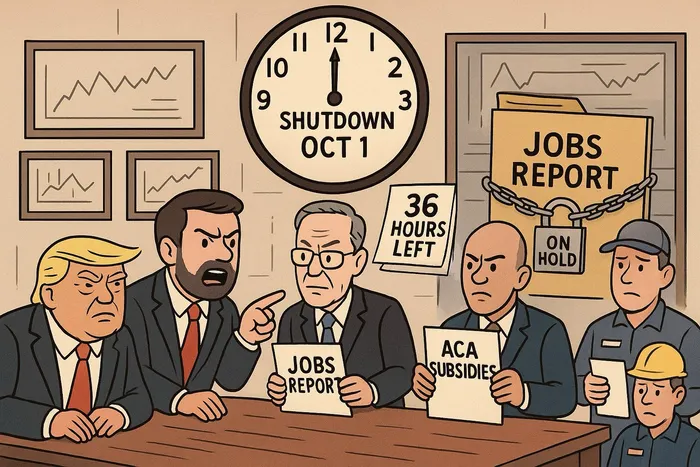
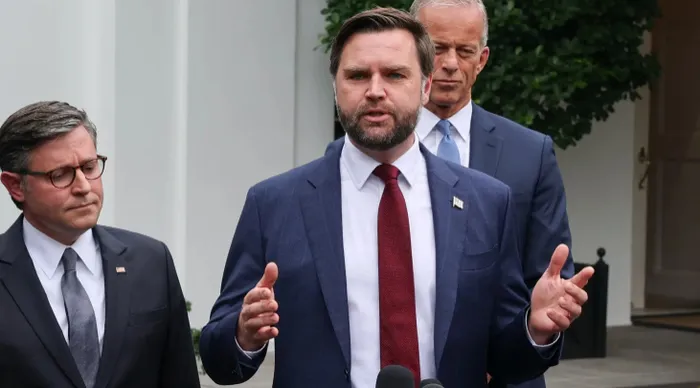
As the clock ticks down to October 1, the specter of a U.S. government shutdown looms large, with Vice President JD Vance pointing fingers squarely at Democrats for refusing to budge on key health-care demands.
Following a tense White House meeting with President Donald Trump and congressional leaders, Vance emerged to declare that a shutdown appears inevitable unless Democrats "do the right thing." This impasse, rooted in disputes over extending Affordable Care Act subsidies and reversing Medicaid cuts from Trump's landmark tax legislation, could ripple through financial markets by delaying critical economic data releases, leaving investors and Federal Reserve policymakers in the dark at a pivotal moment.
The standoff underscores the fragility of Washington's fiscal machinery, where even a Republican-controlled Senate requires Democratic votes to clear procedural hurdles. With federal funding set to lapse in less than 36 hours from the meeting, the potential disruption extends far beyond politics, threatening to withhold essential indicators that shape monetary policy and market expectations.
Stalemate in High-Stakes Negotiations
At the heart of the deadlock are Democrats' insistence on addressing health-care priorities before approving any short-term spending bill. Senate Democratic Leader Chuck Schumer, emerging from the White House talks, acknowledged "large differences" between the parties but hinted at flexibility on certain fronts, such as extending ACA premium subsidies and curbing the White House's use of fast-track procedures to rescind funds. However, he drew a firm line against passing the GOP's stopgap measure without immediate action on those credits, warning that millions of Americans face notices of steep premium hikes.
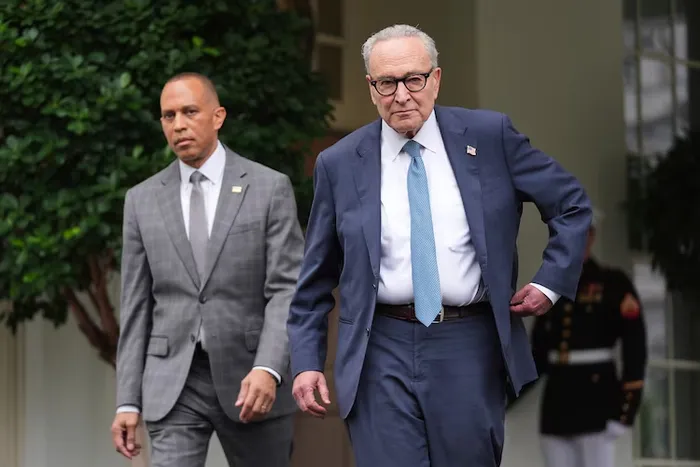
Schumer placed the onus on Trump, stating, "It's in the president's hands." House Minority Leader Hakeem Jeffries echoed this skepticism, rejecting any mere promises of future collaboration on health care. Citing Republicans' decade-long efforts to repeal Obamacare, Jeffries argued that trusting their word would be "unreasonable." Democrats are pushing for a $350 billion infusion to permanently extend tax credits for middle-class families, alongside repealing Medicaid work requirements, cracking down on state reimbursement gimmicks, and restoring cuts to medical research.
On the Republican side, Senate Majority Leader John Thune labeled Democrats' tactics as "hostage taking," insisting on prioritizing a clean funding extension to November 21 before broader discussions. Yet Vance conceded that some Democratic positions, like bolstering rural health-care funding, seemed "reasonable" to the president and could form the basis for compromise. South Dakota Senator Mike Rounds floated a potential middle ground: extending ACA credits for several years but phasing them down to pre-pandemic levels in later years. He suggested such a deal could materialize quickly if Democrats agreed to avert the shutdown first.
Despite these glimmers of negotiation, the path forward remains obstructed. Republicans need at least eight Democratic votes in the Senate to overcome opposition, including from GOP Senator Rand Paul of Kentucky. As lawmakers scrambled late Monday for resolutions, the absence of consensus heightened the shutdown risk.
Economic Fallout: Data Blackout and Worker Disruptions
A shutdown would inflict immediate pain on the economy, starting with a blackout on vital data from the Labor Department. According to the department's contingency plan, the Bureau of Labor Statistics (BLS) would suspend all operations, halting the release of scheduled economic reports and ceasing active data collection for surveys. This includes the monthly nonfarm payrolls report, due Friday, which comes amid signs of weakening job growth and serves as a bellwether for labor market health.
The ripple effects extend to weekly initial jobless claims reports and the October 15 consumer price index (CPI), the final inflation gauge before the Federal Reserve's late-October meeting. In total, the BLS issues about a dozen monthly reports covering wages, import/export prices, and consumer activities—all of which could face delays if the shutdown persists. The department's plan emphasizes an "orderly suspension" of non-essential programs while maintaining limited authorized activities, but the BLS website would go dark, with no updates or restorations during the lapse.
Beyond data, hundreds of thousands of federal workers face furloughs, with others required to continue essential
services without pay. Historically, these employees return and receive back pay upon reopening, but Trump has escalated tensions by threatening mass permanent firings—a move not reflected in agency shutdown plans. Vance reassured that "essential services" would persist, yet the uncertainty could exacerbate economic drag.
From a financial analyst's vantage, this data void arrives at a precarious juncture. Investors rely on these metrics to gauge economic momentum, inflation trajectories, and Fed rate decisions. Without the jobs report, for instance, assessments of labor slack—critical for predicting wage pressures and policy shifts—become speculative. The CPI delay could muddle the Fed's inflation outlook, potentially injecting volatility into bond yields and equity valuations as markets price in heightened uncertainty.
Market Reactions and Investor Implications
U.S. stocks trimmed gains Monday after the BLS announced its intent to withhold data during a shutdown, signaling investor unease. While equities have shown resilience amid fiscal brinkmanship in the past, the current environment—marked by elevated valuations and sensitivity to Fed signals—amplifies risks. A prolonged impasse could erode consumer confidence, delay infrastructure spending, and strain supply chains already under pressure.
Analysts must consider the broader fiscal context: The shutdown stems from unresolved tensions in Trump's tax overhaul, which embedded Medicaid reductions to offset corporate rate cuts. Democrats' demands to unwind these—while blocking rescissions of prior appropriations—highlight ongoing battles over entitlement spending. If unresolved, this could foreshadow deeper fiscal clashes, including debt ceiling debates that might resurface post-election.
For portfolio managers, hedging strategies become paramount. Short-term Treasuries may see safe-haven bids, but prolonged disruption could widen credit spreads and pressure high-yield sectors tied to government contracts. Equity sectors like health care, already volatile amid policy flux, face amplified swings if ACA subsidies lapse, potentially triggering premium spikes and enrollment drops.
Historical Echoes and Path Ahead
This wouldn't be uncharted territory; the last shutdown, spanning five weeks in 2018-2019 under Trump's first term, disrupted services over New Year's and exacted a measurable GDP hit. Back then, as now, partisan divides over funding priorities—wall funding versus broader spending—led to stalemates. Yet today's health-care focus adds a layer of urgency, with real-world impacts on premiums set to materialize January 1.
As Rounds and others probe for deals, the window narrows. A phased ACA extension could bridge the gap, but Democrats' distrust runs deep, rooted in years of repeal attempts. Vance's blame game may rally the base, but it risks alienating moderates needed for bipartisan support.
In the end, financial markets abhor uncertainty, and this shutdown threat embodies it. Investors should monitor Capitol Hill closely, bracing for delayed data that could obscure economic realities just as the Fed navigates its next moves. Whether compromise prevails or shutdown ensues, the episode serves as a stark reminder of Washington's influence on Wall Street—and the high stakes when politics collides with policy.

Expert analysis on U.S. markets and macro trends, delivering clear perspectives behind major market moves.
Latest Articles
Stay ahead of the market.
Get curated U.S. market news, insights and key dates delivered to your inbox.


AInvest
PRO
AInvest
PRO



Comments
No comments yet