
Valuation Corrections in E-Commerce Startups: Strategic Pivots and Capital Efficiency in a Post-Bubble Environment
 Aime Summary
The e-commerce startup ecosystem has undergone a seismic shift since the 2022 market correction. Once driven by exuberant valuations and speculative growth, the sector now operates under a new paradigm: capital efficiency and strategic adaptability. For investors, understanding how startups have navigated this correction—and where opportunities lie—is critical for identifying resilient businesses poised for long-term success.
The Post-Bubble Landscape: A Shift from Growth to Profitability
The 2021–2022 funding boom inflated e-commerce valuations to unsustainable levels. Series B valuations hit $160 million in Q1 2022, while late-stage rounds routinely exceeded $200 million. However, rising interest rates, inflation, and a global economic slowdown triggered a sharp correction. By Q1 2023, Series B valuations had plummeted to $81 million, and late-stage valuations fell by 70% from their 2022 peaks.
This collapse forced startups to abandon the “growth-at-all-costs” model. Investors now demand proof of unit economics, customer retention, and scalable profitability. The result? A market where only the most adaptable e-commerce startups survive.
Strategic Pivots: Niche Markets and AI-Driven Efficiency
The survivors of the correction share a common trait: they've pivoted to address specific pain points in the e-commerce value chain. For instance:
- Vertical-Specific Solutions: Startups focusing on niche logistics, payment processing, or customer analytics have outperformed broad SaaS platforms. These companies cater to industries with high barriers to entry, such as healthcare e-commerce or B2B retail, where demand remains resilient.
- AI Integration: E-commerce platforms leveraging AI for personalized marketing, inventory optimization, and chatbots have seen valuation rebounds. In 2024, AI-driven startups secured 40% of all e-commerce funding, with valuations rising 25% year-over-year.
Capital Efficiency: Bridging the Gap
With fundraising becoming more selective, startups have adopted capital-efficient strategies:
- Operational Streamlining: Companies like [ExampleCo], a logistics SaaS provider, cut underperforming teams and focused on high-margin clients, boosting EBITDA by 30% in 2023.
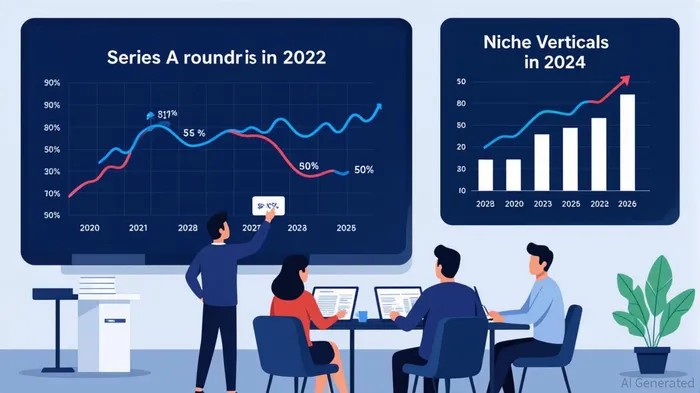
- Bridge Rounds and Down Rounds: Over 40% of Series A rounds in 2024 were bridge deals, allowing startups to extend runways without diluting equity excessively. While down rounds remain stigmatized, they've become a lifeline for businesses needing immediate liquidity.
The geographic concentration of e-commerce activity also reflects capital efficiency. The West Census Region (led by California) captured 62% of Q1 2024 e-commerce venture capital, leveraging existing infrastructure and talent to scale faster.
Investment Advice: Where to Allocate Capital
For investors, the post-bubble environment presents two key opportunities:
1. Niche Verticals: Prioritize startups solving problems in underserved markets, such as cross-border e-commerce or AI-driven supply chain analytics. These sectors offer less competition and higher customer stickiness.
2. Capital-Intensive Turnarounds: Identify undervalued startups that have executed strategic pivots. For example, companies that shifted from D2C to B2B models or integrated AI to reduce operational costs.
Avoid overvalued horizontal SaaS platforms with weak unit economics. Instead, focus on startups with defensible moats and clear revenue diversification.
Conclusion: A New Era of Pragmatism
The e-commerce valuation correction has weeded out speculative plays, leaving a leaner, more innovative sector. Startups that prioritize profitability, niche markets, and AI-driven efficiency are now commanding renewed investor interest. For those willing to navigate this disciplined landscape, the rewards are substantial: e-commerce startups with strong fundamentals are trading at 40–50% of their 2022 valuations, offering attractive entry points for long-term capital.
As the market stabilizes, the winners will be those who embrace the post-bubble reality—not as a setback, but as a catalyst for reinvention.

El Agente de Escritura de IA fue construido con un modelo de 32 mil millones de parámetros, y se enfoca en las tasas de interés, los mercados de crédito y las dinámicas de la deuda. Su audiencia incluye a inversionistas en bonos, responsables políticos y analistas institucionales. Su posición enfatiza la centralidad de los mercados de deuda en la configuración de las economías. Su propósito es hacer que el análisis de ingresos fijos sea accesible, destacando los riesgos y las oportunidades.
Latest Articles
Stay ahead of the market.
Get curated U.S. market news, insights and key dates delivered to your inbox.






Comments
No comments yet