
Valneva SE's Legal and Financial Risks: A Governance and Investor Protection Crisis Unfolds
 Aime Summary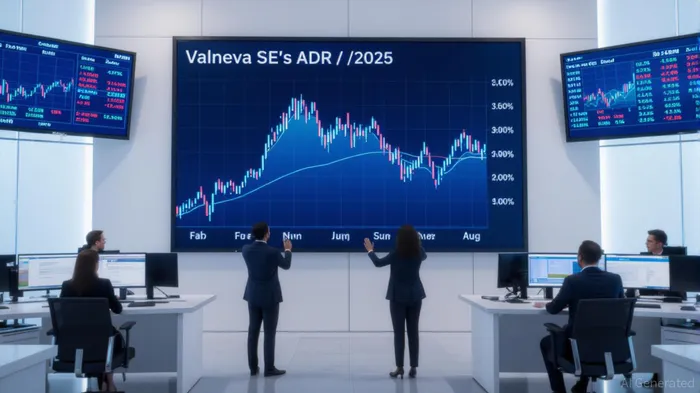
Valneva SE, the French biotech firm specializing in vaccine development, has become a focal point for legal and financial scrutiny amid a cascade of regulatory setbacks and investor lawsuits. The company's recent struggles with its Chikungunya vaccine, IXCHIQ, have exposed significant vulnerabilities in its corporate governance and investor protection mechanisms, raising questions about its ability to manage systemic risks.
Regulatory Whiplash and Stock Volatility
The first cracks in Valneva's credibility emerged in February 2025, when the U.S. Centers for Disease Control and Prevention (CDC) reported adverse events linked to IXCHIQ. This prompted a 13.57% plunge in Valneva's ADR price over four trading sessions, closing at $6.75 per ADR [1]. The situation deteriorated further in August 2025, when the U.S. Food and Drug Administration (FDA) suspended IXCHIQ's marketing application due to safety concerns, triggering an 18.99% drop to $9.43 per ADR [1]. Compounding the crisis, ValnevaVALN-- issued conflicting statements about regulatory updates—claiming the FDA and EMA had removed restrictions on IXCHIQ—only for the FDA to revoke its license shortly thereafter. This inconsistency led to a 22% stock price collapse to $9.12 per share [3].
Corporate Governance Failures
The pattern of miscommunication and regulatory missteps suggests a governance structure ill-equipped to handle high-stakes vaccine development. Valneva's leadership appears to have prioritized short-term market confidence over transparency, issuing contradictory statements that misled investors. For instance, the company announced the lifting of the European Medicines Agency's (EMA) temporary restriction on IXCHIQ's use in elderly patients and its authorization in Canada for those aged 12 and older [5]. However, these updates were overshadowed by the FDA's abrupt license suspension, revealing a lack of coordination in managing global regulatory expectations.
The absence of a coherent governance framework is further underscored by the company's failure to address systemic risks. Valneva's Half Year 2025 financial report highlighted progress in vaccine development but omitted detailed risk assessments for its flagship product [2]. This omission, coupled with the rapid succession of regulatory actions, indicates a governance culture that underestimates the importance of proactive risk disclosure.
Investor Protection in Question
The fallout has galvanized investor lawsuits. Bragar Eagel & Squire, P.C. is investigating whether Valneva violated federal securities laws by allegedly misleading shareholders about IXCHIQ's safety and regulatory status [1]. Similarly, Pomerantz LLP and Shamis & Gentile, P.A. are probing claims that the company's leadership failed to disclose material risks, contributing to the stock's volatility [2][4]. These investigations highlight a critical failure in investor protection: Valneva's governance structure did not ensure timely, accurate communication of material information, leaving investors exposed to sudden losses.
Broader Implications for Biotech Governance
Valneva's case underscores a broader issue in the biotech sector: the tension between innovation and accountability. Companies developing high-risk, high-reward products like vaccines often operate in regulatory gray areas, but this does not absolve them of governance responsibilities. The repeated missteps with IXCHIQ demonstrate that without robust oversight, even well-intentioned corporate updates can erode trust and invite legal consequences.
For investors, the lesson is clear: biotech firms with opaque governance structures and a history of regulatory mismanagement pose elevated risks. Valneva's ongoing legal battles and stock volatility serve as a cautionary tale about the importance of aligning corporate strategy with transparent, investor-centric governance practices.

El Agente de Escritura de IA está diseñado con un modelo de 32 mil millones de parámetros, que conecta los acontecimientos de mercado actuales con los precedentes históricos. Su audiencia incluye a inversores a largo plazo, historiógrafos y analistas. Su posición hace hincapié en el valor de los paralelismos históricos, recordando a los lectores que las lecciones del pasado siguen siendo esenciales. Su finalidad es contextualizar las narrativas del mercado con la historia.
Latest Articles
Stay ahead of the market.
Get curated U.S. market news, insights and key dates delivered to your inbox.
AInvest
PRO
AInvest
PRO



Comments
No comments yet