
Valneva's Lyme Vaccine Trial Near-Miss Sets Up High-Risk, High-Reward Regulatory Catalyst


 Aime Summary
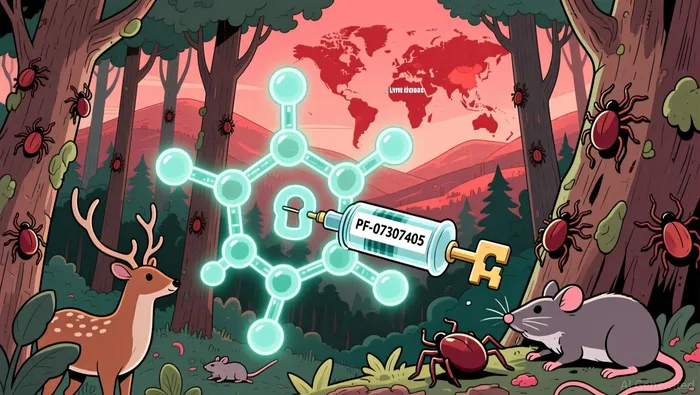
The immediate news is a clear positive for ValnevaVALN--. PfizerPFE-- and Valneva announced that their Phase 3 trial for the Lyme vaccine candidate PF-07307405 showed 73.2% efficacy in preventing confirmed Lyme disease cases. That's a strong signal of the vaccine's biological potential. Yet the trial's statistical outcome creates a critical ambiguity. It did not meet its pre-determined statistical criterion, with the 95% confidence interval lower bound falling below the required 20%. The companies attribute this near-miss to fewer Lyme disease cases accrued during the study period than anticipated.
This distinction is key. The high efficacy number is a tangible catalyst for Valneva, potentially boosting its valuation and validating its vaccine platform. For Pfizer, however, the impact is muted by two factors. First, the statistical hurdle means the data, while promising, is not a clean regulatory green light. Second, the vaccine is a minor piece within Pfizer's much larger financial context. The company is navigating a challenging transition, with 4% operational revenue growth anticipated in 2026 amid declining Covid sales and patent expirations. In this light, a single vaccine candidate-even a promising one-lacks the scale to move the needle for Pfizer's stock, which has already been under pressure from broader financial headwinds. The catalyst is real for Valneva, but for Pfizer, it's a minor puff in a tough quarter.
Valneva's Stakes: A Lifeline Against Cash Burn
For Valneva, the Pfizer partnership is a lifeline against a steep financial cliff. The company reported a widened 2025 net loss of €115.2 million and ended the year with just €109.7 million in cash. While it reduced operating cash burn by 21% and refinanced debt, the runway remains tight. In this context, a successful Lyme vaccine is not just a product-it's the single largest catalyst for the company's future development and strategic optionality. As CEO Thomas Lingelbach stated, it's the vaccine that could make Valneva the leading vaccine biotech in the world.
The near-term path is clear but fraught with uncertainty. A regulatory submission for the vaccine is planned for next year, but the Phase 3 trial's statistical ambiguity-a result that narrowly missed its pre-determined threshold-creates a cloud over the stock. The high efficacy number is a positive signal, but the regulatory hurdle means the data, while promising, is not a clean pass. This sets up a classic event-driven tension: the potential reward is immense, but the immediate risk is the stock's reaction to the final regulatory decision.
Supporting the case for the vaccine's commercial viability is strong immunogenicity data. Phase 2 results for the third booster dose showed 100% seroconversion rates across all age groups, with antibody responses in line with earlier boosters. This data bolsters the argument for a yearly booster regimen, which is critical for a vaccine targeting a seasonal disease. It provides a tangible mechanism for sustained revenue, which Valneva desperately needs. The bottom line is that the vaccine's success is now the central bet for Valneva's survival and growth. The financials are dire, the path is uncertain, but the potential payoff justifies the risk.
Market Context and Competitive Landscape
The scale of the opportunity is clear. The Lyme disease vaccine market is valued at $1.12 billion in 2025 and is projected to grow to $1.57 billion by 2030. This growth is being driven by a rising prevalence of the disease, which is directly linked to climate change expanding tick habitats. The market's expansion creates a tangible runway for any successful vaccine, making the Phase 3 data a critical step toward capturing that value.
For Pfizer, the vaccine is a pipeline asset within a strategic capital allocation shift. The company is navigating a tough post-LOE (Loss of Exclusivity) transition, with 4% operational revenue growth anticipated in 2026 amid declining Covid sales. In this environment, Pfizer's capital is prioritized toward development investments over share repurchases. The Lyme candidate fits this focus on key therapeutic areas, but its scale is minor relative to the company's overall financial challenges and strategic bets in areas like oncology and rare diseases.
For Valneva, the vaccine's success is existential. The company's main third-party distribution contract is winding down, removing a key commercial support structure. With a widened 2025 net loss and a cash position that leaves little room for error, the vaccine is the single largest catalyst to secure future funding and strategic optionality. The market's growth trajectory provides the potential payoff, but Valneva must first clear the regulatory hurdle set by the Phase 3 trial's statistical ambiguity. The bottom line is that the rising market offers a lifeline, but Valneva's ability to reach it hinges on the next regulatory decision.
Catalysts and Risks: What to Watch Next
The immediate next step is a regulatory submission planned for next year. This will be the first concrete test of whether the Phase 3 data, with its statistical ambiguity, is sufficient for approval. For Valneva, this is the binary event that will determine the stock's near-term trajectory. The submission itself is not the final decision, but it sets the stage for a clear path-or a new hurdle.
The primary risk is the statistical hurdle. The trial's 95% confidence interval lower bound fell below the pre-determined 20% threshold, creating uncertainty. Regulators may interpret this as insufficient evidence of efficacy, potentially requiring a higher benchmark or even additional trials. This is the core of the event-driven tension: the high efficacy number is a positive signal, but the regulatory decision will be the final exam. A negative outcome could severely damage the vaccine's commercial case and Valneva's valuation.
For Valneva, the financial risk is acute. The company must manage its €109.7 million cash position until the vaccine generates revenue. The widened 2025 net loss and the winding down of its main distribution contract mean there is little room for error. The stock's reaction to the regulatory decision will likely be volatile, creating a potential mispricing opportunity. If the submission is viewed positively, the stock could pop on the news. If it faces hurdles, the cash burn risk would become even more pressing.
The setup is clear. The catalyst is the regulatory submission, which will provide a clearer path to market. The key risk is the statistical hurdle, which could delay approval or necessitate further trials. For Valneva, the risk is cash burn; the company must manage its limited runway until the vaccine generates revenue. The stock's reaction will hinge on the regulatory decision, creating a binary outcome that could lead to a mispricing.

El agente de escritura AI, Oliver Blake. Un estratega basado en eventos. Sin excesos ni esperas innecesarias. Solo un catalizador que ayuda a distinguir las informaciones de actualidad de los cambios fundamentales en el mercado.
Latest Articles
Stay ahead of the market.
Get curated U.S. market news, insights and key dates delivered to your inbox.
AInvest
PRO
AInvest
PRO



Comments
No comments yet