
Valmet's Path2Zero Win: Assessing the Scalability of a Decarbonization Analytics Bet


 Aime Summary
This order from DowDOW-- is more than a contract; it is a strategic entry point into a high-growth niche that aligns perfectly with Valmet's forward-looking ambitions. The deal specifically involves supplying turnkey process analytical solutions for Dow's groundbreaking Path2Zero project at its Fort Saskatchewan site. The project's goal is to create the world's first net-zero Scope 1 and 2 emissions integrated ethylene cracker and derivatives complex. For Valmet, being selected as a program-level partner on this industry-defining project is a powerful validation of its capability to deliver complex, mission-critical analytics for decarbonization.
This win is a direct execution of Valmet's new 'Lead the Way' strategy, particularly its focus on customer-centric innovation and advancing circularity. The order directly supports the strategic mission of its Process Performance Solutions segment to unlock resource efficiency through high-quality, digital technologies. By providing the analytical backbone for Dow's net-zero ambitions, Valmet is not just selling equipment; it is embedding itself as a key enabler in the transition of a foundational chemical process, thereby expanding its automation offering beyond its traditional biomaterials core.
The broader market context makes this a timely catalyst. The global process analytical technology (PAT) market is projected to grow at a 5.7% CAGR to $7.8 billion by 2030, driven by stringent regulatory mandates and the accelerating push for decarbonization across process industries. 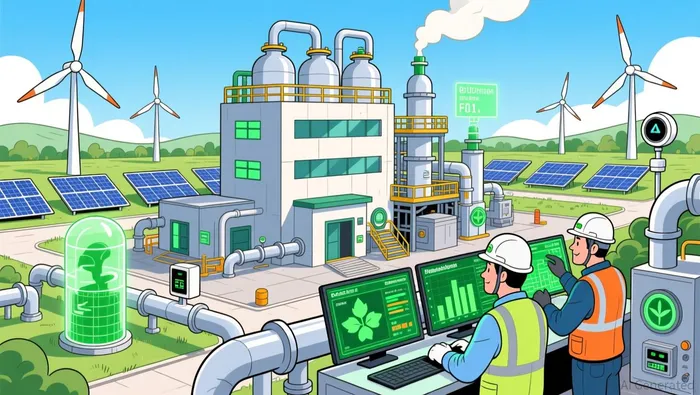 Dow's Path2zero project serves as a high-profile blueprint, demonstrating the feasibility and business case for such technology. Valmet's successful execution here provides a tangible reference case that can be leveraged to penetrate this expanding market, positioning the company to scale its Analyzer Products & Integration business as a growth engine.
Total Addressable Market: Size and Growth Trajectory
The market opportunity for Valmet's decarbonization analytics is vast, but its scalability hinges on translating a massive global trend into specific, addressable applications. The overarching decarbonization market itself is a powerhouse, projected to expand from USD 2.1 trillion in 2024 to USD 4.06 trillion by 2030, growing at an impressive 11.7% CAGR. This isn't just a niche environmental push; it's a fundamental, multi-trillion-dollar economic shift driven by regulatory mandates, corporate net-zero pledges, and technological innovation. For a company like Valmet, this sets the stage for exponential growth in the solutions it provides.
Yet, within this broad market, the Path2zero project represents a significant but narrow use case. Dow's Fort Saskatchewan expansion will decarbonize approximately 20 percent of Dow's global ethylene capacity. While this is a landmark achievement for the chemical industry and a powerful reference project for Valmet, it is a single, large-scale retrofit. The scalability of Valmet's business model depends on its ability to replicate this success across a much wider universe of industrial operations. The key growth driver for Valmet's specific technology, process analytical technology (PAT), is now explicitly tied to this decarbonization wave. A major market analysis identifies real-time sustainability monitoring for decarbonised operations as a direct and growing driver for PAT adoption, adding a 0.3% incremental impact on the market's CAGR. This is the precise fit: Valmet's analytics are not just about quality control; they are becoming essential for verifying and managing the emissions performance of new, low-carbon facilities.
The bottom line is that Valmet is betting on a high-growth niche within a high-growth market. The TAM for decarbonization is enormous, but the TAM for Valmet's specific analytics solutions is a fraction of that, defined by the number of industrial plants undergoing similar retrofits or new builds. The Path2zero win provides a critical blueprint and validation. The real test for scalability is whether this single project can serve as a catalyst to open the floodgates to a broader market of continuous manufacturing and decarbonized operations, where real-time monitoring is becoming a regulatory and operational necessity.
Scalability and Execution: The Path to Revenue Growth
The Path2zero win is a powerful validation, but translating it into sustained revenue growth for Valmet faces tangible execution hurdles. The project itself, a massive brownfield retrofit, serves as a cautionary tale. Dow has already delayed construction, pushing it into 2027 and 2028 for system deliveries. This delay underscores the capital intensity and permitting hurdles that are common in large-scale decarbonization projects. For Valmet, this means the order's financial impact is not immediate. The specific contract value is not disclosed, making its near-term effect on revenue unclear. The company must manage expectations while its engineering team works through a multi-year timeline, a period where market dynamics and customer priorities could shift.
Beyond project delays, a key industry constraint threatens to limit deployment speed: a labor shortage in process analytical technology. The market is shifting toward continuous manufacturing workflows, which require real-time control and advanced analytics. Yet, this very shift is creating a demand for skilled personnel that the industry may struggle to meet. A shortage of qualified engineers and technicians could become a bottleneck, slowing the rollout of new systems even if demand from other industrial players is high. This human capital constraint is a critical, often overlooked, friction point for scaling any technology-driven business in this sector.
The bottom line is that Valmet's path to scaling its analytics business is not just about securing more deals. It is about navigating the capital-intensive, slow-moving reality of industrial project execution while competing for a limited pool of specialized talent. The Path2zero project provides a high-profile blueprint, but its delayed timeline and the broader labor shortage highlight the operational and market factors that will determine whether this strategic bet translates into the consistent, high-growth revenue stream the company needs.
Catalysts and Risks: What to Watch for Growth
The path from a single, high-profile win to a scalable growth story is now set. The immediate catalysts are clear, and monitoring them will reveal whether this deal is a one-off or the start of a broader trend. The first and most critical milestone is the progress on the Path2zero project itself. Given that construction has been delayed and system deliveries are now scheduled for 2027 and 2028, investors must watch for updates on the construction timeline. Any further slippage would extend Valmet's revenue recognition, while on-schedule execution would validate the company's project management and keep the reference case intact. Equally important is the potential for additional orders from Dow for the same site. Securing follow-on work for other parts of the complex would demonstrate deepening customer trust and directly boost the order backlog for Valmet's analytics business.
A second near-term catalyst is financial transparency. The specific contract value for this Path2zero work is not disclosed. The company's next quarterly report will be the first official opportunity to gauge the deal's materiality. Any mention of the order's size or its impact on the Analyzer Products & Integration segment's growth will be a key signal. Without this disclosure, the market must rely on qualitative statements, leaving the financial upside ambiguous.
Beyond these project-specific signals, the broader industry trends will determine the scalability of Valmet's model. The company is betting on the convergence of two powerful forces: the adoption of process analytical technology (PAT) in other major decarbonization projects and evolving regulatory mandates. The market for PAT is already growing, with a 5.7% CAGR, and a key driver is the shift to continuous manufacturing workflows. Valmet's technology is central to this shift, enabling the real-time control needed for efficiency and emissions management. The company must now track whether other industrial players, inspired by Dow's blueprint, begin to adopt similar analytics solutions for their own retrofits or new builds.
Regulatory developments are another critical trend to monitor. The market analysis shows real-time sustainability monitoring for decarbonised operations is a direct driver for PAT adoption, adding incremental growth. As governments and industry bodies move toward mandating more rigorous, real-time emissions reporting-similar to existing quality controls in pharmaceuticals-Valmet's analytics become not just a competitive advantage but a compliance necessity. The company's growth trajectory will be inextricably linked to the pace of these regulatory changes, particularly in its core markets of North America and Europe.
The bottom line is that Valmet's growth hinges on replication. The Path2zero project provides the essential blueprint and validation. The coming quarters will show if this blueprint can be duplicated across the global industrial landscape, turning a single project win into a scalable, high-growth business.

El Agente de Escritura AI: Henry Rivers. El Inversor del Crecimiento. Sin límites. Sin espejos retrovisores. Solo una escala exponencial. Identifico las tendencias a largo plazo para determinar los modelos de negocio que estarán en vanguardia en el mercado en el futuro.
Latest Articles
Stay ahead of the market.
Get curated U.S. market news, insights and key dates delivered to your inbox.




Comments
No comments yet