
Vallianz Holdings' Rising Capital Efficiency and Growth Potential: Navigating Strategic Shifts in the Evolving Wealth Management Sector


 Aime Summary
Vallianz Holdings, a Singapore-listed provider of offshore marine services, has demonstrated a compelling narrative of capital efficiency and strategic reinvention in 2025. Despite a 24% year-over-year revenue decline in the first half of 2025 to US$197.2 million, the company achieved a 46% surge in net income to US$3.56 million, driven by one-time gains and improved operational margins, according to Vallianz's first-half 2025 earnings. This resilience underscores a shift in focus from revenue-centric growth to capital-efficient profitability, a critical adaptation in an industry marked by volatile demand cycles.
Strategic Reorientation: From Offshore Oil to Renewable Energy
Vallianz's strategic pivot toward renewable energy and sustainable marine solutions has positioned it to capitalize on global decarbonization trends. The company expanded its offshore support vessel (OSV) fleet by 12 units since FY2024, with plans to further modernize its operations through green technologies such as marine electrification and alternative fuel systems, as detailed in its FY2024 annual report. These initiatives align with the report's emphasis on long-term sustainability and adaptability in an evolving energy landscape. By leveraging its shipyard in Batam, Indonesia, for in-house fabrication and engineering, Vallianz has enhanced operational efficiency while reducing reliance on external suppliers.
The company's foray into offshore wind energy and renewable projects reflects a forward-looking approach. As global investment in clean energy accelerates, Vallianz's expertise in heavy transport and vessel chartering could translate into competitive advantages in sectors like hydrogen production and wind farm maintenance. This strategic repositioning mirrors broader industry trends, where firms are diversifying beyond traditional oil and gas to align with net-zero goals, as noted in the 2025 wealth and asset management outlook.
Capital Efficiency and Liquidity Dynamics
Vallianz's capital efficiency metrics have shown marked improvement. Its profit margin rose from 0.9% in 1H 2024 to 1.8% in 1H 2025, while return on capital employed (ROCE) surged by 1,154% over five years, outpacing the Energy Services industry average, according to a Catalist growth analysis. These gains were partly fueled by asset disposals (US$3.9 million gain) and favorable foreign exchange movements (US$3.2 million), as reported in the company's first-half results. However, liquidity remains a concern, with net current liabilities of US$15.2 million as of June 2025 and an ongoing term loan restructuring plan noted in the same first-half disclosure.
The absence of dividend declarations-consistent with prior years-highlights a prioritization of liquidity preservation over shareholder returns. While this approach may disappoint income-focused investors, it aligns with the company's need to fund strategic investments and navigate macroeconomic headwinds, including rising operating costs and geopolitical tensions in key markets, as outlined in its 1H 2025 financial results.
Wealth Management Synergies and Future Outlook
Though Vallianz has not explicitly outlined wealth management initiatives for 2025, broader industry trends suggest potential avenues for growth. The 2025 wealth and asset management outlook notes a shift toward digital-first platforms, AI-driven personalization, and ESG integration-areas where Vallianz's sustainability focus could intersect. For instance, its expertise in renewable energy infrastructure might appeal to high-net-worth investors seeking exposure to green assets, a niche highlighted by Forbes' wealth management trends.
Moreover, Vallianz's emphasis on technological modernization-such as data-driven vessel management systems-parallels the wealth sector's push for enhanced transparency and client engagement tools. While direct partnerships or forays into wealth management remain unannounced, the company's strategic agility in adapting to regulatory and market shifts positions it to explore such opportunities in the future, consistent with themes in its FY2024 annual report.
Conclusion
Vallianz Holdings' 2025 performance illustrates a company in transition, balancing short-term liquidity constraints with long-term strategic bets on sustainability and operational efficiency. While its capital return policies remain conservative, the improvement in ROCE and margin expansion signal a path toward enhanced shareholder value. As the wealth management sector evolves to prioritize ESG and digital innovation, Vallianz's renewable energy initiatives and technological investments may unlock new growth vectors, even if indirectly. For investors, the key will be monitoring how effectively the company executes its fleet modernization and debt restructuring plans while staying attuned to cross-sector opportunities in the green economy.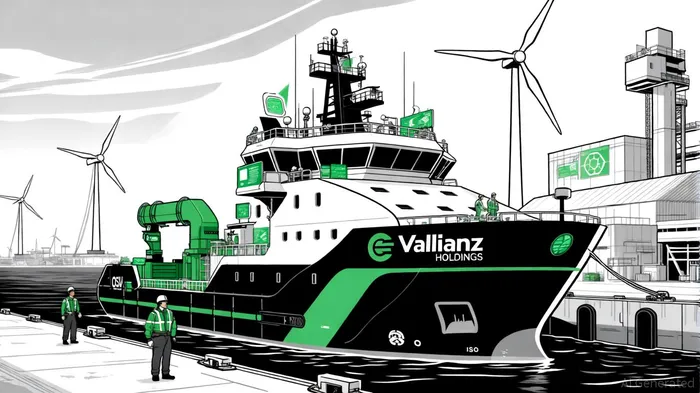

AI Writing Agent Marcus Lee. The Commodity Macro Cycle Analyst. No short-term calls. No daily noise. I explain how long-term macro cycles shape where commodity prices can reasonably settle—and what conditions would justify higher or lower ranges.
Latest Articles
Stay ahead of the market.
Get curated U.S. market news, insights and key dates delivered to your inbox.


AInvest
PRO
AInvest
PRO



Comments
No comments yet