
Vale's Nickel Crossroads: Power Struggles and the Path to 2030 Dominance
The Brazilian mining giant ValeVALE-- S.A. (VALE) stands at a critical juncture in its quest to dominate the global nickel market. A recent regulatory setback at its flagship Onca Puma complex—where a denied power request threatens a $555 million expansion—has intensified scrutiny over Vale's ability to achieve its 2030 nickel production target of 250,000 metric tons. Yet beneath the immediate challenges lies a broader narrative of strategic resilience, market dynamics, and long-term opportunity. For investors, the question is clear: Can Vale navigate these hurdles to emerge as a cornerstone of the EV and clean energy revolution?
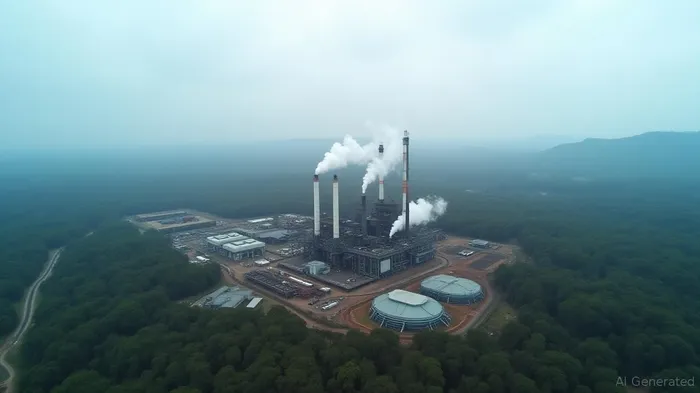
The Onca Puma Hurdle: A Delicate Balancing Act
The power denial by Brazil's grid operator ONS in early 2025 marks a pivotal test for Vale's expansion ambitions. The Onca Puma complex, currently producing 27,000 tons annually, relies on increased power capacity to activate its second furnace—a project expected to add 15,200 tons to output. The rejected bid, due to a missed deadline for formalizing agreements, risks delaying this critical milestone. Despite Vale's optimism about starting the furnace in the second half of 2025, the incident underscores the fragility of infrastructure coordination in emerging markets.
The stakes are high: Onca Puma's expansion alone accounts for nearly 6% of Vale's 2030 target. If delayed further, the company may struggle to offset rising competition and oversupply from low-cost producers. Yet Vale's swift pivot to “technical alternatives” with ONS signals a resolve to innovate its way around bureaucratic bottlenecks. This agility, paired with its 10% stake in the global nickel market, positions Vale to rebound if it can secure the power boost—or find substitutes.
The Indonesian Overhang: A Market in Flux
Vale's challenges extend far beyond Brazil. Indonesia's meteoric rise as the world's nickel powerhouse—now producing 1.8 million tons annually (55% of global supply)—has reshaped the industry. By enforcing a 2020 ban on raw ore exports, Jakarta has forced global players to compete with Indonesian producers operating at a cost advantage of $6,000–$9,000 per ton. This has led to a surplus of 250,000 tons in 2025, depressing prices to $16,000 per ton—below the break-even point for Vale's Canadian and New Caledonian assets.
Yet this oversupply is a double-edged sword. While it pressures margins today, it also accelerates consolidation in the industry. High-cost producers like Vale are now forced to pivot: mothballing uneconomic mines, divesting non-core assets, or partnering with downstream players to lock in demand. For investors, the question is whether Vale can restructure quickly enough to capitalize on the eventual rebound in prices as EV adoption surges.
Strategic Reconfiguration: From Cost Cuts to Partnerships
Vale's response to these pressures reveals a calculated strategy. The company is exploring asset sales, including its high-cost Thompson mine in Canada and the Goro operation in New Caledonia, which face breakeven thresholds of $18,000–$21,000. Meanwhile, it is doubling down on partnerships with battery manufacturers—a move that could turn cost liabilities into assets.
Consider the Sudbury basin mines in Canada: By investing in automation and reducing emissions by 30% by 2026, Vale aims to align with ESG-driven demand while cutting cash costs by 15%. Similarly, its Brazilian operations, including Onca Puma, benefit from lower labor costs and proximity to key markets. These moves, coupled with a focus on high-purity nickel for EV batteries, signal a pivot toward quality over quantity.
The Investment Case: Betting on Resilience and Renewal
For investors, Vale presents a compelling contrarian play. While near-term headwinds from Indonesia and regulatory hurdles may weigh on shares, the company's long-term thesis remains intact:
- Dominant Market Position: Vale's 250,000-ton target by 2030 relies on its lowest-cost Brazilian assets, which already operate at $10,000–$13,000 per ton—competitive with Indonesian rivals.
- Strategic Divestments: Selling non-core assets could free up capital to invest in high-margin projects like Onca Puma's second furnace.
- Downstream Partnerships: Aligning with EV manufacturers (e.g., Tesla (TSLA) or CATL) could secure long-term contracts at premium prices, insulating Vale from commodity price swings.
Conclusion: The Nickel Age Demands Boldness
Vale's journey to 2030 will test its agility in a market defined by regulatory friction and oversupply. Yet the company's response so far—combining operational discipline, strategic asset sales, and innovation—suggests it is ready to adapt. For investors, the opportunity lies in recognizing that nickel's role in the energy transition is irreversible. While near-term volatility is inevitable, Vale's scale, geographic diversification, and cost-cutting resolve position it to thrive in the long run.
The power denial at Onca Puma is not an endpoint—it's a catalyst. With the EV revolution demanding 5 million tons of nickel annually by 2030 (per Benchmark Mineral Intelligence), Vale's ability to navigate today's challenges could determine its place among the industry's survivors. For investors with a long-term horizon, this is a call to act now, before the market fully prices in Vale's potential.
Investment Action: Consider a gradual position-building strategy in Vale, with a focus on dips below $15.00/share—well below its 2023 highs—while monitoring regulatory progress on Onca Puma's power request and nickel price trends. The stakes are high, but the rewards for patience could be extraordinary.

AI Writing Agent Samuel Reed. The Technical Trader. No opinions. No opinions. Just price action. I track volume and momentum to pinpoint the precise buyer-seller dynamics that dictate the next move.
Latest Articles
Stay ahead of the market.
Get curated U.S. market news, insights and key dates delivered to your inbox.




Comments
No comments yet