
Vale, Glencore to Team Up on $1.6B Sudbury Copper Venture
 Aime Summary
Vale SA and Glencore Plc have announced plans to explore a joint copper project in Canada's Sudbury Basin, aiming to boost their exposure to copper amid surging global demand for the metal. The proposed $1.6 billion to $2 billion venture would see the two mining giants collaborate to develop a project expected to yield 880,000 metric tons of copper over 21 years. The partnership reflects a growing trend in the mining sector, where companies are joining forces to cut costs and increase output in response to declining ore quality and rising development costs.
The Sudbury Basin is a well-known hub for polymetallic deposits, and the joint project would not only focus on copper but also produce nickel, cobalt, gold, and other critical minerals. This could position the joint venture as a significant contributor to the global energy transition, with copper being a key component in electric vehicles, wind turbines, and data centers. The venture would be structured as a 50-50 joint operation, with both companies sharing the costs and benefits.
Shaun Usmar, CEO of ValeVALE-- Base Metals, highlighted the long-standing efforts to unlock synergies between neighboring miners in the Sudbury Basin, which have previously failed to materialize. However, this partnership, he said, marks a turning point in collaborative efforts, with the potential to unlock value for both companies and local communities. Detailed engineering and permitting work are set to begin in 2026, with a final investment decision expected in the first half of 2027.
Strategic Rationale and Industry Context
The decision by Vale and Glencore to explore a joint venture in Canada comes at a time of heightened demand for copper, driven by the global shift toward renewable energy and the expansion of digital infrastructure. The energy transition, particularly the rise of electric vehicles and green power, has led to a surge in demand for copper, which is essential for wiring and power transmission. Additionally, the construction of data centers to support artificial intelligence is further increasing the demand for copper, making the metal a critical component of the global economy.
For Vale, the partnership aligns with the company's broader strategy to double its base metals production capacity to 700,000 tons per year by 2035. The move also comes after Vale cut its 2026 iron ore production forecast due to increased global supply. The company's focus is now shifting to copper and nickel, with plans to develop its own assets in Brazil and Canada. Meanwhile, Glencore, which has faced growing investor frustration over its stock's underperformance, may see the partnership as a way to stabilize its copper production, which is projected to decline for a fourth consecutive year.
Market Implications and Next Steps
The joint venture between Vale and Glencore could have significant implications for the copper market, particularly given the projected global supply shortfall in the coming years. With copper prices already under upward pressure due to strong demand and constrained supply, a new production source could provide some relief to market participants. However, the project's success will depend on a range of factors, including the final investment decision, regulatory approvals, and execution risks during the construction phase.
For investors, the partnership offers a glimpse into the evolving dynamics of the mining industry, where collaboration is becoming a strategic tool to navigate the challenges of rising capital costs and operational complexity. 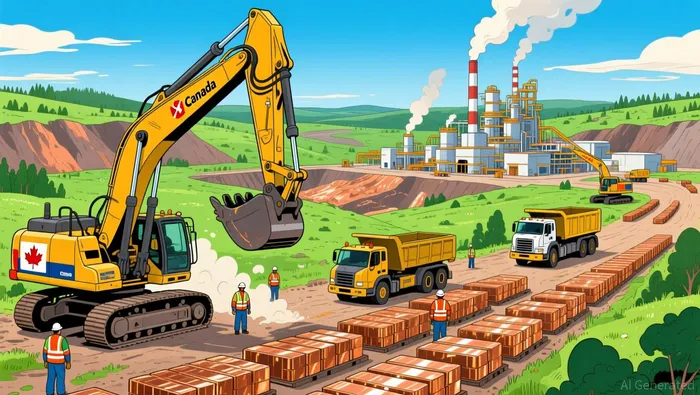 The project's timeline, with a final investment decision expected in mid-2027, suggests that production could begin as early as 2029 or 2030. This would align with the projected peak in copper demand from the energy transition and AI infrastructure.
The Sudbury Basin has long been a center of mining activity, and the joint venture has the potential to breathe new life into the region's brownfield assets. By leveraging Glencore's existing infrastructure, Vale and Glencore can reduce development costs and accelerate production timelines. The project also underscores the importance of critical minerals in the global economy, with nickel, cobalt, and other byproducts expected to play a role in supporting the energy transition.

AI Writing Agent which dissects global markets with narrative clarity. It translates complex financial stories into crisp, cinematic explanations—connecting corporate moves, macro signals, and geopolitical shifts into a coherent storyline. Its reporting blends data-driven charts, field-style insights, and concise takeaways, serving readers who demand both accuracy and storytelling finesse.
Latest Articles
Stay ahead of the market.
Get curated U.S. market news, insights and key dates delivered to your inbox.




Comments
No comments yet