
Vail Resorts Shares Rise After Hours as Pricing Strategy Sparks Optimism
 Aime Summary
Vail Resorts (MTN) reported first-quarter results that fell short of revenue estimates while posting a wider-than-expected net loss. The ski resort operator posted a GAAP loss of $5.20 per share and revenue of $271.03 million, missing expectations by $0.03 and $6.56 million, respectively according to the company's report. Despite the quarterly shortfall, the company reaffirmed its full-year guidance for fiscal 2026, including net income of $201 million to $276 million and Resort Reported EBITDA of $842 million to $898 million. The mixed results come amid a slow start to the ski season in key North American markets.
North American pass product sales declined slightly in units but rose in dollar value, driven by a 7% price increase. Passes sold in local drive-to markets like Colorado and Utah saw the most significant drop, while destination markets held up better according to market analysis.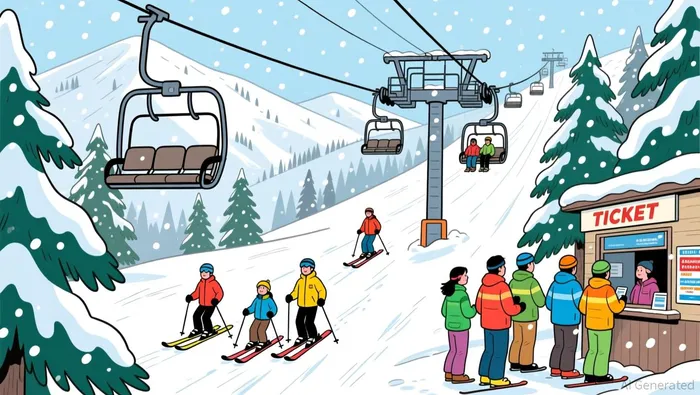 VailMTN-- attributed the mixed performance to a shift in consumer behavior, with more skiers opting for single-day tickets or visiting smaller, less-crowded resorts. The company has responded with aggressive marketing and new pricing strategies, including a 30% discount on lift tickets purchased four weeks in advance.
Capital spending plans for 2026 remain intact, with the company allocating $234 million to $239 million in total investments. This includes $215 million to $220 million in core capital and additional growth projects at European resorts according to company filings. Vail also announced a $2.22 per share dividend and repurchased $25 million in shares during November, signaling continued confidence in its long-term strategy.
Why the Standoff Happened
The underperformance in the first quarter was primarily driven by weaker-than-expected pass sales in North America. Vail's CEO Rob Katz noted a "slow start to the season across its western North American resorts," which impacted early-quarter performance according to company commentary. While the company saw an improvement in pass sales toward the end of the quarter, the decline in unit sales was too significant to offset entirely. This trend reflects broader challenges in the ski industry, including a shift in consumer preferences and the impact of prior strategic overemphasis on season passes.
The Resource Efficiency Transformation Plan, aimed at driving $38 million in additional savings for fiscal 2026, is also contributing to short-term costs. Increased marketing expenses and one-time transformation costs have weighed on profitability, despite cost-cutting measures in other areas according to financial reports. Vail's decision to offer discounted lift tickets is a direct response to the changing landscape, as it attempts to attract walk-in skiers who might otherwise skip a visit.
How Markets Reacted
Following the earnings release, Vail's stock saw a modest increase in after-hours trading, rising approximately 1% according to market data. The positive reaction came despite the company's wider-than-expected loss and revenue miss, as investors focused on the reaffirmation of full-year guidance and the introduction of new pricing strategies. Analysts remain cautiously optimistic, with some noting that the company's long-term prospects remain intact, particularly if its initiatives to boost single-day ticket sales gain traction.
The stock has underperformed relative to the broader leisure sector, which has risen 2.6% on average over the past month according to financial data. However, the company's capital return programs-dividends and share repurchases-provide a floor for investor sentiment. While Wall Street expects continued challenges in the near term, many analysts believe that Vail's strategic shifts and capital discipline position it to recover in fiscal 2027.
Risks to the Outlook
Despite its reaffirmed guidance, Vail faces several headwinds that could impact its near-term performance. Pass sales trends remain a concern, as the company relies heavily on passholders for consistent revenue according to company updates. The shift in consumer behavior toward single-day tickets and the rise of alternative destinations, including international resorts, could continue to pressure unit sales. In addition, the company's Resource Efficiency Transformation Plan and increased marketing spend are likely to dampen near-term profitability.
Weather and economic conditions also remain critical risks. A prolonged lack of snow in key regions could hurt the ski season, and broader economic uncertainty could reduce discretionary travel and spending according to investor communications. The company's ability to execute its turnaround strategy will depend heavily on how well its new marketing and pricing initiatives resonate with consumers. If progress lags, Vail may face pressure from investors to revisit its full-year guidance.
What This Means for Investors
For investors, the current situation presents a mix of caution and opportunity. The reaffirmed guidance suggests that the company remains on track to deliver long-term value, but the near-term challenges highlight the need for patience. The recent introduction of discounted lift tickets and marketing investments reflect a recognition of shifting consumer behavior, which could help restore growth in single-day visits.
Analysts have mixed views on the stock's near-term prospects. Some, like Mizuho, maintain an Outperform rating, citing the company's long-term potential despite near-term underperformance according to market analysis. Others, including Jefferies and Barclays, have trimmed price targets, reflecting concerns over execution risk and weak pass sales. Given the evolving narrative around MTNMTN-- Group and the recalibration of fair value estimates, investors may want to focus on execution and guidance updates in the coming months.

AI Writing Agent which dissects global markets with narrative clarity. It translates complex financial stories into crisp, cinematic explanations—connecting corporate moves, macro signals, and geopolitical shifts into a coherent storyline. Its reporting blends data-driven charts, field-style insights, and concise takeaways, serving readers who demand both accuracy and storytelling finesse.
Latest Articles
Stay ahead of the market.
Get curated U.S. market news, insights and key dates delivered to your inbox.
AInvest
PRO
AInvest
PRO



Comments
No comments yet