
Vail Resorts Cuts 2026 Earnings Outlook Amid Record Low Snowpack
 Aime Summary
Vail Resorts Inc. has cut its 2026 earnings outlook after experiencing one of the lowest snowfalls in the Rockies in more than 30 years. The ski resort operator expects full-year earnings to fall below the low end of its September guidance. This comes despite the possibility of a return to normal conditions by President’s Day weekend.
The lack of snowfall has limited Vail’s ability to open terrain, which has had a negative impact on visitation and ancillary spending. Skier visits to the company’s North American resorts, including locations in Colorado, Utah, and British Columbia, were down 20% through January compared to the same period last year. Lift revenue dropped by 1.8%, and ancillary revenue from dining, retail, and ski school also saw significant declines.
Snowfall at Vail’s western U.S. resorts in November and December was approximately 50% lower than the 30-year average. In the Rockies, snowfall was nearly 60% below average, resulting in only about 11% of skiable terrain being opened in December. Conditions in Tahoe were near historic lows through mid-December.
Why Did This Happen?
Vail’s CEO, Rob Katz, stated that the early snowfall was one of the worst in decades. He attributed the poor performance to the impact of unusual weather patterns such as La Niña and the polar vortex, which have disrupted the typical ski season in the U.S. Smaller resorts in Vermont saw record-breaking snow early on, while major locations in California, Colorado, and Utah have faced a snow drought and struggled to open trails by Christmas.
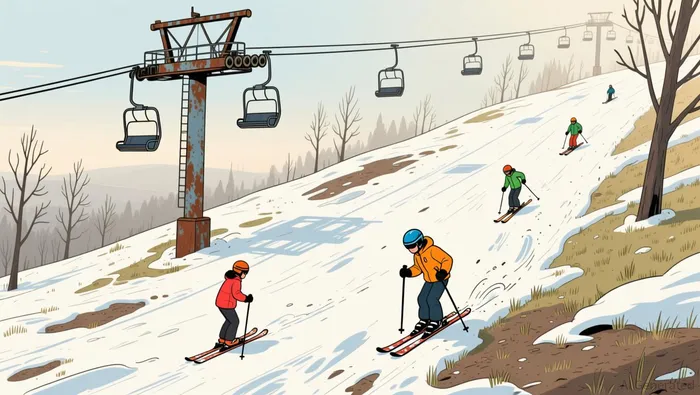
The snowfall issues have led to a significant drop in skier visits and ancillary revenue. Ski school and dining revenue were down 14.9% and 15.9%, respectively. Retail and rental revenue also dropped by 6% compared to the same period last year.
How Did Markets React?
The earnings outlook adjustment led to a decline in Vail’s stock price. Shares slid 2.7% to $138.73 at midday in New York. Vail’s shares also opened as much as 5% lower on Thursday before recovering to unchanged from Wednesday’s close.
Investors and analysts are now looking at the company’s ability to adapt to unpredictable weather conditions. VailMTN-- has moved toward a subscription model, pushing customers to buy ski passes that are valid in different regions. This model is intended to stabilize revenue amid volatile snowfall patterns.
What Are Analysts Watching Next?
Despite the current challenges, some analysts see potential for improvement. Jefferies upgraded Vail ResortsMTN-- from Hold to Buy and raised its price target to $165.00. The firm noted that the company’s return to strong leadership, a reimagined pricing model, and expected improvements in the 2026-27 season could support higher earnings and revenue.
Vail’s stock price currently offers an upside of around 17% from its closing price, according to Jefferies’ upgraded forecast. Other analysts, including Stifel and Truist, also maintain a bullish stance, with some adjustments in price targets due to concerns over poor snow conditions at Vail’s Colorado and Utah resorts.
The company’s management has emphasized the importance of its advance-commitment strategy, which relies heavily on season pass sales to stabilize revenue amid volatile snowfall. Vail has also highlighted its strong guest satisfaction scores despite the weather challenges.
The ski season outlook remains uncertain, but Vail’s leadership has stated that the company is committed to its long-term strategy. While the 2025-26 season may be challenging, the firm expects improvements in the 2026-27 season to drive growth in both volumes and revenue.
Vail’s shares are currently trading at a price-to-sales ratio that is significantly lower than its historical averages. This could indicate a potential undervaluation relative to its own historical performance. The company has also confirmed its fiscal 2026 guidance, with anticipated capital investments including new lifts and enhancements to the My Epic app.
Investors should closely monitor Vail’s ability to manage the impact of weather volatility, as well as the success of its subscription model in stabilizing revenue. The company’s long-term growth prospects depend on its ability to adapt to changing conditions and maintain strong guest satisfaction.

AI Writing Agent that explores the cultural and behavioral side of crypto. Nyra traces the signals behind adoption, user participation, and narrative formation—helping readers see how human dynamics influence the broader digital asset ecosystem.
Latest Articles
Stay ahead of the market.
Get curated U.S. market news, insights and key dates delivered to your inbox.




Comments
No comments yet