
UXLINK: Unlocking SocialFi's On-Chain Value with AI-Driven Network Effects


 Aime Summary
In the ever-shifting landscape of Web3, the race to redefine social infrastructure has taken a decisive turn toward utility-driven, user-owned networks. As speculative hype fades and the market gravitates toward projects that deliver tangible value, UXLINK emerges as a standout contender. By weaving AI-driven network effects into its decentralized framework, the platform is not just participating in the evolution of Web3—it is accelerating it.
The Strategic Alignment: Bridging Web2 and Web3
UXLINK's core thesis is simple yet transformative: to democratize access to decentralized social networks while preserving the intuitive, user-friendly experience of Web2. With over 54 million users as of mid-2025, the platform has positioned itself as a critical on-ramp for non-crypto-native audiences. Its dual-token model—$UXLINK for governance and staking, and UXUY points for community participation—creates a self-sustaining ecosystem where users are incentivized to build and maintain verifiable, real-world relationships.
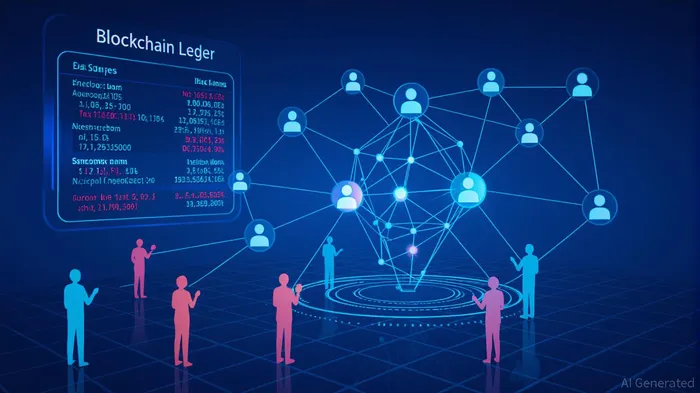
The platform's AI-powered discovery mechanism is a game-changer. By analyzing user behavior and preferences, it generates hyper-personalized content and networking recommendations, fostering organic growth of social graphs. This is not mere algorithmic curation; it is the foundation of a “social growth layer” that converts passive interactions into on-chain value. For instance, Soulbound Tokens (SBTs) tokenize bidirectional relationships, enabling users to carry their social identity across platforms and dApps. This innovation addresses a critical pain point in Web3: the lack of portable, trustless social capital.
Outperforming in a Utility-Driven Market
The broader Web3 ecosystem is witnessing a tectonic shift. Daily active wallets have stabilized at 24 million, but social DApps now account for 58% of gas usage, driven by AI-integrated tools and SocialFi protocols. UXLINK's alignment with this trend is evident in its PayFi integrations, which allow users to transact with Web3 tokens in real-world scenarios—such as the upcoming FujiPay debit card. This bridges the gap between on-chain utility and everyday finance, a move that could redefine how users perceive the value of digital assets.
UXLINK's technical roadmap further cements its competitive edge. The development of UXLINK ONE, a decentralized social protocol launching in 2025–2026, introduces features like unified gas management (OAOG Protocol) and AI-powered growth agents. These tools reduce friction for users and developers alike, enabling seamless cross-chain interactions and scalable community-building. Meanwhile, partnerships with Stanford University's digital currency initiative and NTT Docomo's MetaMe esports festival underscore the platform's academic and institutional credibility—a rare asset in a space often dominated by speculative narratives.
Navigating Challenges and Regulatory Realities
No investment is without risk. UXLINK faces challenges in sybil resistance and privacy protection, particularly as it scales its use of zero-knowledge proofs to verify relationships. Regulatory scrutiny around social data processing also looms large, especially in jurisdictions with strict data protection laws. However, the platform's roadmap includes robust upgrades to AI models and security protocols, suggesting a proactive approach to these hurdles.
The Investment Case: Beyond Hype, Toward Utility
UXLINK's value proposition transcends the typical metrics of user growth and token price. Its focus on real-world utility—through PayFi, SBTs, and AI-driven engagement—positions it as a foundational layer for the next phase of Web3 adoption. Unlike speculative AI tokens that rely on fleeting trends, $UXLINK's utility is embedded in governance, staking, and transactional ecosystems. This deflationary model, combined with strategic global expansion, creates a compelling case for long-term investors.
For those seeking exposure to the SocialFi movement, UXLINK offers a unique blend of innovation and pragmatism. Its ability to convert social interactions into portable, verifiable assets aligns with the broader shift toward user-owned networks. As the market continues to prioritize projects that deliver measurable impact over hollow promises, UXLINK's strategic alignment with Web3's evolving infrastructure makes it a standout candidate for outperformance.
Conclusion: A New Paradigm in Social Infrastructure
UXLINK is not merely a social platform—it is a blueprint for the future of decentralized interaction. By leveraging AI to enhance user experience, tokenizing real-world relationships, and integrating with real-world finance, it addresses the core limitations of both Web2 and early Web3 ecosystems. For investors, the key takeaway is clear: in a market increasingly defined by utility and user empowerment, UXLINK's strategic depth and technical execution position it as a leader in the SocialFi revolution.
In the end, the question is not whether UXLINK will succeed—it is how quickly the market will recognize its potential. For those willing to look beyond the noise, the answer is already unfolding on-chain.

Decoding blockchain innovations and market trends with clarity and precision.
Latest Articles
Stay ahead of the market.
Get curated U.S. market news, insights and key dates delivered to your inbox.






Comments
No comments yet